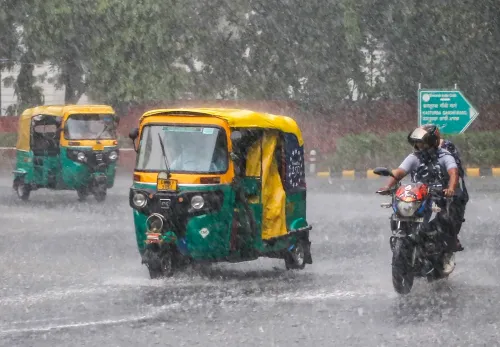
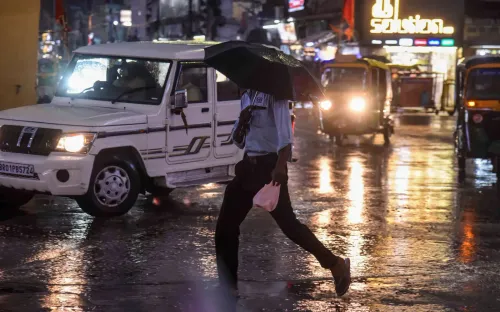
Delhi-NCR dust storm Red Alert: 100 kmph winds, rain on 23 June

Synopsis
A sudden, severe dust storm with winds forecast up to 100 kmph triggered a Red Alert across Delhi-NCR on 23 June, with the IMD warning of thunderstorms and lightning lasting at least 3 hours. The storm — fuelled by days of above-normal heat — extended warnings into Haryana, Uttar Pradesh, and Rajasthan, affecting millions across the region.
Key Takeaways
The IMD issued a Red Alert for Delhi-NCR on 23 June after a severe dust storm struck on Tuesday afternoon .
Wind speeds were forecast to reach up to 100 kmph in isolated areas, with gusts of 50–80 kmph across the broader region.
The alert was expected to remain in force for at least 3 hours , with thunderstorms, lightning, and light rainfall also forecast.
Districts in Haryana , Uttar Pradesh , and Rajasthan were placed under weather watch alongside Delhi.
Above-normal temperatures in preceding days created the atmospheric instability that triggered the sudden storm.
Conditions were expected to improve by evening, with dry weather likely to return by nightfall.
The India Meteorological Department (IMD) issued a Red Alert for Delhi-NCR on 23 June after a sudden and severe dust storm swept through the capital and surrounding regions on Tuesday afternoon, with wind speeds forecast to touch 100 kmph in isolated pockets and the alert expected to remain in force for at least 3 hours. The storm disrupted normal life across the region, blanketing roads and residential areas in thick dust and sharply reducing visibility.
How the Storm Unfolded
Conditions deteriorated rapidly from around 2:30 pm, when the IMD issued urgent weather advisories for Delhi and adjoining parts of Haryana, Uttar Pradesh, and Rajasthan. Strong gusts swept across the capital almost immediately, with dense dust clouds enveloping open spaces and neighbourhoods. Meteorologists attributed the sudden storm activity to above-normal temperatures in preceding days, which created atmospheric instability and allowed energy to build up rapidly.
What IMD Forecast
The IMD warned of gusty winds ranging between 50 and 80 kmph across Delhi-NCR, with isolated areas potentially seeing speeds up to 100 kmph. The department also forecast thunderstorms, lightning, and light to moderate rainfall as moisture-bearing winds interacted with the unstable atmosphere. Conditions were expected to improve gradually through the evening, with dry weather likely to return by nightfall. The rainfall, once it arrives, is expected to settle dust particles and bring further cooling to a region that has endured intense heat in recent days.
Districts Under Watch
The Red Alert extended well beyond Delhi's boundaries. In Haryana, districts including Sonipat, Rohtak, Kharkhoda, Bhiwani, and Charkhi Dadri were placed under watch. In Uttar Pradesh, warnings covered Bagpat, Khekra, Pilakhua, and Sikandrabad. Parts of Rajasthan — including Alwar, Bhiwadi, Tijara, and Deeg — were also included in the alert zone.
Brief Relief from the Heat
Despite the disruption, the storm brought temporary respite from the punishing heat that had gripped the region over the past several days. Above-normal temperatures had created the very atmospheric conditions that triggered the sudden storm, a pattern meteorologists say is becoming more frequent during pre-monsoon months in northern India. This comes amid a broader pattern of extreme weather events across the Indo-Gangetic Plain in June, underscoring the vulnerability of densely populated urban centres like Delhi to rapid weather shifts.
Point of View
Covering four states simultaneously, which signals that the IMD is treating this as a regional, not merely local, weather event. Delhi's dense urban infrastructure — from power lines to air quality — remains acutely exposed to these rapid-onset storms, and the city's emergency response systems are tested each time. The real question is whether urban planning and early-warning dissemination are keeping pace with the increasing frequency of such events.
NationPress
22 Sept 2026
Frequently Asked Questions
What triggered the dust storm in Delhi-NCR on 23 June?
The dust storm was triggered by above-normal temperatures in the days preceding 23 June, which created atmospheric instability and allowed energy to build up rapidly. Moisture-bearing winds then interacted with this unstable atmosphere, producing the sudden storm.
How long will the Red Alert last in Delhi-NCR?
The IMD Red Alert issued on 23 June was expected to remain in force for at least 3 hours from the time of issue. Conditions were forecast to improve gradually through the evening, with dry weather likely to return by nightfall.
Which areas outside Delhi are affected by the storm warning?
The alert extended to multiple districts in Haryana (Sonipat, Rohtak, Kharkhoda, Bhiwani, Charkhi Dadri), Uttar Pradesh (Bagpat, Khekra, Pilakhua, Sikandrabad), and Rajasthan (Alwar, Bhiwadi, Tijara, Deeg).
What wind speeds are expected during the Delhi dust storm?
The IMD forecast gusty winds between 50 and 80 kmph across Delhi-NCR, with isolated areas potentially seeing speeds up to 100 kmph. Thunderstorms and lightning were also forecast alongside the dust and wind.
Will there be rainfall after the dust storm in Delhi?
Yes, the IMD forecast thunderstorms and light to moderate rainfall following the dust storm, as moisture-bearing winds interact with the unstable atmosphere. The rain is expected to settle dust particles and bring further cooling to the region.