Delhi records coldest October day in 75 years; AQI stays moderate on Oct 31
Synopsis
Delhi just broke a 75-year October temperature record — with a maximum of only 20.7°C on Friday, 10.3 degrees below normal — while simultaneously logging its cleanest October air since 2015. Rainfall of 123.3 mm against a monthly normal of 15.1 mm has upended every expectation for this time of year, heading into what is usually Delhi's worst pollution month.
Key Takeaways
Delhi recorded a maximum temperature of 20.7°C on Friday, 31 October — the lowest October day maximum at Safdarjung since 1951 , a 75-year record.
The temperature was 10.3 degrees below normal for October, according to the IMD .
Cumulative October rainfall at Safdarjung reached 123.3 mm , against a monthly normal of 15.1 mm — the wettest October in four years and the sixth-wettest since 1951.
Delhi's overall AQI stood at 110 ('moderate') at 8 am on Saturday ; Jahangirpuri was the worst at 188 , Ghoga the cleanest at 46 .
Average October AQI for 2026 settled at 167 , the lowest since 2015 , per a CREA analysis.
Friday's AQI of 60 was the cleanest October reading since 10 October 2022 .
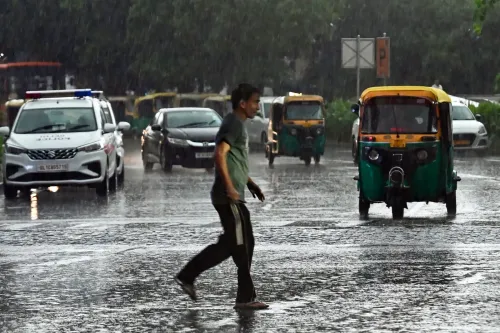
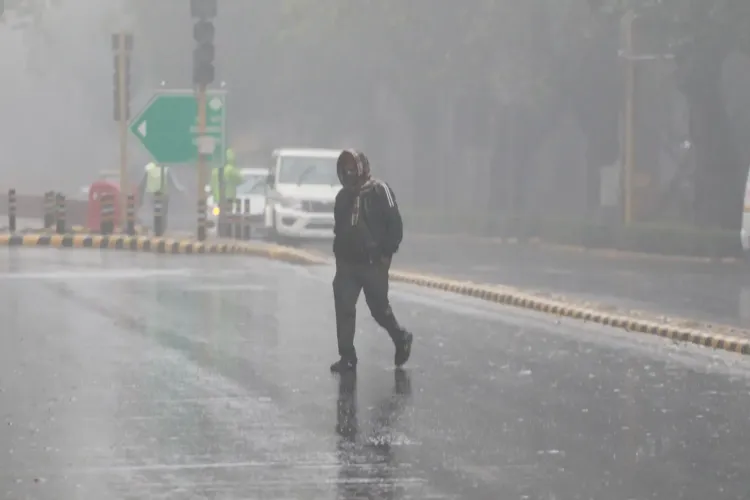
Delhi-NCR woke up to a sharp chill on Saturday, 31 October 2026, a day after the capital registered its lowest October maximum temperature in 75 years — 20.7 degrees Celsius at the Safdarjung base station, which is 10.3 degrees below normal for the month, according to the India Meteorological Department (IMD). The historic cold snap follows two days of persistent rainfall that reshaped weather records across the board.
Historic Temperature and Rainfall Records
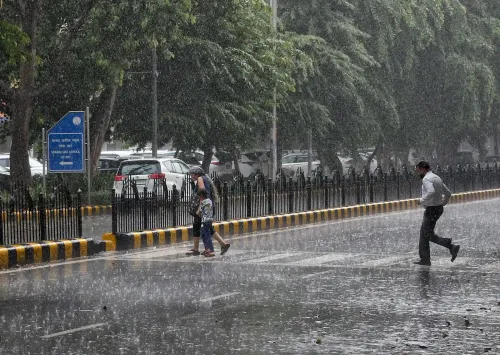
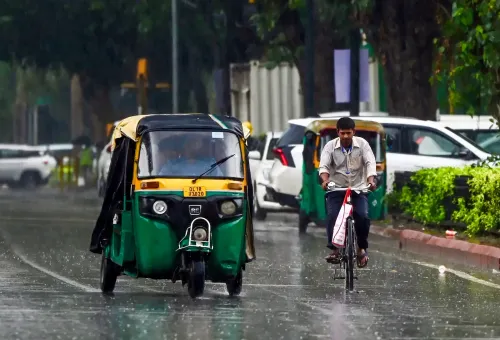
The IMD confirmed that Friday's maximum temperature of 20.7°C at Safdarjung was the lowest October day maximum at the station since 1951 — a stretch of 75 years. The same day also emerged as the sixth-wettest October day since 1951 and the wettest in four years, with cumulative rainfall at Safdarjung reaching 123.3 mm until 8.30 am — against a monthly normal of just 15.1 mm. Relative humidity on both morning and evening readings touched 100 per cent.
Dark clouds continued to hang over the capital on Saturday, with intermittent rain and shallow fog in the early morning and late evening adding to the wintry atmosphere. Residents across the city reportedly reached for windbreakers and shawls — unusual attire for October in Delhi.
Air Quality Across Delhi-NCR Stations
Despite the cold and wet conditions, Delhi's overall Air Quality Index (AQI) stood at 110 at 8 am on Saturday, placing the city in the 'moderate' category. Readings varied considerably across monitoring stations: Ghoga recorded the cleanest air at 46, while Jahangirpuri registered the highest at 188 — still within the 'moderate' band.
Other station readings included Burari at 65, Vasundhara Enclave at 101, Uttam Nagar at 92, NIH Narela at 76, Punjabi Bagh at 176, Shadipur at 131, Sirifort at 116, Chandni Chowk at 128, Burari Crossing at 89, R.K. Puram at 118, ITO at 128, Anand Vihar at 110, Mundka at 143, Vivek Vihar at 141, Rohini at 147, and Bawana at 142.
Cleanest October Air in Over a Decade
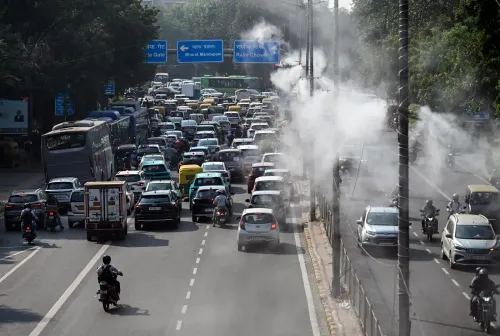
The rain-washed skies delivered a notable air quality dividend. On Friday, Delhi's AQI touched 60 — the cleanest October reading since 10 October 2022, when it stood at 44. More strikingly, an analysis by the Centre for Research on Energy and Clean Air (CREA) found that the average AQI for October 2026 settled at 167, the lowest monthly October average since 2015 — over a decade of data.
This is a sharp contrast to recent Octobers, when Delhi's air routinely deteriorated into the 'poor' or 'very poor' category as stubble burning in neighbouring states ramped up and north-westerly winds brought pollutants southward. The unusual rainfall appears to have suppressed both local dust and incoming particulate matter.
What Comes Next
With November — historically the onset of Delhi's worst pollution season — now beginning, the critical question is whether the cleaner October baseline translates into a softer start to the winter pollution crisis, or whether conditions will normalise rapidly once the rain recedes and dry, cold air resumes. The IMD has not yet issued a forecast indicating when temperatures will return to seasonal norms.
Point of View
Not structural. The moment the skies clear and north-westerly winds resume, the city will almost certainly slide back toward 'poor' and 'very poor' territory. One exceptional weather event should not be read as evidence that Delhi's chronic winter pollution problem has been solved.
NationPress
31 Oct 2026
Frequently Asked Questions
What temperature record did Delhi break in October 2026?
Delhi recorded a maximum temperature of 20.7 degrees Celsius at Safdarjung on Friday, 31 October — the lowest October day maximum at the station since 1951, making it a 75-year record. The reading was 10.3 degrees below the seasonal normal for October, according to the IMD.
What was Delhi's AQI on 31 October 2026?
Delhi's overall AQI stood at 110 at 8 am on Saturday, 31 October, placing it in the 'moderate' category. Readings ranged from 46 at Ghoga to 188 at Jahangirpuri across monitoring stations.
Why was Delhi's October 2026 air quality unusually clean?
An unusually high volume of rainfall — 123.3 mm against a monthly normal of 15.1 mm — washed out local dust and suppressed incoming particulate matter. The average October AQI settled at 167, the lowest since 2015, according to a CREA analysis.
How much rain did Delhi receive in October 2026?
Cumulative rainfall at Safdarjung reached 123.3 mm until 8.30 am on Friday, against the monthly normal of 15.1 mm. This made October 2026 the wettest October in four years for Delhi, and Friday itself the sixth-wettest October day since 1951.
Will Delhi's air quality remain clean in November 2026?
The IMD had not yet issued a forecast on when temperatures or conditions would return to seasonal norms as of 31 October. November is historically Delhi's worst month for air pollution, as stubble burning peaks and cold, dry north-westerly winds trap particulate matter over the city.