Delhi-NCR rain alert: IMD issues yellow warning for next 3 days
Synopsis
The southwest monsoon may have left Delhi two days early — its earliest exit since 2002 — but the rain isn't done yet. A depression over Chhattisgarh is pushing moisture northward, triggering a yellow alert for Delhi-NCR and a red alert for Uttar Pradesh, where CM Yogi Adityanath has placed district officials on emergency standby through 27 September.
Key Takeaways
The IMD has issued a yellow alert for Delhi-NCR on 27 September , warning of thunderstorms and winds up to 30 kmph .
Light to moderate rain is expected across Delhi-NCR, Punjab, Haryana and north Rajasthan through 29 September .
The southwest monsoon withdrew from Delhi on 23 September — the earliest retreat since 2002 , two days ahead of the normal date.
A depression over Chhattisgarh and Madhya Pradesh tracking towards Uttar Pradesh is the primary driver of the rainfall spell.
Uttar Pradesh is under a red alert ; Chief Minister Yogi Adityanath has directed district magistrates to maintain special vigilance and monitor flash flood arrangements.
Delhi's AQI remained in the 'satisfactory' range, with station readings between 56 (JNU) and 129 (Wazirpur) .
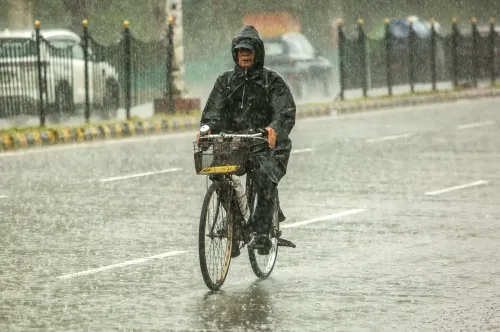
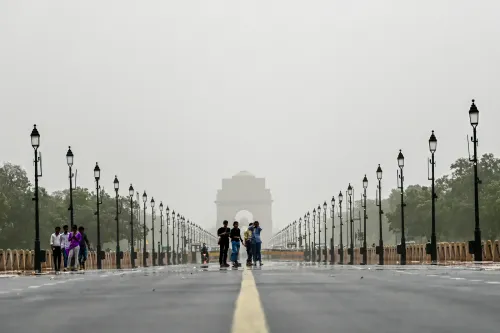
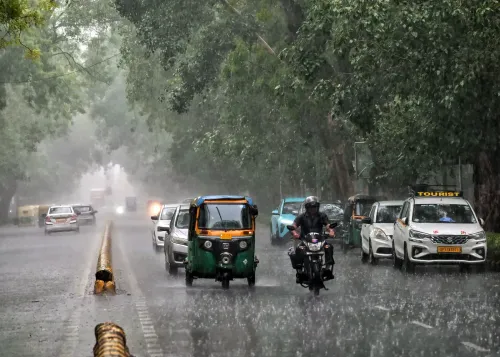
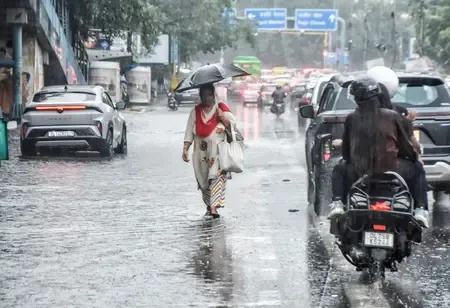
The India Meteorological Department (IMD) has issued a yellow alert for Delhi-NCR on Saturday, 27 September 2026, warning of thunderstorms and gusty winds of up to 30 kmph, with light to moderate rainfall expected to continue through Monday, 29 September. The spell offers a brief respite from lingering heat as the national capital transitions into the post-monsoon period.
What Is Driving the Weather Change
The rain activity is being fuelled by a depression over Chhattisgarh and Madhya Pradesh that is tracking towards Uttar Pradesh, where it will interact with a weak western disturbance. A cyclonic circulation in the lower atmosphere over north-western Uttar Pradesh and adjoining areas is also contributing to the change in conditions. Separately, a weather system over Chhattisgarh and Odisha, combined with a fresh trough in the upper atmosphere, is set to bring heavy rainfall across a wide stretch of the country on Saturday, according to the IMD.
Heavier rainfall is anticipated in parts of Uttarakhand and north-western Uttar Pradesh, while Delhi-NCR, Punjab, Haryana, and north Rajasthan are in line for lighter showers. Similar conditions are forecast on Sunday, with the possibility of light rain extending into Monday.
Earliest Monsoon Withdrawal from Delhi Since 2002
Notably, the southwest monsoon withdrew from Delhi on 23 September — two days ahead of its normal withdrawal date — marking the earliest retreat from the national capital since 2002. Despite the early exit of the monsoon, weather officials have clarified that prevailing weather systems can still deliver scattered showers and thunderstorms over the next several days, a pattern not uncommon during the post-monsoon transition.
Cloudy skies and moist easterly winds helped moderate temperatures in Delhi on Friday. The maximum temperature settled at 33°C, one degree below normal, while the minimum was recorded at 24.2°C. The IMD has forecast a maximum of 32–34°C and a minimum of 22–23°C for Saturday.
Uttar Pradesh on Red Alert; CM Yogi Directs Officials
The most intense weather impact is expected in Uttar Pradesh, for which the IMD has issued a red alert covering several districts. The agency warned of heavy to very heavy rainfall at multiple locations and extremely heavy rainfall at isolated spots over the next two days. The Uttar Pradesh state government has placed district administrations on alert through 27 September.
Uttar Pradesh Chief Minister Yogi Adityanath took note of the forecasts and directed district magistrates to maintain special vigilance, visit field locations, and monitor flood-management arrangements in the wake of flash flood risks.
Delhi Air Quality Holds Satisfactory
Despite the weather activity, Delhi's air quality remained in the 'satisfactory' category on Friday. Air Quality Index (AQI) readings across monitoring stations ranged from 56 at JNU to 129 at Wazirpur, with most stations recording figures well within acceptable limits. Stations including Rohini (120), Wazirpur (129), and Nehru Nagar (91) were at the higher end, while JNU (56), NSUT Jaffarpur (63), and R K Puram (63) posted the cleanest readings.
With the rain cycle expected to persist through Monday, Delhi residents can expect continued cloud cover and cooler days — a marked shift from the prolonged heat of earlier weeks.
Point of View
Yet within days a depression-driven spell is dampening the capital again. This underscores a recurring forecasting challenge: post-withdrawal weather systems are increasingly delivering near-monsoon rainfall, blurring the boundary between the monsoon and post-monsoon calendars. The red alert in Uttar Pradesh is the more consequential dimension here — flash flood risk in a densely populated agrarian state at harvest time carries far greater stakes than a pleasant weekend in Delhi. Whether district-level administration, placed on alert by CM Yogi Adityanath, can translate that vigilance into effective ground response is the real test of preparedness.
NationPress
26 Sept 2026
Frequently Asked Questions
What is the IMD alert for Delhi-NCR on 27 September 2026?
The IMD has issued a yellow alert for Delhi-NCR on 27 September 2026, forecasting thunderstorms and gusty winds of up to 30 kmph, with light to moderate rainfall expected to continue through Monday, 29 September.
Why is Delhi getting rain after the monsoon withdrew?
Although the southwest monsoon withdrew from Delhi on 23 September — two days early — a depression over Chhattisgarh and Madhya Pradesh is moving towards Uttar Pradesh and interacting with a weak western disturbance, bringing post-monsoon showers to Delhi-NCR and surrounding states.
When was the last time the monsoon withdrew from Delhi this early?
The monsoon's withdrawal from Delhi on 23 September 2026 is the earliest retreat since 2002, occurring two days ahead of the normal withdrawal date.
Which areas face the heaviest rainfall risk this weekend?
Uttar Pradesh is under a red alert from the IMD, with heavy to very heavy rainfall forecast at multiple locations and extremely heavy rain at isolated spots. Uttarakhand and north-western Uttar Pradesh face the most intense rainfall, while Delhi-NCR, Punjab, Haryana, and north Rajasthan will see lighter showers.
What action has the Uttar Pradesh government taken ahead of the heavy rain forecast?
Chief Minister Yogi Adityanath directed district magistrates across the affected districts to maintain special vigilance, visit field locations, and monitor arrangements against flash floods. The state government has placed district administrations on high alert through 27 September.