Sonowal flags ₹2,300 cr e-Methanol Plant at Kandla
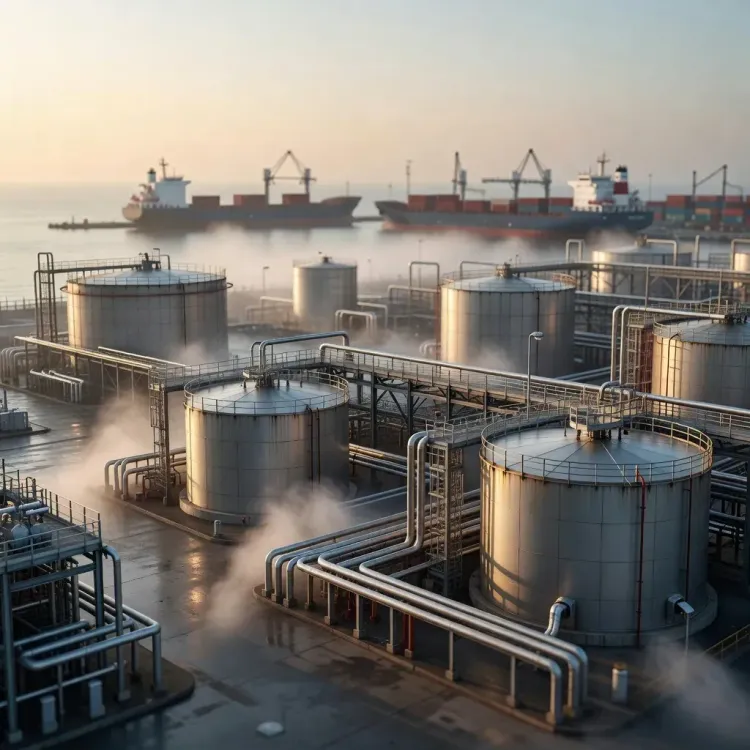
Synopsis
Union Ports Minister Sarbananda Sonowal has announced a ₹2,300 crore, 150 TPD e-Methanol plant at Kandla, Gujarat — a first-of-its-kind Assam-Gujarat collaboration — positioning India as an industrial-scale green marine fuel producer aligned with IMO decarbonisation targets.
Key Takeaways
A ₹2,300 crore e-Methanol plant with 150 tonnes-per-day capacity is being set up at Kandla (Deendayal Port), Gujarat .
The project is built on a collaboration between Assam (feedstock resources) and Gujarat (coastal industrial infrastructure).
Union Minister Sarbananda Sonowal called it 'a monumental step for India's green maritime future.' The plant aligns with India's National Green Hydrogen Mission (2023) and the Sagarmala Project (2015) .
E-methanol is emerging as a preferred clean marine fuel under tightening IMO emission regulations .
The facility positions India as a potential regional exporter of green marine fuels to Indian Ocean shipping routes.
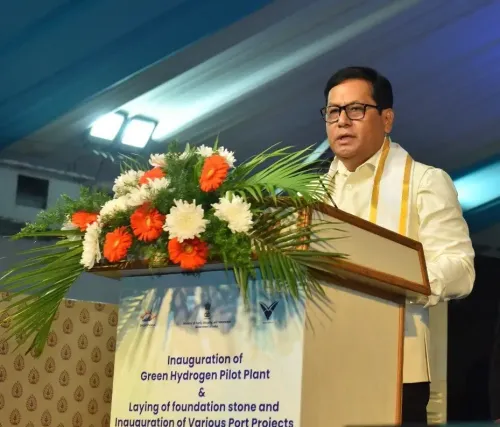
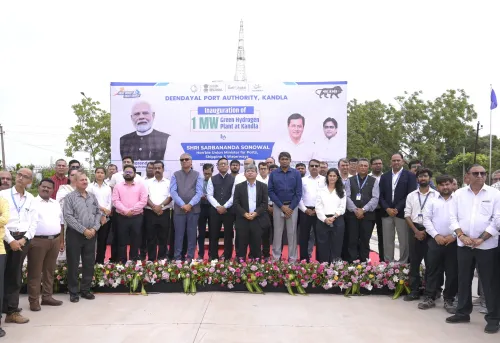
An unlikely partnership between India's northeast and its western coastline is now producing something the global shipping industry urgently needs. Union Ports and Shipping Minister Sarbananda Sonowal announced on Saturday, 26 September 2026, that a ₹2,300 crore e-Methanol plant with a capacity of 150 tonnes per day (TPD) at Kandla (Deendayal Port), Gujarat — built on a unique collaboration between Assam and Gujarat — marks a 'monumental step for India's green maritime future.'
Two states, one green-fuel ambition
The Assam-Gujarat axis at the heart of this project is striking. Assam, rich in biomass and renewable feedstock from its agrarian northeast, supplies the raw material logic; Gujarat, home to Deendayal Port — one of India's busiest ports for bulk and liquid cargo — provides the industrial muscle and maritime gateway. The pairing turns a geographic contrast into a supply-chain advantage, routing northeastern resources toward a coastal export economy that the shipping world is watching.
Why e-Methanol, and why now
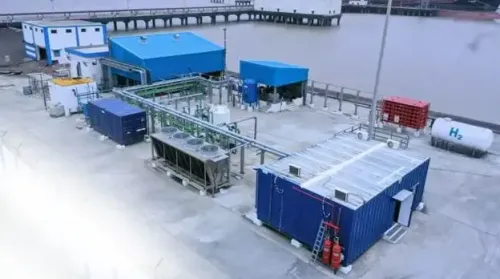
E-methanol — produced by combining green hydrogen with captured carbon dioxide — is rapidly emerging as the marine fuel of choice for next-generation vessels, primarily because it is liquid at room temperature, easier to store than hydrogen, and burns far cleaner than conventional bunker fuel. The International Maritime Organization (IMO) has tightened emission regulations and set decarbonisation milestones that have sent shipping lines scrambling for scalable alternatives. A 150 TPD facility is not a pilot — it is industrial-scale production designed to feed real offtake demand.
The project connects directly to two major national policy frameworks: the National Green Hydrogen Mission, approved in 2023, which earmarks production targets for green hydrogen and its derivatives including e-methanol, and the Sagarmala Project (launched 2015), which has been steadily upgrading India's ports with sustainable infrastructure and green-fuel capabilities. Kandla's e-Methanol plant is, in effect, both programmes finding physical form at a single berth.
India's net-zero shipping play
India has committed to a net-zero emissions target by 2070. Shipping, which accounts for roughly 2.9 per cent of global greenhouse gas emissions, is among the hardest sectors to decarbonise — and one where India, as a major port economy, stands to gain outsized advantage if it becomes an early supplier of green marine fuels. A production hub at Kandla positions India not merely as a compliant market, but as a potential regional exporter of e-methanol to vessels transiting the Indian Ocean.
For Minister Sonowal — who, as former Chief Minister of Assam, carries a personal stake in the northeastern dimension of this project — the plant is also a statement of inter-state economic integration, proof that India's landlocked northeast can plug directly into its maritime economy.
The next markers to watch: commissioning timelines for the 150 TPD facility, offtake agreements with international shipping lines, and whether similar green-fuel infrastructure follows at other major ports under the Green Hydrogen Mission's rolling targets. Kandla just set the benchmark.
Point of View
The government is threading two strategic narratives simultaneously — maritime decarbonisation and northeastern economic integration. The timing is shrewd: as IMO regulations raise the compliance cost for conventional bunker fuel, a domestic e-methanol supply chain gives Indian ports a competitive differentiator. If commissioning and offtake targets are met, this could become the template for similar green-fuel hubs at other major ports — a rare instance of climate policy generating genuine trade leverage.
NationPress
26 Sept 2026
Frequently Asked Questions
What is the e-Methanol plant at Kandla?
It is a ₹2,300 crore facility at Deendayal Port, Kandla (Gujarat) with a production capacity of 150 tonnes per day of e-methanol — a clean marine fuel — built through a collaboration between Assam and Gujarat.
What is e-methanol and why is it used in shipping?
E-methanol is produced by combining green hydrogen with captured carbon dioxide. It is liquid at room temperature, easy to store, and burns far cleaner than conventional bunker fuel, making it a viable alternative as the IMO tightens shipping emission rules.
How does the Assam-Gujarat collaboration work for this project?
Assam contributes biomass and renewable feedstock resources from the northeast, while Gujarat provides the coastal industrial infrastructure and port connectivity at Kandla, creating a cross-state supply chain for green fuel production.
Which national schemes back the Kandla e-Methanol project?
The project aligns with the National Green Hydrogen Mission (approved in 2023), which targets production of green hydrogen derivatives like e-methanol, and the Sagarmala Project (launched 2015), which upgrades Indian ports for sustainable infrastructure.
What is India's shipping decarbonisation target?
India has committed to a net-zero emissions target by 2070. The maritime sector is one of the hardest to decarbonise, and green fuel infrastructure at major ports like Kandla is a key step toward meeting both domestic and international IMO-mandated emission goals.