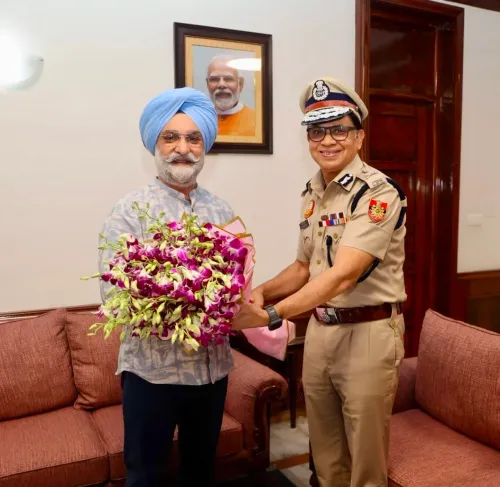
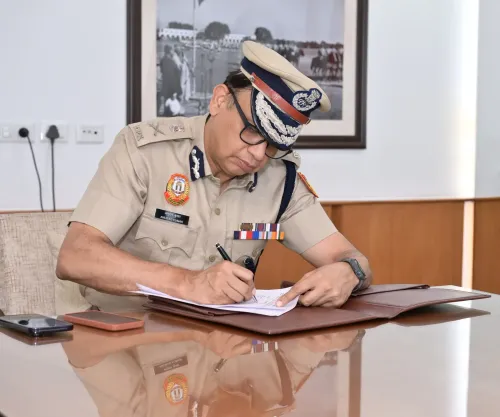
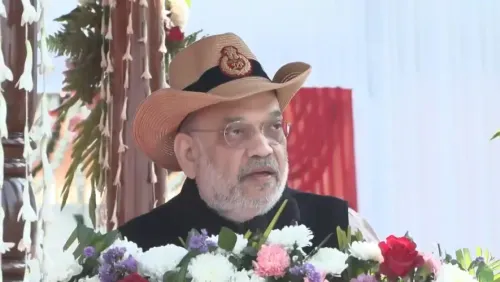
Delhi Police chief Anurag Kumar honours 202 retiring personnel with ranks
Synopsis
Delhi Police Commissioner Anurag Kumar personally pinned honorary ranks on 202 retiring officers at a Pipping Ceremony on 1 August — a dignified send-off from a force that, with over 76,000 personnel and more than 200 police stations, is among the largest metropolitan police organisations in the world.
Key Takeaways
Delhi Commissioner of Police Anurag Kumar presided over a Pipping Ceremony on 1 August at Adarsh Auditorium , Police Headquarters.
202 retiring personnel were conferred honorary ranks for exemplary service.
Delhi Police operates across 15 districts , 66 subdivisions , and more than 200 police stations .
Sanctioned strength stood at 83,762 personnel (including India Reserve Battalions) as of 2024 .
The Police Commissioner System has been in place since 1 July 1978 , following the Khosla Commission recommendations.
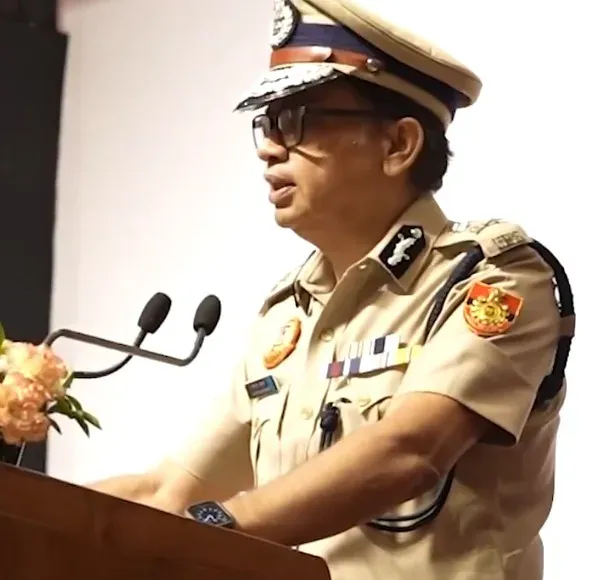
Delhi Commissioner of Police Anurag Kumar on 1 August presided over a Pipping Ceremony at the Adarsh Auditorium of Police Headquarters, where 202 retiring personnel were conferred honorary ranks in recognition of their exemplary service. The event marked a formal and dignified farewell to officers who have collectively devoted decades to policing one of the world's most demanding urban environments.
What Happened at the Ceremony
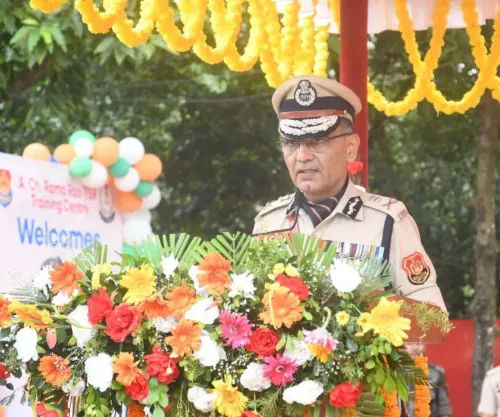
Commissioner Kumar, joined by senior officers, personally pinned the honorary ranks on each retiring personnel. According to a post shared by Delhi Police on social media platform X, the Commissioner 'lauded their lifelong dedication and wished them a healthy, joyous post-retirement journey.' In his address, Kumar told the retirees that 'the entire nation is proud of the contribution made by them,' adding, 'I want to congratulate all of those who are retiring after serving the nation.'
The Scale of Delhi Police
Delhi Police is widely regarded as one of the largest metropolitan police forces in the world — larger, by some measures, than the forces of London, Paris, New York, and Tokyo. The force operates across 15 districts, 66 police subdivisions, and more than 200 police stations. Its sanctioned strength stood at 83,762 personnel — including India Reserve Battalions — as of 2024, with operational strength above 76,000, a level reached following the recommendations of the Srivastava Committee.
Historical Context
Delhi Police's modern structure traces back to 1966, when the Union government constituted the Delhi Police Commission under Justice G.D. Khosla to address systemic challenges. The Khosla Commission's report led to a comprehensive reorganisation, including the creation of four police districts — North, Central, South, and New Delhi. The Commission also recommended the Police Commissioner System, which was formally adopted from 1 July 1978 — a structure that remains in place today.
Recent Ceremonial Milestones
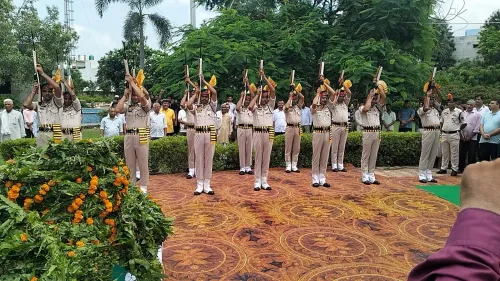
The Pipping Ceremony follows another significant event: on 1 July, Delhi Police marked its Commissionerate Day with a Ceremonial Parade at the Parade Ground, New Police Lines, Kingsway Camp. Lieutenant Governor Taranjit Singh Sandhu inspected the parade and took the salute in the presence of the Commissioner of Police. Together, these events reflect the force's emphasis on institutional tradition and personnel welfare.
As Delhi's population and policing demands continue to grow, ceremonies such as this serve as a reminder of the human capital that sustains the force — and the institutional commitment to recognising it.
Point of View
But they carry institutional weight in a force as large and complex as Delhi Police. With over 76,000 personnel policing a city whose population has multiplied faster than its civic infrastructure, retaining morale and a sense of institutional belonging is not trivial. Commissioner Kumar's personal participation — pinning ranks himself rather than delegating — signals a leadership style that values visible recognition. The deeper question is whether such ceremonies are matched by substantive improvements in service conditions, pension security, and mental health support for the force's rank and file.
NationPress
1 Aug 2026
Frequently Asked Questions
What is a Pipping Ceremony in the Delhi Police?
A Pipping Ceremony is a formal event at which retiring police personnel are conferred honorary ranks as recognition of their years of service. The ceremony involves senior officers personally pinning the new rank insignia on retirees, serving as an official and dignified farewell.
How many personnel retired in this ceremony?
A total of 202 personnel were honoured at the Pipping Ceremony held on 1 August at Adarsh Auditorium, Police Headquarters, New Delhi. Each was conferred an honorary rank for exemplary service.
Who is Anurag Kumar?
Anurag Kumar is the Commissioner of Police of Delhi, the head of one of the world's largest metropolitan police forces. He presided over the 1 August Pipping Ceremony and personally conferred honorary ranks on the 202 retiring officers.
How large is Delhi Police compared to other forces?
Delhi Police is considered one of the largest metropolitan police forces in the world, with a sanctioned strength of 83,762 personnel as of 2024 and operational strength above 76,000. It operates across 15 districts, 66 subdivisions, and more than 200 police stations — larger than the forces of London, Paris, New York, and Tokyo by some measures.
When was the Police Commissioner System adopted in Delhi?
The Police Commissioner System was adopted in Delhi from 1 July 1978, following the recommendations of the Delhi Police Commission led by Justice G.D. Khosla, which was constituted in 1966 to address systemic challenges faced by the force.