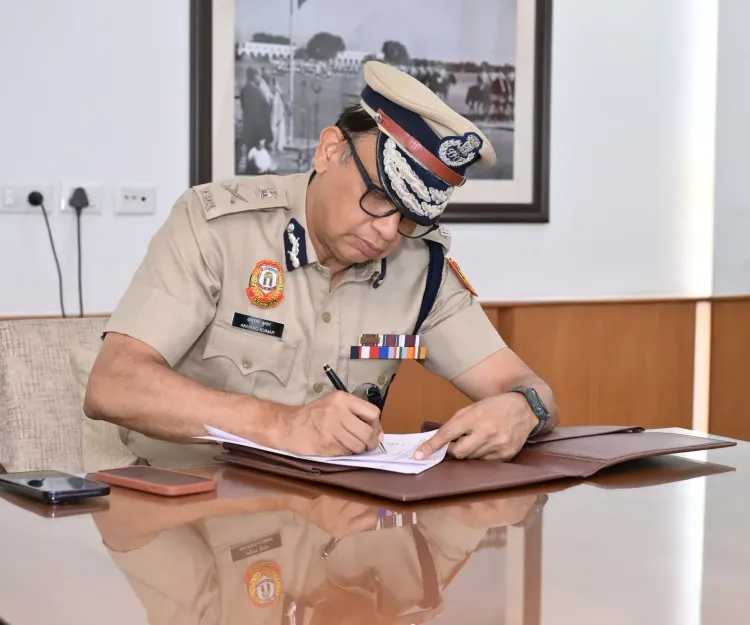
Anurag Kumar takes charge as Delhi Police Commissioner, succeeds Satish Golcha
Synopsis
A veteran of India's domestic intelligence establishment, Anurag Kumar has moved from the shadows of the Intelligence Bureau to the most visible policing post in the country. His appointment — cleared by the ACC just a day before he took charge — ends Satish Golcha's tenure nearly two years early, signalling a deliberate recalibration at the helm of Delhi Police.
Key Takeaways
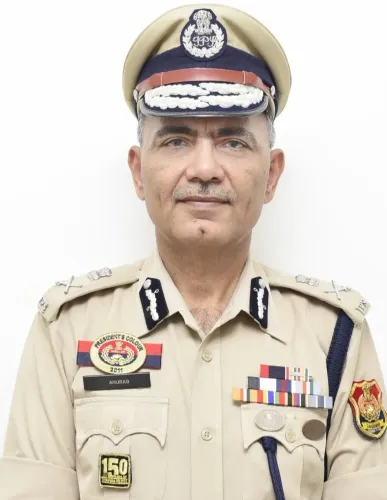
Anurag Kumar , former IB Special Director , took charge as Delhi Police Commissioner on 17 July .
He succeeds Satish Golcha , whose tenure was cut short ahead of its scheduled end in April 2027 ; Golcha has been directed to report to the Lieutenant Governor of Delhi .
Kumar is a 1994-batch IPS officer of the AGMUT cadre with nearly 32 years of experience in policing, administration, and intelligence.
His appointment was cleared by the Appointments Committee of the Cabinet (ACC) , headed by Prime Minister Narendra Modi , on Thursday .
Kumar holds the Police Medal for Meritorious Service (2010) and the President's Police Medal for Distinguished Service (2016) .
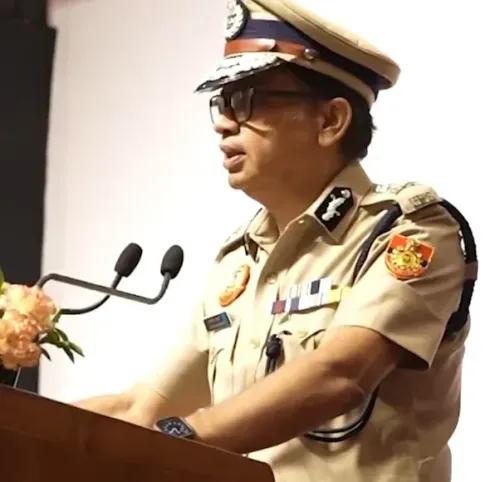
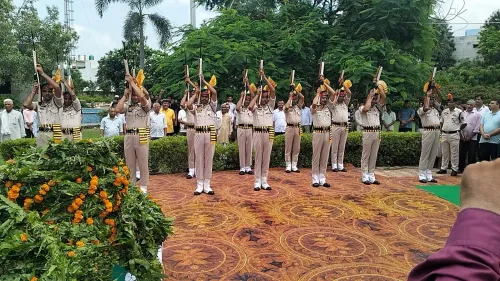
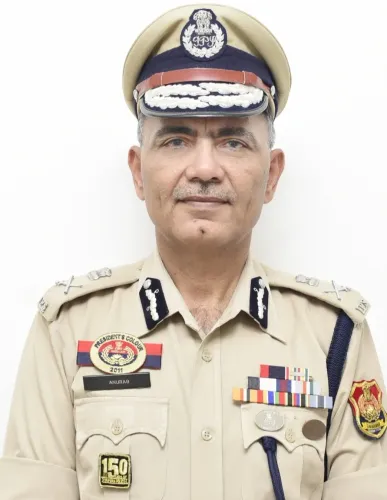
Former Intelligence Bureau (IB) Special Director Anurag Kumar on Friday, 17 July took charge as the new Commissioner of Delhi Police, bringing with him nearly 32 years of experience in policing, administration, and intelligence operations. Outgoing Commissioner Satish Golcha formally handed over the ceremonial baton at the Delhi Police Headquarters in New Delhi.
The Appointment and Transition
A 1994-batch IPS officer of the AGMUT cadre, Kumar succeeds Golcha, a 1992-batch officer who had assumed charge as Delhi Police Commissioner in August last year. Although Golcha's tenure was scheduled to run until April 2027, the government directed him to report to the office of the Lieutenant Governor of Delhi.
Kumar's repatriation to his parent AGMUT cadre was approved on Thursday by the Appointments Committee of the Cabinet (ACC), headed by Prime Minister Narendra Modi. Following the repatriation clearance, the ACC formally approved his appointment as Commissioner.
An official order stated: 'With the approval of the Competent Authority, Anurag Kumar, IPS (AGMUT:1994), is hereby appointed as Commissioner of Police, Delhi, with effect from the date of assumption of charge and until further orders.'
Kumar's Intelligence and Security Background
During his tenure at the Intelligence Bureau — India's premier domestic intelligence agency — Kumar handled several critical portfolios spanning national security, counter-terrorism strategy, intelligence gathering and analysis, and other sensitive security matters. An engineering graduate, he is recognised for distinguished service with some of the highest honours in Indian policing.
He was awarded the Police Medal for Meritorious Service in 2010 and the President's Police Medal for Distinguished Service in 2016 for exceptional contributions to the force.
What the Role Demands
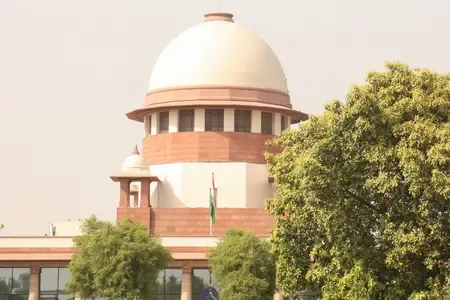
As Delhi Police Commissioner, Kumar will oversee security and law-and-order management in the national capital — a city that houses key constitutional and administrative institutions including Parliament, Rashtrapati Bhavan, the Prime Minister's Office, the Supreme Court, and numerous foreign embassies. The assignment is widely regarded as one of the most demanding policing posts in the country.
Significance of the Appointment
Kumar's shift from the intelligence establishment to frontline policing reflects a broader pattern of deploying IB veterans in high-stakes administrative roles. His deep familiarity with counter-terrorism frameworks and internal security architecture is expected to inform Delhi Police's operational priorities. Notably, this transition comes ahead of several high-profile events scheduled in the capital in the coming months, making continuity of security planning a key priority for the incoming Commissioner.
Point of View
And it has gone largely unremarked. Transferring a sitting Delhi Police Commissioner to the LG's office mid-tenure is unusual and warrants scrutiny of what prompted the recalibration. Kumar's IB pedigree is impressive, but intelligence work and frontline metropolitan policing demand different instincts. Whether his counter-terrorism expertise translates into effective law-and-order governance for a city of 20 million will be the test that matters — not the medals on his uniform.
NationPress
16 Oct 2026
Frequently Asked Questions
Who is the new Delhi Police Commissioner?
Anurag Kumar, a 1994-batch IPS officer of the AGMUT cadre and former Special Director of the Intelligence Bureau, is the new Commissioner of Delhi Police. He took charge on 17 July, succeeding Satish Golcha.
Why was Satish Golcha replaced before his tenure ended?
Satish Golcha's tenure as Delhi Police Commissioner was scheduled to continue until April 2027, but the government directed him to report to the office of the Lieutenant Governor of Delhi ahead of schedule. No official reason for the early transfer has been stated publicly.
Who approved Anurag Kumar's appointment as Delhi Police Commissioner?
The Appointments Committee of the Cabinet (ACC), headed by Prime Minister Narendra Modi, approved Kumar's repatriation to the AGMUT cadre and his appointment as Commissioner on Thursday, a day before he assumed charge.
What is Anurag Kumar's background and experience?
Kumar has nearly 32 years of experience spanning policing, administration, and intelligence operations. During his tenure at the Intelligence Bureau, he handled national security, counter-terrorism strategy, and intelligence analysis. He has been awarded the Police Medal for Meritorious Service (2010) and the President's Police Medal for Distinguished Service (2016).
What are the key responsibilities of the Delhi Police Commissioner?
The Delhi Police Commissioner oversees security and law-and-order management across the national capital, which houses Parliament, Rashtrapati Bhavan, the Prime Minister's Office, the Supreme Court, and numerous foreign embassies — making it one of the most demanding policing assignments in India.