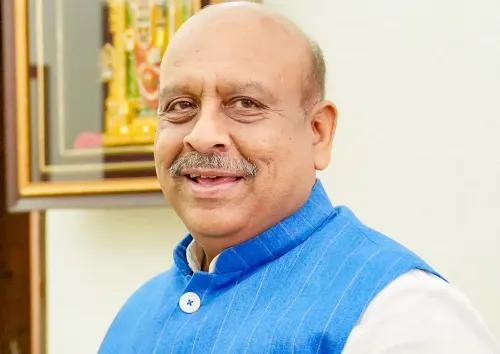
Delhi Speaker Vijender Gupta backs uniform legislative procedures for India
Synopsis
Presiding officers from five state legislatures met in Mysuru on 12 May to begin framing a Uniform Model of Rules of Procedure for Indian legislatures — a reform that, if adopted, could standardise how laws are debated and passed across the country. Delhi Speaker Vijender Gupta called it an institutional necessity in the age of digital governance.
Key Takeaways
Delhi Assembly Speaker Vijender Gupta endorsed a Uniform Model of Rules of Procedure for legislative bodies at a consultation in Mysuru on 12 May 2025 .
The meeting was chaired by Uttar Pradesh Vidhan Sabha Speaker Satish Mahana and attended by speakers from Maharashtra, Nagaland, Himachal Pradesh , and Karnataka .
Speaker Gupta cited Article 118 and Article 208 of the Constitution as the legal basis for legislatures to voluntarily adopt harmonised procedures.
The initiative follows a decision at the 85th All India Presiding Officers' Conference held in Patna .
Gupta described uniform legislative procedures as an institutional necessity in the era of digital legislatures and technology-driven governance.
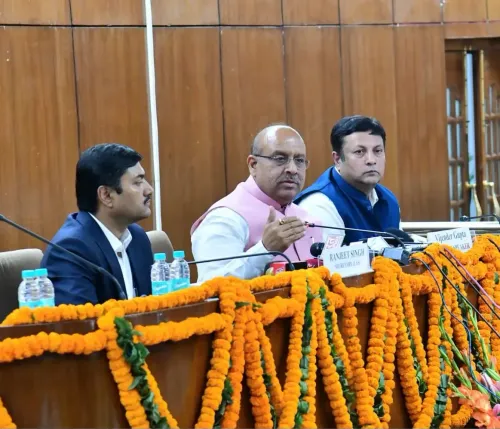
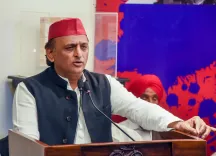
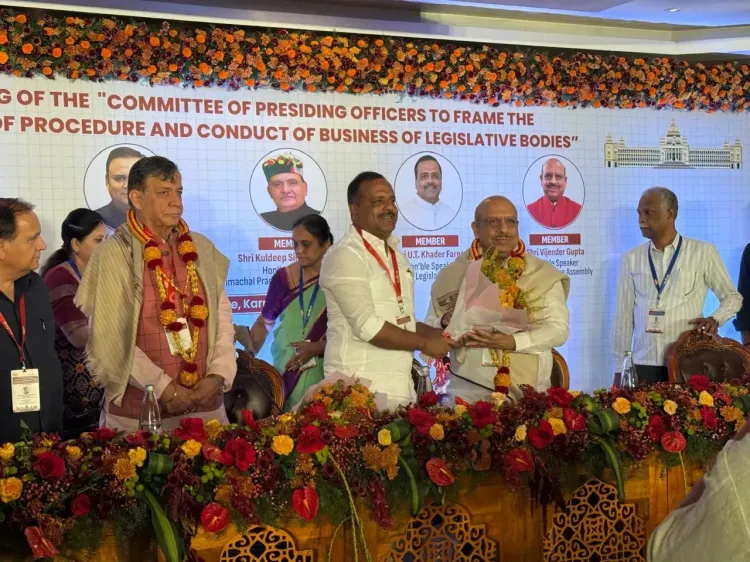
Delhi Assembly Speaker Vijender Gupta on Tuesday, 12 May endorsed a proposal to develop a Uniform Model of Rules of Procedure and Conduct of Business for legislative bodies across India, speaking at a preliminary consultation held in Mysuru. The endorsement marks a significant step in a nationally coordinated effort to harmonise parliamentary procedures across state legislatures and the Union.
What Speaker Gupta Said
Addressing the Preliminary Meeting of the Committee of Presiding Officers convened to frame the uniform procedural model, Speaker Gupta stated, "Uniformity in legislative procedures is no longer merely desirable; it has become an institutional necessity in the era of digital legislatures and technology-driven governance."
He further said that harmonised rules of procedure would strengthen transparency, executive accountability, and coherence across India's democratic institutions — framing the initiative not as an administrative exercise but as a structural democratic reform.
Key Participants and Chairmanship
The meeting was held under the chairmanship of Uttar Pradesh Vidhan Sabha Speaker Satish Mahana. Also in attendance were Maharashtra Assembly Speaker Ram Shinde, Nagaland Assembly Speaker Sharingain Longkuner, Himachal Pradesh Assembly Speaker Kuldeep Singh Pathania, and Karnataka Assembly Speaker Khadeer Fareed. The broad cross-regional representation signals a serious institutional push rather than a symbolic consultation.
Constitutional and Legal Basis
Speaker Gupta grounded the proposal in existing constitutional provisions. He noted that Article 118 of the Constitution empowers both Houses of Parliament to frame rules regulating their procedure and conduct of business, while Article 208 grants similar powers to state legislatures. In Delhi's specific case, Section 33 of the Government of National Capital Territory of Delhi Act, 1991, empowers the Delhi Assembly to frame its own Rules of Procedure, provided they remain consistent with the Rules of Procedure of the Lok Sabha.
He argued that these provisions establish the sovereignty of legislatures in regulating their internal functioning while also enabling them to voluntarily adopt tested parliamentary practices and procedural innovations in the broader democratic interest.
Background and Context
Speaker Gupta welcomed the decision taken earlier at the 85th All India Presiding Officers' Conference held in Patna, describing it as a "historic and forward-looking institutional reform" capable of bringing greater coherence, transparency, and efficiency to legislative functioning across India. Notably, this initiative comes at a time when several state legislatures have faced criticism over inconsistent procedural standards and varying degrees of transparency in conduct of business.
The move reflects a growing consensus among presiding officers that a shared procedural baseline — while preserving each legislature's constitutional autonomy — could reduce procedural arbitrariness and strengthen democratic accountability nationwide. Further meetings of the committee are expected as the drafting process advances.
Point of View
And the voluntary nature of this framework is both its strength and its limitation — adoption will depend on political will that varies sharply across states. More critically, the real test of any harmonised procedure is not uniformity on paper but enforcement in practice: several state assemblies have routinely suspended rules mid-session when inconvenient. Without a credible review mechanism, this risks becoming another well-intentioned resolution that presiding officers endorse in conference halls but quietly shelve at home.
NationPress
30 Sept 2026
Frequently Asked Questions
What is the Uniform Model of Rules of Procedure for Legislative Bodies?
It is a proposed common procedural framework for all legislative bodies in India, aimed at standardising how legislatures conduct their business. The initiative was formally initiated following a decision at the 85th All India Presiding Officers' Conference in Patna and is being developed by a Committee of Presiding Officers.
Why did Delhi Assembly Speaker Vijender Gupta endorse this proposal?
Speaker Gupta endorsed the proposal at a preliminary consultation in Mysuru on 12 May, arguing that uniform legislative procedures have become an institutional necessity in the era of digital governance. He said harmonised rules would strengthen transparency, executive accountability, and coherence across India's democratic institutions.
Which states were represented at the Mysuru consultation?
The consultation was attended by speakers from Delhi, Uttar Pradesh, Maharashtra, Nagaland, Himachal Pradesh, and Karnataka. The meeting was chaired by UP Vidhan Sabha Speaker Satish Mahana.
What is the constitutional basis for this legislative reform?
Article 118 of the Constitution empowers Parliament to frame its own rules of procedure, while Article 208 grants similar powers to state legislatures. These provisions allow legislatures to voluntarily adopt shared practices without compromising their constitutional autonomy.
What happens next after the Mysuru consultation?
The Committee of Presiding Officers is expected to continue its work on drafting the uniform procedural model following the preliminary meeting. Further consultations and drafting sessions are anticipated before a final framework is presented to the broader All India Presiding Officers' Conference.