Delhi Speaker Vijender Gupta launches workshop for House panel chiefs
Synopsis
Delhi Assembly Speaker Vijender Gupta used the inauguration of a committee chairpersons' workshop to send a pointed message: the real work of the legislature happens in committee rooms, not on the floor. With Delhi's new Assembly freshly constituted, the push to activate Standing Committees early is a deliberate bet on institutional accountability over political theatre.
Key Takeaways
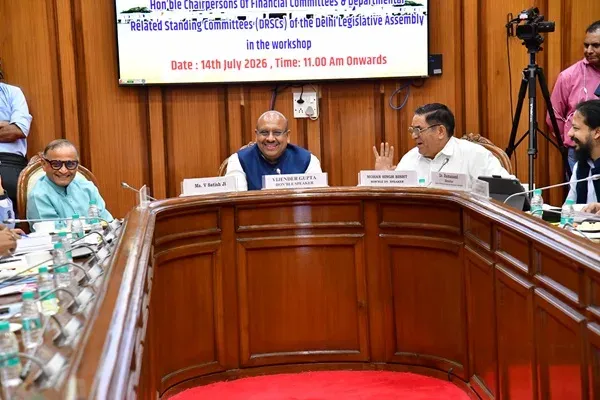
Delhi Assembly Speaker Vijender Gupta inaugurated a workshop for chairpersons of Financial Committees and DRSCs on 14 July .
The workshop covered constitutional, procedural, and functional aspects of legislative committee work.
Gupta stressed that committee effectiveness will be judged by quality of deliberations and relevance of recommendations , not meeting frequency.
Standing Committees cover sectors including public finance, health, education, urban development, transport , and environmental sustainability .
The initiative is aimed at deepening the Delhi Legislative Assembly's engagement with residents' everyday governance concerns.
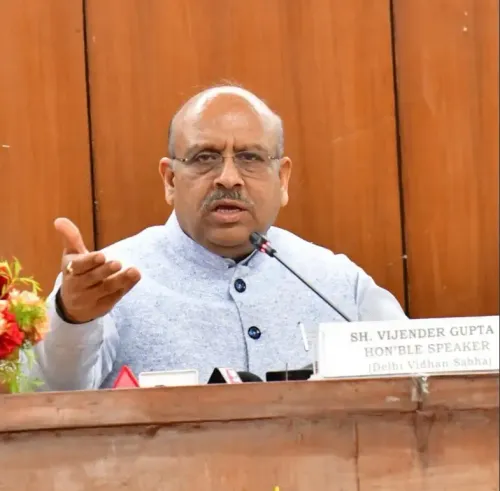
Delhi Legislative Assembly Speaker Vijender Gupta on Tuesday, 14 July inaugurated a specialised workshop for the newly-appointed chairpersons of the Assembly's Financial Committees and Department-Related Standing Committees (DRSCs), underscoring the central role these panels play in ensuring executive accountability and transparent governance in the capital.
What the Workshop Covered
The session was designed to orient committee chiefs on the constitutional, procedural, and functional dimensions of their respective panels. Topics ranged from legislative oversight mechanisms to the scrutiny of public expenditure and departmental performance review. Officials familiar with the programme said the training aims to equip chairpersons with the tools needed for evidence-based deliberation rather than routine procedural compliance.
What Speaker Gupta Said
Addressing the assembled chairpersons, Gupta emphasised that the committee system is where the legislature's most substantive work is conducted. 'Much of the Legislature's detailed and substantive work takes place through its committee system, where Members examine policies, scrutinise public expenditure, review departmental performance and assess the implementation of government programmes through informed and constructive deliberation,' he said.
He added that committees represent 'one of the finest traditions of legislative functioning,' arguing that 'patient deliberation, scrutiny and evidence-based recommendations' strengthen not only executive accountability but also the overall quality of governance. Gupta told the new chairpersons that their appointments were 'not merely a procedural assignment but an opportunity to strengthen one of the Legislature's most vital institutions.'
Why Standing Committees Matter
The Speaker noted that Standing Committees have grown into a principal pillar of legislative democracy as governance has expanded in scale and complexity. These panels, he observed, provide an institutional space where elected representatives can rise above the immediacy of political debate to collectively examine issues — engaging with officials, domain experts, and citizen stakeholders across interconnected sectors including public finance, urban development, health, education, transport, technology, and environmental sustainability.
Gupta pointed out that committee recommendations have repeatedly improved administration, refined public policy, and strengthened public confidence in democratic institutions — outcomes that go well beyond the headline activity of floor debates.
The Accountability Imperative
Stressing that citizens today expect more than mere representation, the Speaker said the public now demands transparency, accountability, responsiveness, and visible improvements in service delivery. The newly constituted Standing Committees, he argued, give the Delhi Legislative Assembly a concrete opportunity to deepen its engagement with the everyday concerns of the capital's residents.
Gupta was emphatic that the effectiveness of these committees would ultimately be measured not by the volume of meetings they hold, but by the quality of deliberations, the relevance of their recommendations, and the tangible difference they make to governance on the ground.
Broader Context
The workshop comes at a time when Delhi's legislative machinery is being reconstituted following recent Assembly elections. Strengthening committee oversight is widely seen as critical to improving the capital's delivery on urban services — an area that has been a persistent flashpoint in Delhi politics. This initiative signals an intent to institutionalise scrutiny mechanisms early in the new Assembly's tenure, rather than allowing committees to remain dormant, as critics have argued has happened in previous terms.
Point of View
But its value depends entirely on what follows. Delhi's Standing Committees have historically struggled with irregular sittings and limited follow-through on recommendations — a pattern that has blunted legislative oversight in the capital for years. Speaker Gupta's framing is the right one: effectiveness measured by outcomes, not meetings. The harder question is whether the Assembly will build in a public reporting mechanism to hold committees — and itself — to that standard. Without one, this workshop risks being a well-intentioned orientation that changes little in practice.
NationPress
13 Oct 2026
Frequently Asked Questions
What was the workshop inaugurated by Delhi Assembly Speaker Vijender Gupta about?
The workshop was organised to train newly-appointed chairpersons of the Delhi Assembly's Financial Committees and Department-Related Standing Committees (DRSCs) on their constitutional, procedural, and functional responsibilities. It was inaugurated by Speaker Vijender Gupta on 14 July and focused on strengthening legislative oversight and accountability.
Who are the Department-Related Standing Committees (DRSCs) in the Delhi Assembly?
DRSCs are specialised legislative panels in the Delhi Legislative Assembly assigned to scrutinise specific government departments. They examine policies, review departmental performance, assess programme implementation, and make evidence-based recommendations to improve governance across sectors such as health, education, urban development, and transport.
Why did Speaker Gupta stress the importance of committee work?
Gupta argued that committees are where the legislature's most substantive and detailed work occurs, away from the political theatre of floor debates. He said committee recommendations have historically improved administration and public policy, and that citizens now expect tangible improvements in service delivery — not just representation.
How will the effectiveness of these committees be measured?
According to Speaker Gupta, committee effectiveness will be judged not by the number of meetings held but by the quality of deliberations, the relevance of recommendations made, and the positive difference those recommendations make to governance and public service delivery in Delhi.
Why is this workshop significant for Delhi's new Assembly?
The workshop signals an intent to activate oversight mechanisms early in the new Assembly's tenure. Strengthening committee oversight is seen as critical to improving Delhi's urban service delivery — a persistent political flashpoint — and to institutionalising accountability before governance lapses can take root.