Did Delhi Minister Manjinder Singh Sirsa Refute AQI Data Manipulation Claims?

Synopsis
In a bold defense, Delhi's Environment Minister refutes claims of AQI data manipulation. With a notable drop in air quality index figures from last year, he emphasizes the effectiveness of science-driven strategies in combating pollution. Discover how comprehensive monitoring and community efforts are shaping Delhi's air quality narrative.
Key Takeaways
Delhi's AQI has improved from 357 to 218 year-on-year.
40 automatic air monitoring stations ensure data integrity.
Government initiatives include mechanical road sweeping and anti-smog guns.
Intensified winter action plan aims to address pollution hotspots.
Community participation is crucial for sustaining air quality improvements.
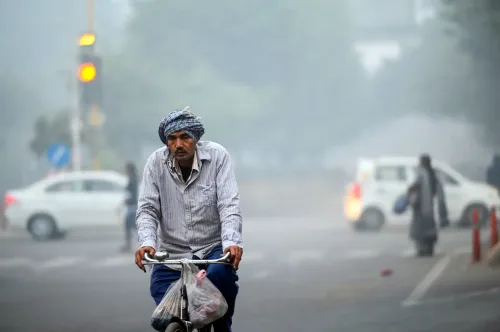
New Delhi, Oct 31 (NationPress) Environment Minister Manjinder Singh Sirsa asserted on Friday that there has been a significant year-on-year enhancement in Delhi's air quality index (AQI). He labeled certain media reports questioning the credibility of Delhi’s AQI data as “misinformed and misleading.”
“Currently, Delhi's AQI is at 218, a substantial reduction from 357 on the same date last year. This indicates that our science-driven initiatives and enforcement measures are yielding tangible results,” he stated.
Sirsa firmly rejected the allegations of data manipulation, emphasizing, “Let me clarify — the 40 automatic air monitoring stations in Delhi are tamper-proof and fully automated. No one can alter the data.”
He added, “Monitoring is carried out by the DPCC, CPCB, and IMD, with results published across multiple platforms simultaneously. Speculation regarding data manipulation is both irresponsible and factually incorrect.”
Sirsa noted that this year's air quality has visibly improved, despite a return to various public activities. “Under Chief Minister Rekha Gupta, we have demonstrated that effective governance and environmental consciousness can coexist. Even with a 21% surge in construction work and an 8% rise in new vehicle registrations, our air quality continues to improve,” he remarked.
He attributed this progress to diligent monitoring, strict enforcement, and community engagement that collectively kept pollution levels manageable throughout the city. “The people of Delhi deserve cleaner air. This improvement is only the beginning — we will sustain this momentum through coordinated, science-backed efforts,” he asserted.
Additionally, he announced plans to enhance the winter action plan for 2025, focusing on 13 identified pollution hotspots. Sirsa chaired a high-level review meeting with key enforcement agencies, including the Environment Department, DPCC, MCD, NDMC, DSIIDC, DDA, Transport Department, and Traffic Police, to ensure effective pollution control measures are executed throughout Delhi.
During this review, he examined the status of all 13 pollution hotspots, which are targeted with specific interventions based on major pollution sources such as dust from unpaved roads, construction and demolition activities, open dumping, and the open burning of waste.
Sirsa stated, “Our entire governmental apparatus — MCD, DDA, NDMC, DSIDC, and others — is functioning in complete coordination.”
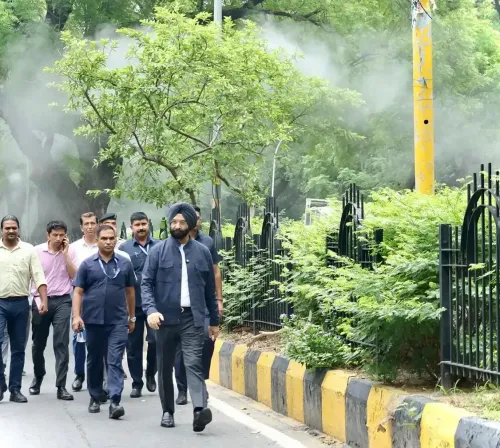
To tackle dust pollution, mechanical road sweeping has been conducted over nearly 3,000 km of city roads daily, with 280 water sprinklers and 390 fixed and mobile anti-smog guns continuously operational, including at 91 high-rise buildings.
The Minister also evaluated the management of construction and demolition waste, directing MCD and DSIIDC to ensure regular inspections of all 500 C&D waste sites to enforce strict adherence to pollution control regulations.
Point of View
It is imperative to approach the situation with neutrality. While the Minister's claims of improved air quality and robust monitoring systems are commendable, ongoing scrutiny and transparency remain essential to uphold public trust in environmental data.
NationPress
22 Sept 2026
Frequently Asked Questions
What is the current AQI in Delhi?
As of now, Delhi's AQI stands at 218, a significant improvement from 357 on the same day last year.
How are the AQI data monitored?
Monitoring is conducted through 40 automatic air monitoring stations operated by DPCC, CPCB, and IMD, ensuring data integrity.
What measures are being taken to improve air quality?
The government has implemented mechanical road sweeping, deployed anti-smog guns, and is focusing on pollution hotspots to enhance air quality.
Are there any ongoing initiatives for the winter season?
Yes, there are plans to intensify the winter action plan for 2025, specifically targeting identified pollution hotspots.
How can the public contribute to cleaner air?
Community participation in monitoring and reporting pollution sources, alongside adherence to government regulations, can significantly assist in improving air quality.