Delimitation keeps state seat ratio, south to get 195: Meghwal
Synopsis
Ahead of Parliament's Special Session, Law Minister Arjun Ram Meghwal says delimitation will not shrink the south's voice. By his figures, the five southern states would grow from 129 to 195 Lok Sabha seats, with their share edging up from 23.76% to 23.90% in an expanded 816-member House.
Key Takeaways
Law Minister Arjun Ram Meghwal said on 28 November 2026 that delimitation seeks to maintain the current ratio of seats among states.
The Special Session of Parliament runs from 30 November to 3 December , when the Constitution (131st Amendment) Bill, 2026 is expected to be reintroduced.
The package would enable delimitation on the 2011 Census and raise the Lok Sabha cap from 550 to 850 .
Southern states would go from 129 of 543 seats ( 23.76% ) to 195 of 816 ( 23.90% ), according to Meghwal.
Projected seats: Tamil Nadu 59 , Karnataka 42 , Andhra Pradesh 38 , Kerala 30 , Telangana 26 .
The bills also aim to operationalise one-third reservation for women in Parliament and state Assemblies.
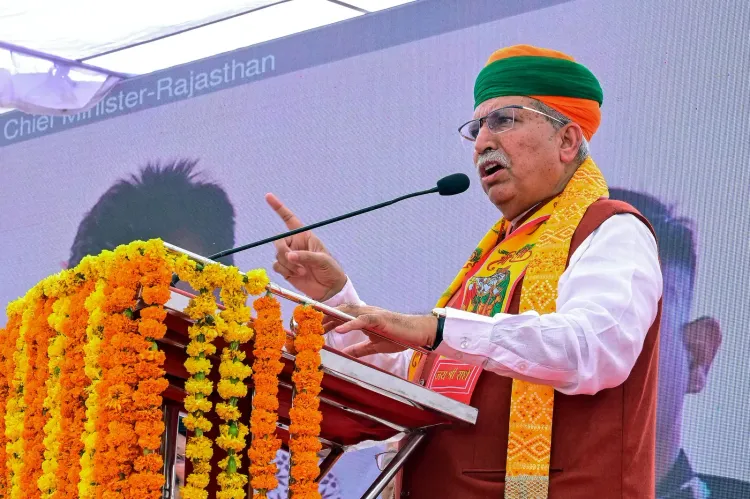
Union Law and Justice Minister Arjun Ram Meghwal on Saturday, 28 November 2026, said the proposed delimitation exercise seeks to preserve the existing ratio of Lok Sabha seats among states. He described this as one of the proposal's positive aspects. The remarks, made in New Delhi, come days before a Special Session of Parliament where the government is expected to bring the delimitation package back to the House.
In a post on X, Meghwal said: “One positive aspect of the delimitation proposal is that it also seeks to maintain the current ratio of seats among states.” He shared an illustration showing the projected seat increase for the five southern states, a region that has long been sensitive to any redrawing of parliamentary representation.
What the Government Plans to Reintroduce
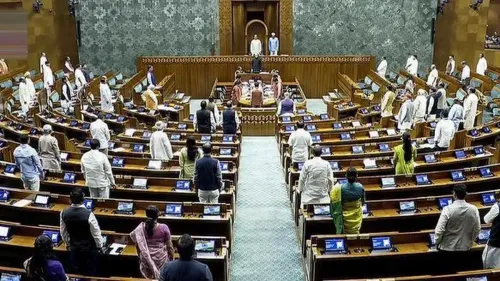
The Special Session of Parliament is scheduled from 30 November to 3 December. During the session, the government is expected to reintroduce the Constitution (131st Amendment) Bill, 2026, which includes the Delimitation Bill, 2026 and the Union Territories Laws (Amendment) Bill, 2026.
The legislative package seeks to enable delimitation based on the 2011 Census. It would raise the maximum Lok Sabha seat limit from 550 to 850 and operationalise one-third reservation for women in Parliament and state Assemblies.
Notably, the minister's illustration is based on an expanded House of 816 seats, which falls within the proposed ceiling of 850.
What Meghwal Said on the South's Share
Meghwal argued that every region deserves balanced representation. “Every state in the country, whether in the south or the north, has its own importance. As development progresses, it is essential to maintain a balance in every state's representation,” he said.
“The five southern states currently hold 129 of 543 Lok Sabha seats (23.76 per cent). Under the proposed expansion to 816 seats, this rises to 195 seats (23.90 per cent), indicating a proportionate increase. The same pattern holds true for each state individually,” the minister added.
State-wise Seat Projections
The state-wise figures shared by Meghwal and the government are as follows:
- Karnataka would rise from 28 seats (5.15%) to 42 seats, with its percentage share unchanged.
- Andhra Pradesh would rise from 25 seats (4.60%) to 38 seats, with its 4.60% share intact.
- Telangana would rise from 17 seats (3.13%) to 26 seats, with its share unchanged.
- Tamil Nadu would rise from 39 seats to 59 seats, keeping its 7.23% share.
- Kerala would rise from 20 seats to 30 seats, keeping its 3.68% share.
Taken together, the southern bloc would grow from 129 of 543 seats to 195 of the proposed 816. By the government's figures, its share would move from 23.76% to 23.90%.
Why the Clarification Matters
This comes amid longstanding concern among southern states about delimitation. Several of these states have stabilised their populations faster than parts of the north, and a strictly population-based reallocation has been feared to dilute their weight in Parliament.
The minister's outreach appears aimed at addressing those apprehensions before the bills return to Parliament. The government's message is that every state would gain seats in absolute terms while keeping its relative share.
The timing is also significant. The delimitation package is linked to operationalising women's reservation, which makes the outcome of the Special Session consequential beyond the north-south debate.
The coming week's proceedings will show whether the government's assurance on proportional representation is enough to build consensus across party and regional lines.
Point of View
But it raises a question the government has not answered: if every state's share is effectively frozen, what work is the 2011 Census actually doing in this exercise? Proportional expansion also widens absolute gaps, because larger northern states would gain far more seats in raw numbers even as percentages hold. There is also a gap between the 850-seat ceiling in the bill and the 816 figure in the minister's illustration, which leaves room for future tinkering. A formula written into law, not a social media chart, is what will reassure the southern states.
NationPress
28 Nov 2026
Frequently Asked Questions
What did Arjun Ram Meghwal say about delimitation?
Law Minister Arjun Ram Meghwal said the delimitation proposal seeks to maintain the current ratio of Lok Sabha seats among states. He made the remark in a post on X on 28 November 2026.
How many Lok Sabha seats will southern states get after delimitation?
According to Meghwal, the five southern states would go from 129 seats to 195 seats in a proposed 816-member Lok Sabha. Their share would move from 23.76% to 23.90%.
What is the Constitution (131st Amendment) Bill, 2026?
It is a legislative package that includes the Delimitation Bill, 2026 and the Union Territories Laws (Amendment) Bill, 2026. It seeks to enable delimitation on the 2011 Census, raise the Lok Sabha cap from 550 to 850, and operationalise one-third reservation for women.
When is the Special Session of Parliament?
The Special Session of Parliament is scheduled from 30 November to 3 December 2026. The government is expected to reintroduce the delimitation-related bills during this session.
How will delimitation affect Tamil Nadu and Kerala?
Tamil Nadu would rise from 39 to 59 seats and Kerala from 20 to 30 seats, according to the government. Their shares of 7.23% and 3.68% respectively would remain unchanged.