Is Dense Fog Engulfing Delhi-NCR While Air Quality Remains 'Very Poor'?
Synopsis
As Delhi-NCR grapples with a thick layer of fog and alarming air quality, residents face serious challenges in their daily lives. With visibility plummeting and pollution levels soaring, this situation raises urgent health concerns for the city's inhabitants.
Key Takeaways
Dense fog is severely impacting visibility and daily life in Delhi-NCR.
Flight operations are experiencing significant disruptions due to low visibility.
Delhi's air quality is categorized as 'very poor', with alarming AQI levels reported.
Health risks associated with high pollution levels are a growing concern.
Authorities are implementing measures to tackle the persistent air quality issues.
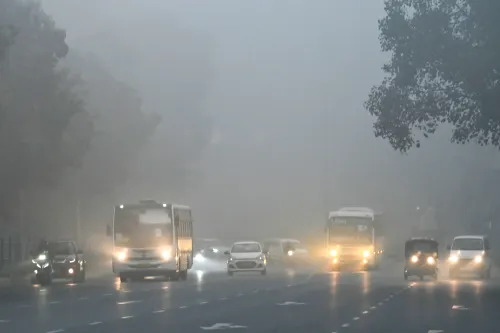
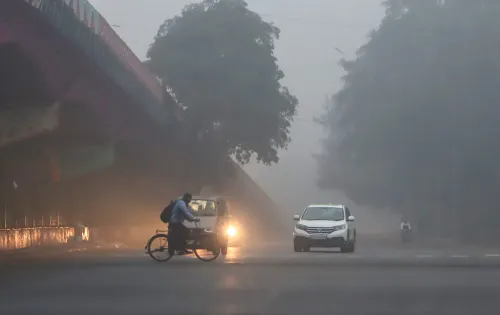
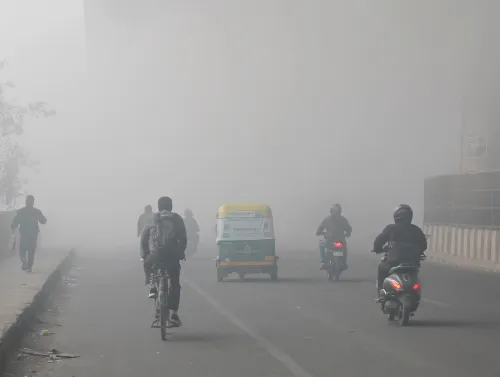
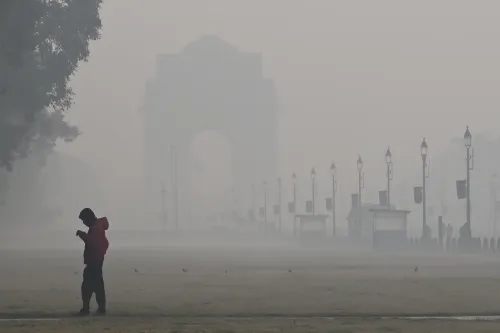
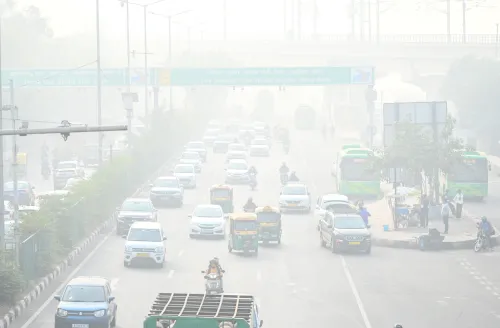
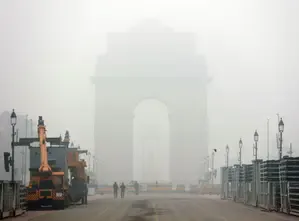
New Delhi, Dec 23 (NationPress) Dense fog has shrouded Delhi-NCR on Tuesday, drastically impairing visibility and worsening already subpar air quality. A thick cover of fog and smog enveloped the city in the early morning hours, disrupting daily activities and presenting significant challenges for commuters.
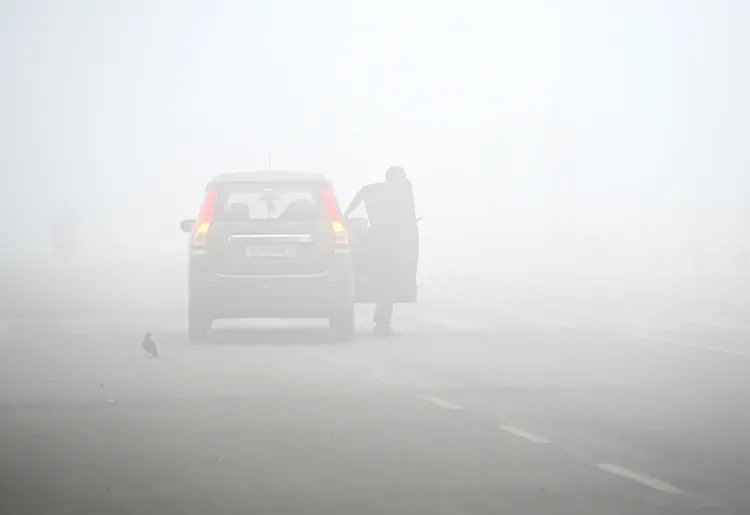
Flight operations at the Indira Gandhi International Airport were notably affected by low visibility, leading to numerous delays and cancellations over the past few days due to persistent smog and dense fog in the national capital. Road traffic also faced severe disruptions, particularly in areas like the Rajokri flyover in south Delhi, where visibility dropped to alarmingly low levels. Vehicles were seen moving cautiously with headlights and parking lights activated.
Even with the Commission for Air Quality Management (CAQM) executing all measures under Stage IV of the Graded Response Action Plan (GRAP) across the NCR, the air quality remained unbearable. The Central Pollution Control Board (CPCB) reported that Delhi’s average Air Quality Index (AQI) at 7 a.m. on Tuesday was approximately 390, categorizing it as ‘very poor’.
Several regions in the national capital recorded AQI levels exceeding 400, indicating severe pollution. For instance, Srinivaspuri noted an AQI of 438, Mundka 422, Okhla 396, RK Puram 376, Anand Vihar 397, and Noida Sector 1 at 403. The Akshardham area was also blanketed in smog, registering an AQI of around 384.
Other NCR cities also experienced poor air quality. Gurugram’s Sector 51 had an AQI of 386, while Vasundhara in Ghaziabad reported 374. Bahadurgarh, adjacent to Delhi, faced extremely low visibility, complicating travel for motorists. The AQI in Bahadurgarh peaked at 308, with a minimum temperature recorded at 7 degrees Celsius and cold winds blowing at approximately 10 km per hour.
Weather stations reported concerning visibility levels. At Palam, visibility was reduced to a mere 50 metres with west-southwesterly winds at 5 kmph at 8 a.m. Meanwhile, Safdarjung noted visibility of 100 metres under calm wind conditions.
Noida faced a severe combination of a cold wave and detrimental pollution. Pollution levels in various sectors reached the ‘extremely poor’ category, with Sector 62 at 396, Sector 116 at 426, Sector 125 at 420, Knowledge Park 3 in Greater Noida at 339, and Knowledge Park 5 at 407.
The concentration of PM2.5 and PM10 particles remained alarmingly high throughout the region, raising significant health concerns for residents as winter conditions deteriorate.
Point of View
It is crucial to highlight the persistent environmental challenges that Delhi-NCR faces. The suffocating air quality, exacerbated by natural weather patterns, poses significant health risks to the population. It is essential that authorities continue to prioritize effective measures to combat pollution and protect the well-being of residents.
NationPress
22 Sept 2026
Frequently Asked Questions
What is the current air quality index in Delhi?
As of 7 a.m. on Tuesday, Delhi's average AQI was approximately 390, categorized as 'very poor'.
How is the fog affecting transportation?
The dense fog has severely disrupted flight operations at Indira Gandhi International Airport, leading to numerous delays and cancellations. Road traffic is also significantly affected, particularly in low visibility areas.
What health risks does poor air quality pose?
Poor air quality can lead to various health issues including respiratory problems, heart disease, and other serious conditions, especially for vulnerable populations.
Are there any measures in place to improve air quality?
The Commission for Air Quality Management (CAQM) has implemented all measures under Stage IV of the Graded Response Action Plan (GRAP) to combat pollution in the NCR.
What areas in Delhi recorded the highest AQI levels?
Areas like Srinivaspuri recorded an AQI of 438, Mundka 422, and several others exceeded 400, indicating severe pollution.