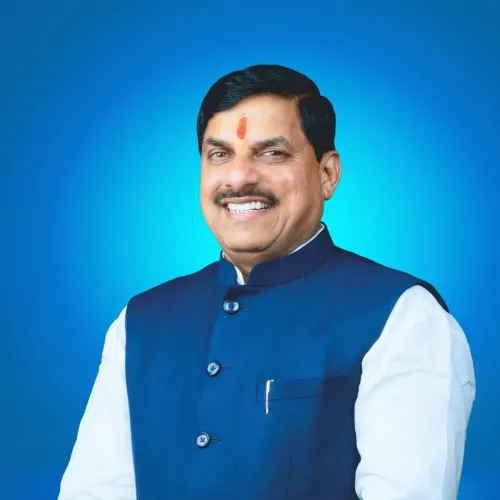
CM Mohan Yadav Opens West Zone Justice Access Conference in Indore
Synopsis
Madhya Pradesh CM Dr. Mohan Yadav inaugurated the NALSA-backed West Zone Regional Conference on Access to Justice in Indore alongside CJI Justice Suryakant and Union Law Minister Arjun Ram Meghwal, spotlighting e-courts, virtual hearings, and the Jan Vishwas Act's decriminalisation of 183 minor offences.
Key Takeaways
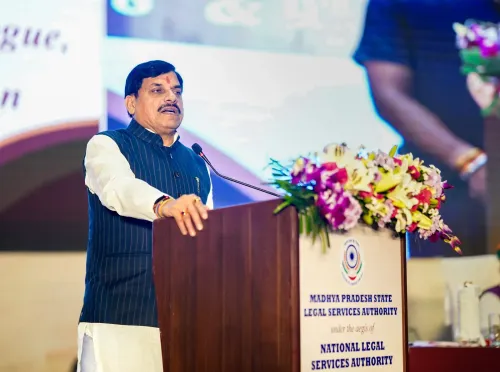
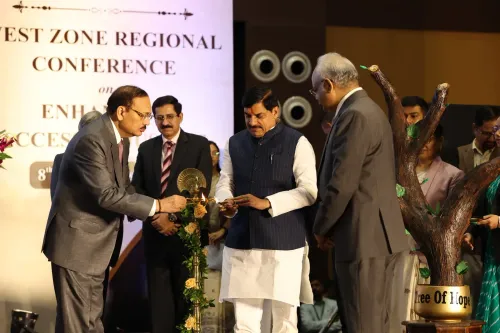
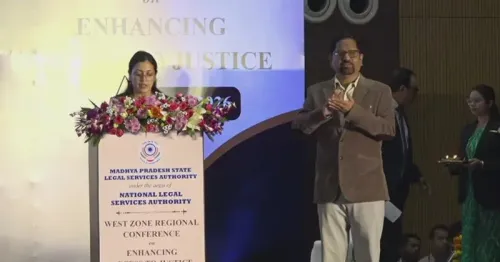
The West Zone Regional Conference on Enhancing Access to Justice was inaugurated in Indore on 8 August 2026 , organised with NALSA's support.
Chief Justice of India Justice Suryakant , Union Law Minister Arjun Ram Meghwal , and MP High Court Chief Justice Justice Vivek Rusia attended alongside CM Dr.
The Jan Vishwas (Amendment of Provisions) Act, 2023 decriminalised 183 minor offences across 42 central laws , reducing the criminal case burden on courts.
Reforms highlighted include e-case filing, virtual hearings, digital data collection , and modern justice management systems.
Numerous colonial-era laws have been repealed as part of India's ongoing legislative pruning effort.
NALSA was established under the Legal Services Authorities Act, 1987 to provide free legal aid to weaker sections of society.
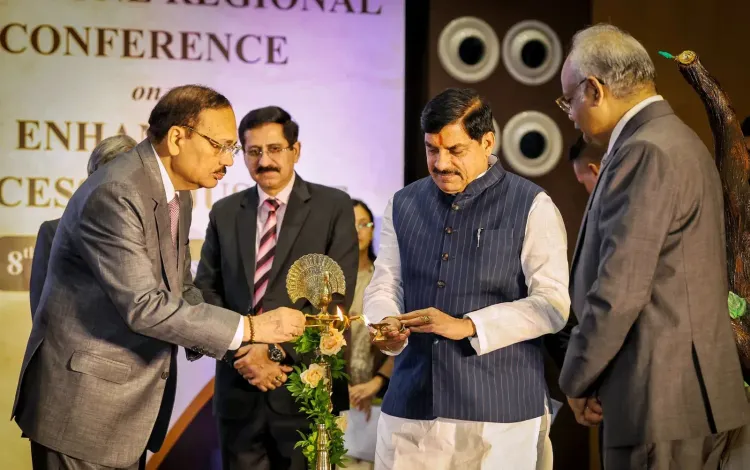
India's push to make justice faster, cheaper, and less colonial took centre stage in Indore on Saturday, 8 August 2026, as Madhya Pradesh Chief Minister Dr. Mohan Yadav joined the country's top judicial and legislative leadership to inaugurate the 'West Zone Regional Conference on Enhancing Access to Justice' — a NALSA-backed gathering that put digital courts and decriminalisation squarely on the national agenda.
Chief Justice, Union Minister, and MP High Court Chief Justice on One Stage
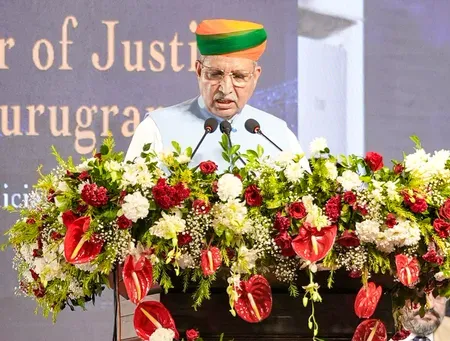
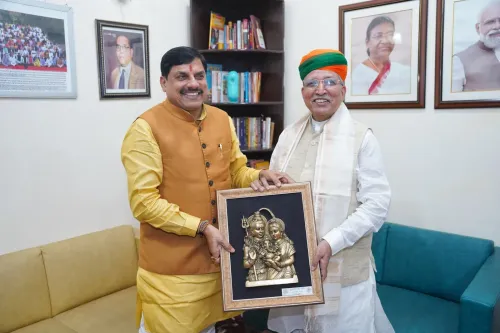
The conference brought together Chief Justice of India Justice Suryakant, Union Minister of State (Independent Charge) for Law and Justice Arjun Ram Meghwal, and Madhya Pradesh High Court Chief Justice Justice Vivek Rusia — a rare convergence of the judiciary's apex, the legislature's law ministry, and the host state's highest court. NALSA, the National Legal Services Authority established under the Legal Services Authorities Act, 1987 to deliver free legal aid to marginalised citizens, anchored the event's organisational framework.
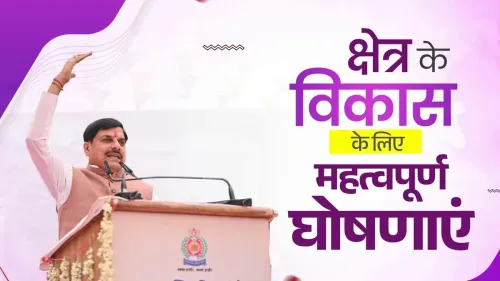
Dr. Yadav shared his thoughts at the inauguration, noting the sweeping changes already reshaping India's courtrooms: 'ई-केस फाइलिंग, वर्चुअल सुनवाई, डिजिटल डेटा संग्रह' — e-case filing, virtual hearings, and digital data collection are now live features of the justice system, not aspirations.
Colonial Laws Out, Jan Vishwas Act In
Two legislative shifts dominated the CM's remarks. First, the systematic elimination of colonial-era laws deemed redundant in a modern democratic republic — a process successive governments have pursued but which has accelerated sharply in recent years. Second, the landmark Jan Vishwas (Amendment of Provisions) Act, 2023, which decriminalised 183 minor offences across 42 central laws, converting what were once criminal violations into civil or compoundable ones.
The practical effect is significant: ordinary citizens who once faced arrest or prosecution for technical, low-stakes infractions — think paperwork lapses or minor regulatory breaches — no longer risk a criminal record. Courts, in turn, shed a portion of their crushing pendency load.
The e-Courts Thread Running Through It All
The digital justice push Dr. Yadav highlighted fits inside a longer national arc. The e-Courts project, running across multiple phases, has progressively wired India's district and high courts with case management software, video-conferencing infrastructure, and online cause-list systems. Virtual hearings — once a pandemic-era emergency measure — have become a permanent fixture, widening access for litigants in remote districts who previously had to travel hundreds of kilometres for a brief court appearance.
The West Zone conference, by design a regional convening, signals that the next frontier is not just policy at the centre but implementation consistency across states — and Madhya Pradesh, as host, is positioning itself at the front of that conversation.
With the Chief Justice of India in the room and a Union Minister at the podium, Indore just became the loudest voice in India's ongoing argument that justice delayed is a system design problem — and design problems have solutions.
Point of View
CM Dr. Mohan Yadav is staking a visible claim in the governance-reform narrative ahead of what remains a fiercely competitive political environment. The Jan Vishwas Act's decriminalisation push and the e-Courts rollout together represent the most structurally significant changes to India's justice delivery architecture in decades — but their success will ultimately be measured in pendency numbers and litigant experience, not conference proceedings.
NationPress
23 Sept 2026
Frequently Asked Questions
What is the West Zone Regional Conference on Enhancing Access to Justice?
It is a regional conference organised with NALSA's support, bringing together judicial, legislative, and state government leaders to advance access to justice — the Indore edition on 8 August 2026 focused on digital courts and legal reform.
What is NALSA and what does it do?
NALSA, the National Legal Services Authority, was established under the Legal Services Authorities Act, 1987 to provide free legal aid and services to marginalised and weaker sections of Indian society.
What is the Jan Vishwas Act and how does it affect ordinary citizens?
The Jan Vishwas (Amendment of Provisions) Act, 2023 decriminalised 183 minor offences across 42 central laws, meaning citizens no longer face criminal prosecution for small technical violations — making the justice system simpler and less punitive.
What digital reforms has India introduced in its court system?
India has introduced e-case filing, virtual hearings, digital data collection, and modern case management systems through the e-Courts project, significantly expanding access for litigants across the country.
Who attended the Indore justice conference with CM Mohan Yadav?
Chief Justice of India Justice Suryakant, Union Minister of State for Law and Justice Arjun Ram Meghwal, and Madhya Pradesh High Court Chief Justice Justice Vivek Rusia attended the conference alongside CM Dr. Mohan Yadav.