Deve Gowda: Modi surpassing Nehru's PM record reflects India's democratic evolution
Synopsis
A former Prime Minister praising a rival's record-breaking tenure is rare in Indian politics. Deve Gowda's Times of India piece goes beyond courtesy — it frames Modi's longevity as a structural reflection of how much harder Indian democracy has become to navigate, from 53 parties in 1952 to 2,593 in 2024, and from 17 crore voters to 146 crore.
Key Takeaways
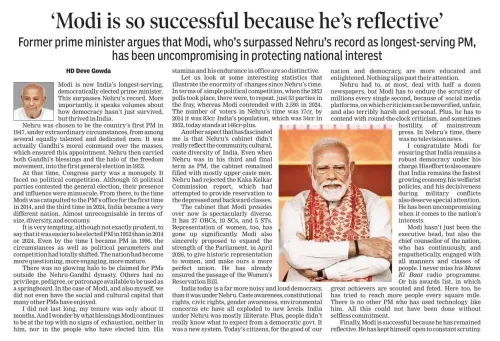
Deve Gowda wrote in The Times of India on 9 June that PM Modi surpassing Nehru's record as longest continuously serving democratically elected PM reflects India's democratic evolution.
Voter numbers have grown from roughly 17 crore in Nehru's era to over 146 crore today; registered parties rose from 53 in 1952 to 2,593 in 2024.
Deve Gowda noted that Modi's Cabinet reflects greater social diversity, including OBC , SC , and ST representation, contrasting with Nehru's era.
Deve Gowda, whose own tenure lasted roughly 11 months , described Modi's political endurance as a distinctive leadership feature.
Deve Gowda cited 'Mann Ki Baat' and direct public engagement as hallmarks of Modi's outreach model.
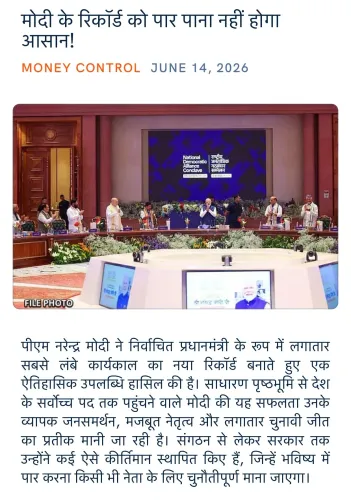
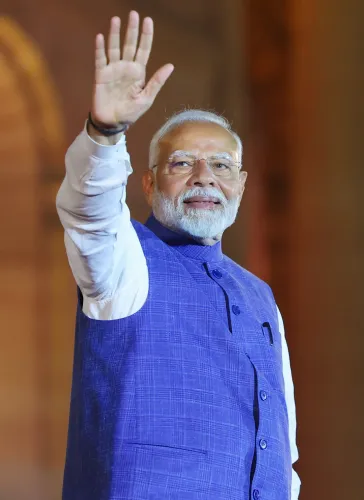
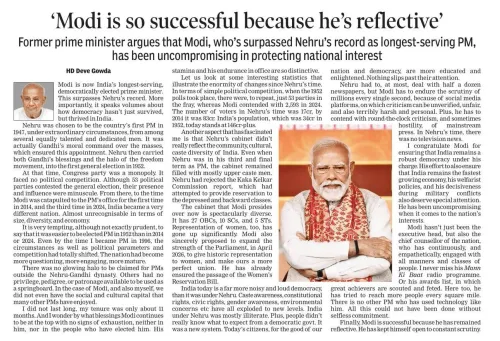
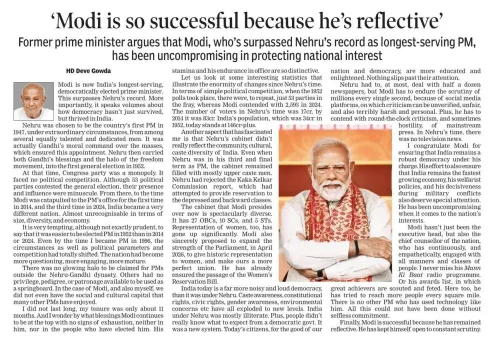
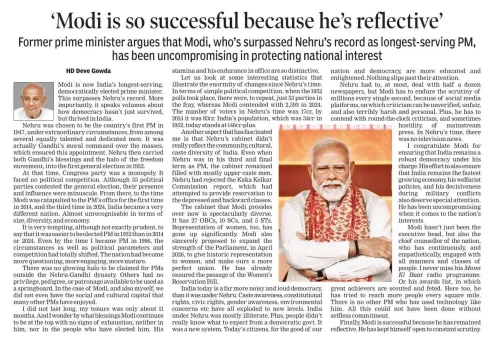
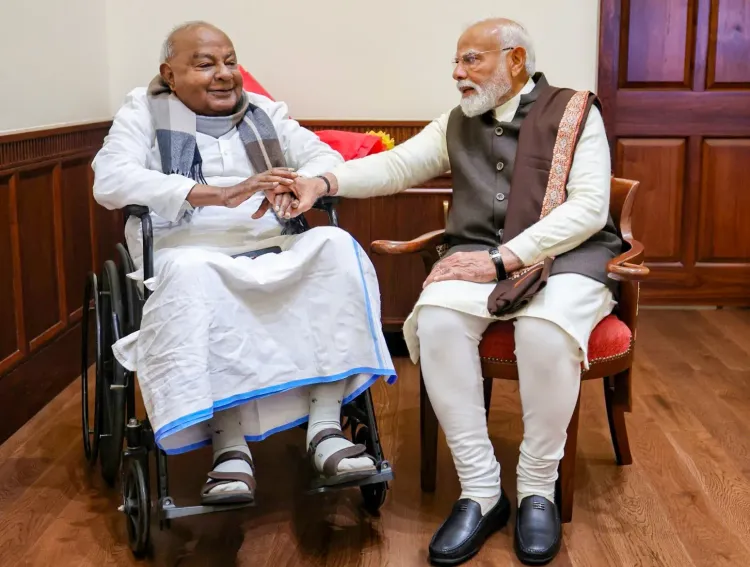
Former Prime Minister H.D. Deve Gowda on Tuesday, 9 June said that Prime Minister Narendra Modi becoming India's longest continuously serving democratically elected Prime Minister — surpassing the record of Jawaharlal Nehru — reflects both the strength and the evolution of Indian democracy. Writing in an article in The Times of India, Deve Gowda credited Modi's tenure to what he described as uncompromising protection of national interest and sustained public endorsement.
Contextualising Nehru's Record
Deve Gowda noted that Nehru was chosen as India's first Prime Minister in 1947 under extraordinary circumstances, with Mahatma Gandhi's moral authority over the freedom movement playing a decisive role in that transition. Nehru subsequently carried the legacy of the independence movement into the first general election in 1952, when roughly 53 political parties contested but opposition influence remained limited, and the Congress functioned as a dominant political force with minimal challenge.
Deve Gowda said it would not be prudent to suggest that becoming Prime Minister in 1952 was easier than in 2014 or 2024, adding that even by 1996 — when he himself assumed office — India's political environment had already become more competitive, questioning, and mature.
A Far More Complex Democratic Arena
Deve Gowda highlighted sharp statistical contrasts between the two eras. The 1952 elections saw 53 parties contest, whereas Modi navigated a field of 2,593 registered parties in 2024. Voter numbers have expanded from roughly 17 crore in Nehru's era to approximately 83 crore by 2014, and over 146 crore in present-day India. This scale of democratic participation, he argued, makes sustained electoral legitimacy significantly harder to achieve and maintain.
He also drew a personal parallel, noting that unlike leaders from dynastic or privileged political backgrounds, neither Modi nor he himself had access to inherited political capital or social advantage as a springboard to national leadership. Deve Gowda's own tenure lasted approximately 11 months, making him candid about the contrast with Modi's continued political endurance, which he described as a distinctive feature of the Prime Minister's leadership.
Governance, Diversity, and Representation
On the question of Cabinet composition, Deve Gowda observed that Nehru's Cabinet did not fully reflect India's social and cultural diversity even in his later terms, citing the non-implementation of proposals from the Kaka Kelkar Commission on backward class representation. He contrasted this with the current Cabinet under Modi, which he said reflects greater diversity — including representation from Other Backward Classes (OBC), Scheduled Castes (SC), and Scheduled Tribes (ST), along with increased participation of women.
He also referenced the Women's Reservation Bill, stating that efforts are underway to expand women's representation in Parliament and move toward a more inclusive democratic structure.
Media Scrutiny and Democratic Accountability
Deve Gowda noted that Nehru operated in an era of limited press coverage, whereas modern leaders face constant scrutiny through television and social media platforms — a level of continuous and often intense public examination that did not exist in earlier decades. He described India today as a 'far more noisy and loud democracy', with expanded public awareness of caste, constitutional rights, civic rights, gender issues, and environmental concerns.
Praising Modi's outreach, Deve Gowda cited programmes such as 'Mann Ki Baat' as examples of direct engagement with citizens across different sections of society, describing Modi as functioning not only as the executive head but also as a 'chief counsellor of the nation'.
Deve Gowda's Conclusion
Concluding his assessment, Deve Gowda said Modi's political success is rooted in constant public engagement, openness to scrutiny, and sustained democratic endorsement. He described the Prime Minister's leadership as reflecting endurance, adaptability, and continued electoral legitimacy in a rapidly changing India — and framed the record-breaking tenure as a marker of how far Indian democracy has come since 1947.
Point of View
Which makes the tribute harder to dismiss as partisan choreography. That said, the article conflates structural democratic complexity with individual leadership merit; a more competitive arena does not by itself validate the quality of governance. The omission of any critique — on press freedom rankings, electoral bond controversies, or federal tensions — means this reads more as a tribute piece than a rounded assessment. The Kaka Kelkar Commission reference is a pointed, if implicit, dig at Congress's historical record on social justice, and that framing will not be lost on readers.
NationPress
24 Oct 2026
Frequently Asked Questions
What did Deve Gowda say about Modi surpassing Nehru's record?
Deve Gowda wrote in The Times of India that Modi becoming India's longest continuously serving democratically elected Prime Minister reflects the strength and evolution of Indian democracy. He credited Modi's tenure to uncompromising protection of national interest and sustained public support.
How does the 2024 democratic landscape compare to Nehru's era?
According to Deve Gowda's article, the 1952 elections saw 53 political parties contest, compared to 2,593 registered parties in 2024. Voter numbers have also grown from roughly 17 crore in Nehru's time to over 146 crore today.
Why did Deve Gowda compare his own tenure to Modi's?
Deve Gowda noted that his own tenure lasted approximately 11 months and that, like Modi, he did not come from a dynastic or privileged political background. He used the contrast to highlight what he described as Modi's exceptional political endurance.
What did Deve Gowda say about Cabinet diversity under Modi?
Deve Gowda said Modi's Cabinet reflects greater social diversity than Nehru's, citing representation from OBCs, Scheduled Castes, and Scheduled Tribes, along with increased participation of women. He also referenced the Women's Reservation Bill as a step toward more inclusive representation.
Where did Deve Gowda publish his assessment of PM Modi?
Deve Gowda published his assessment as a detailed article in The Times of India, timed around Modi surpassing Nehru's record as the longest continuously serving democratically elected Prime Minister of India.