CM Dhami: 700 welfare camps held in 65 days, 6 lakh attended
Synopsis
Chief Minister Pushkar Dhami has highlighted that the first phase of a state welfare outreach programme saw 700 camps held over 65 days, with over six lakh people participating — underscoring Uttarakhand's camp-based model for delivering services to remote populations.
Key Takeaways
The Chief Minister's Office of Uttarakhand quoted CM Pushkar Dhami on 11 July 2026 on a welfare outreach programme.
The programme's first phase organised 700 camps over 65 days — roughly ten to eleven camps per day.
More than six lakh people participated in the first phase of the programme.
The camp-based outreach model is designed to reach rural and remote populations in Uttarakhand's hilly districts.
CM Dhami's remarks suggest subsequent phases of the programme are planned or ongoing.
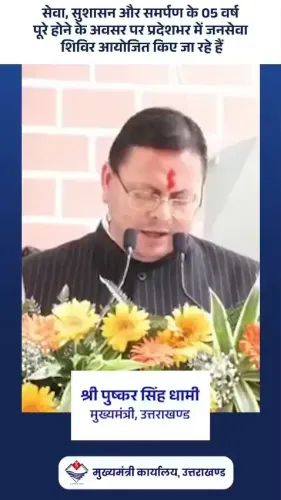
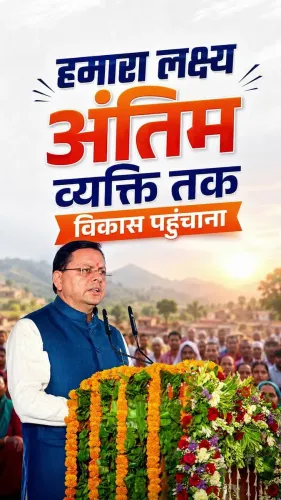
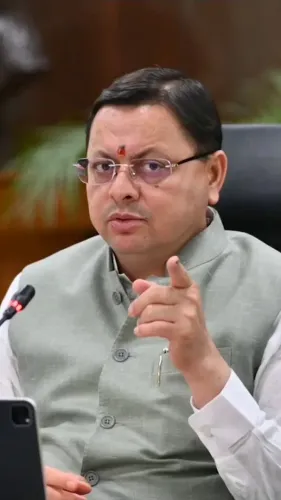
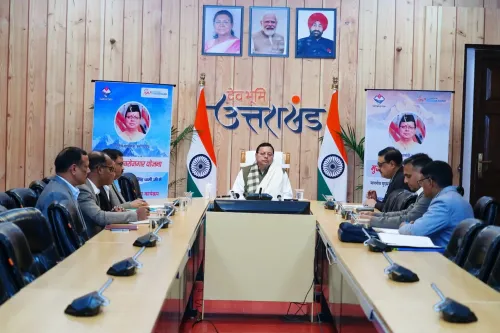
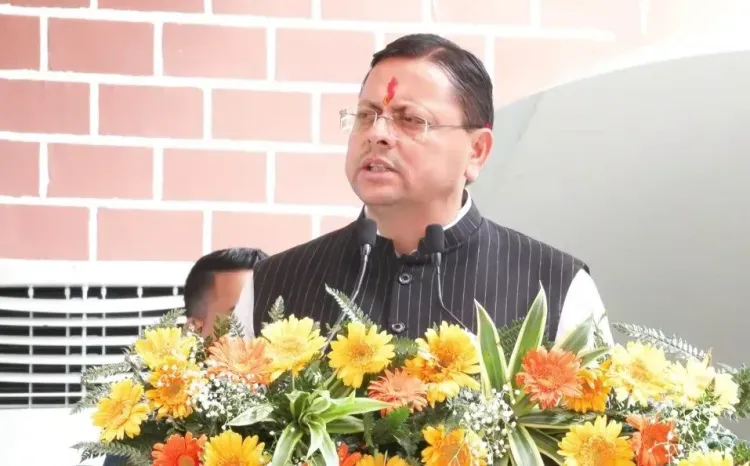
The Chief Minister's Office of Uttarakhand on Saturday, 11 July 2026 quoted Chief Minister Pushkar Singh Dhami recalling the first phase of a government welfare outreach programme, in which 700 camps were organised over 65 days and drew participation from more than six lakh people across the state.
Context
Speaking about the programme's earlier phase, CM Dhami stated — 'jab humne is karyakram ka pehla charan chalaya tha, tab 65 din mein 700 shiviron ka aayojan kiya gaya tha' ('When we ran the first phase of this programme, 700 camps were organised in 65 days') — and noted that over six lakh people participated in those camps. The remarks underline the state government's emphasis on direct citizen outreach as a mode of welfare delivery.
Uttarakhand, a Himalayan state with a large rural and semi-urban population spread across difficult terrain, has consistently relied on camp-based models to bridge the last-mile gap in scheme delivery. The reference to a 'first phase' signals that subsequent phases are either planned or already under way.
Policy Backdrop
Large-scale welfare camps — often called 'shivirs' — have been a staple of Indian state governance for over a decade, used to register beneficiaries, distribute entitlements, and resolve grievances on the spot. In geographically challenging states like Uttarakhand, where hilly districts can be difficult to reach through conventional administrative channels, such camps are particularly significant.
The model mirrors a broader national trend of direct citizen engagement that gained momentum across multiple states since the 2010s, with governments competing to demonstrate outreach numbers as a metric of governance performance. A scale of 700 camps in 65 days — roughly ten to eleven camps per day — points to a coordinated, district-level mobilisation of state machinery.
Stakeholders and Impact
The primary beneficiaries of such camps are rural residents and welfare scheme recipients in Uttarakhand's remote districts, many of whom face barriers of distance, literacy, and connectivity in accessing government services independently. With more than six lakh participants recorded in the first phase alone, the programme's footprint is substantial relative to the state's population.
Local administrative staff, district officials, and frontline workers are the key implementers, and the scale of the exercise reflects a significant deployment of state resources. Civil society groups and scheme beneficiaries in hill districts stand to gain the most from continued phases of the initiative.
What's Next
CM Dhami's public reference to the first phase's numbers suggests the government is building a case — likely before an audience or at an official event — for expanding or continuing the programme. The rollout of subsequent phases and any official evaluation of coverage, scheme enrolments, and grievance redressal outcomes will be the key indicators to watch.
If the state maintains the pace set in the first phase, subsequent rounds could extend the programme's reach to an even larger share of Uttarakhand's population, particularly in districts that remain underserved by conventional administrative infrastructure.
Point of View
65 days, six lakh participants — is a classic governance-performance signal, framing the programme as both scalable and proven before a likely announcement of its next phase. For a state like Uttarakhand, where difficult terrain makes conventional service delivery expensive and slow, the camp model is not merely optics but a structural necessity. The emphasis on raw participation figures, however, leaves open the harder question of outcomes: how many beneficiaries were actually enrolled in schemes, and how many grievances were resolved. As Indian states increasingly compete on welfare delivery metrics ahead of electoral cycles, Uttarakhand's phased camp model will be watched as a template — or a cautionary tale — depending on what independent evaluations reveal.
NationPress
10 Oct 2026
Frequently Asked Questions
What did CM Pushkar Dhami say about the welfare camp programme in Uttarakhand?
CM Dhami stated that the first phase of the programme organised 700 camps over 65 days, with more than six lakh people participating across Uttarakhand.
How many welfare camps were held in Uttarakhand's first programme phase?
700 camps were organised during the first phase, spread over a period of 65 days.
How many people attended the Uttarakhand welfare camp programme?
More than six lakh people participated in the first phase of the welfare outreach programme, according to CM Dhami.
Why does Uttarakhand use welfare camps to deliver government services?
Uttarakhand's hilly and remote terrain makes conventional service delivery difficult, so the state uses large-scale camps to bring government schemes directly to rural and underserved populations.
Is there a second phase of the Uttarakhand welfare camp programme?
CM Dhami's reference to the 'first phase' and its outcomes suggests subsequent phases are planned or under way, though official details of the next phase have not been separately confirmed.