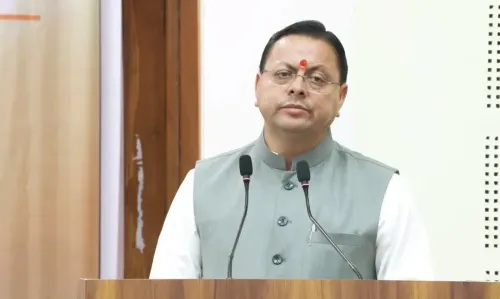
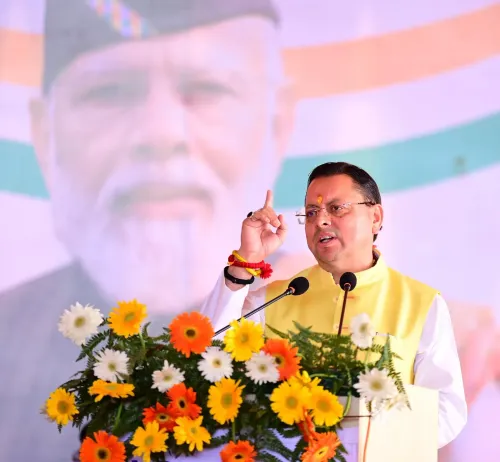
CM Dhami backs Uttarakhand Minority Education Act as reform tool
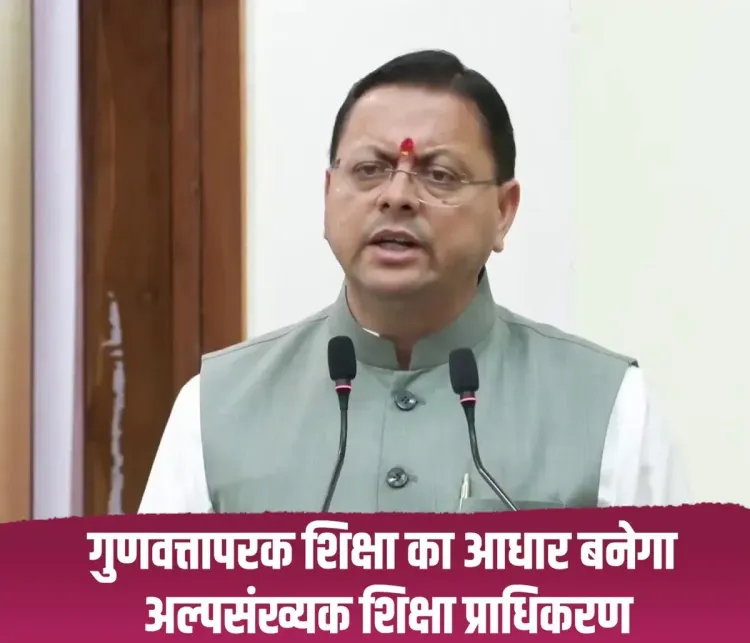
Synopsis
Uttarakhand Chief Minister Pushkar Singh Dhami has publicly backed the Uttarakhand Minority Education Act, calling it a vehicle for positive change in education. The statement signals the BJP-led government's intent to champion the legislation amid broader national debates on minority institution regulation.
Key Takeaways
CM Pushkar Singh Dhami declared on 1 July 2026 that the Uttarakhand Minority Education Act will be an instrument of positive educational transformation.
The Act regulates minority-run educational institutions in Uttarakhand , a Himalayan state with significant minority populations.
The legislation is framed within the national policy context of the National Education Policy 2020 , which calls for equitable access and transparent governance.
Key stakeholders include minority communities and private minority schools across the state, whose autonomy under Article 30 of the Constitution remains a central legal consideration.
Implementation rules, regulatory body formation, and compliance data are the key developments to watch in the coming months.
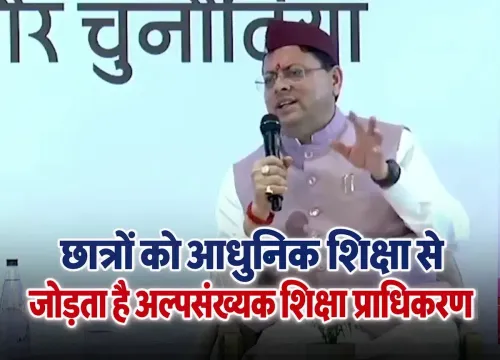
Uttarakhand Chief Minister Pushkar Singh Dhami on Wednesday, 1 July 2026, declared that the Uttarakhand Minority Education Act will prove to be an instrument of positive transformation in the field of education, signalling the state government's confidence in the legislation as a cornerstone of its education reform agenda.
Context
Dhami posted on X in Hindi, stating: 'Uttarakhand Alpasankhyak Shiksha Adhiniyam shiksha ke kshetra mein sakaratmak parivartan ka madhyam siddh hoga' — 'The Uttarakhand Minority Education Act will prove to be a medium of positive change in the field of education.' The statement underscores the BJP-led state government's position that the Act is a progressive step rather than a restrictive measure, framing it as aligned with the broader goal of equitable and quality education for all communities in Uttarakhand.
Uttarakhand is a northern Himalayan state with a notable presence of minority communities, including Muslims and Christians, many of whom are served by privately run minority educational institutions. Regulatory clarity around such institutions has been a long-standing policy question in the state.
Policy Backdrop
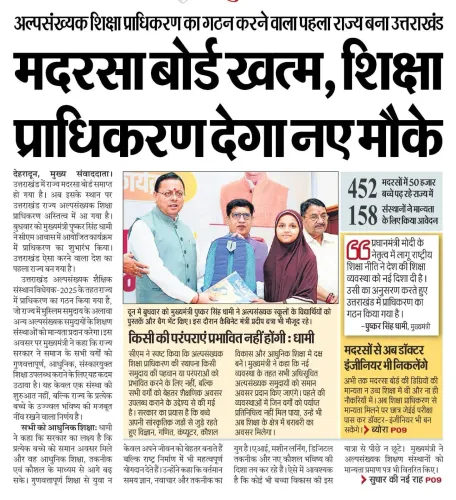
The Uttarakhand Minority Education Act is a state legislation aimed at regulating minority-run educational institutions, seeking to align their functioning with constitutional standards while respecting the rights guaranteed under Article 30 of the Indian Constitution, which allows religious and linguistic minorities to establish and administer educational institutions of their choice.
The Act sits within the broader framework of the National Education Policy 2020, which emphasises equitable access and transparent governance across all categories of educational institutions. BJP-governed states have increasingly introduced regulatory frameworks for minority institutions, focusing on oversight of fee structures, teacher appointments, and curriculum standards — areas where judicial observations have previously flagged the need for accountability.
Stakeholders and Impact
Minority communities across Uttarakhand — particularly those dependent on minority-run private schools — are the most directly affected stakeholders. Proponents of the Act argue it will raise quality standards and ensure transparency in admissions, benefiting students from these communities. Critics and minority institution administrators, however, have historically raised concerns that such legislation could encroach on constitutionally protected autonomy.
Private minority schools operating in the state will need to align their governance structures with the Act's provisions. The government's framing of the law as a 'positive transformation' suggests it is positioning the Act as a welfare measure rather than a regulatory imposition, a distinction that will be closely watched by community leaders and legal observers.
What's Next
Attention will now turn to the release of detailed implementation rules, the formation of any oversight or regulatory bodies mandated under the Act, and early data on school compliance and minority enrolment trends. CM Dhami's public endorsement signals that the government intends to actively champion the legislation rather than let it pass quietly into the statute books. How minority institutions and community organisations respond — and whether legal challenges follow — will determine the Act's real-world trajectory in the months ahead.
Point of View
Casting regulatory oversight as a reform dividend rather than a restriction — a framing designed to pre-empt criticism from minority community leaders. The move fits a broader pattern of BJP-governed states seeking to bring minority institutions under standardised governance frameworks, testing the boundaries of Article 30 protections without directly challenging them. The success of this approach will hinge on implementation: whether the Act's rules are seen as enabling quality or curbing autonomy will shape both community trust and the likelihood of legal challenges. Nationally, it adds another data point to the ongoing debate about how states balance minority educational rights with the push for uniform regulatory standards.
NationPress
30 Sept 2026
Frequently Asked Questions
What is the Uttarakhand Minority Education Act?
The Uttarakhand Minority Education Act is a state legislation that regulates minority-run educational institutions in Uttarakhand, aiming to ensure transparency in admissions, fee structures, and teacher appointments while respecting the rights of minorities under Article 30 of the Indian Constitution.
What did CM Dhami say about the Minority Education Act?
On 1 July 2026, CM Pushkar Singh Dhami stated on X that the Uttarakhand Minority Education Act 'will prove to be a medium of positive change in the field of education,' expressing the government's confidence in the law as an education reform tool.
How does the Uttarakhand Minority Education Act affect minority schools?
Minority-run private schools in Uttarakhand will need to align their governance, admissions, and curriculum practices with the Act's provisions. The government frames this as a quality-improvement measure, though some institutions may raise concerns about autonomy.
Is the Uttarakhand Minority Education Act related to NEP 2020?
Yes, the Act aligns with the principles of the National Education Policy 2020, which emphasises equitable access and transparent governance across all educational institutions, including minority-run ones.
Which communities are affected by the Uttarakhand Minority Education Act?
Religious and linguistic minority communities in Uttarakhand — including Muslims and Christians — who rely on privately run minority educational institutions are the primary communities affected by this legislation.