CM Dhami: Congress blames constitutional bodies for poll losses
Synopsis
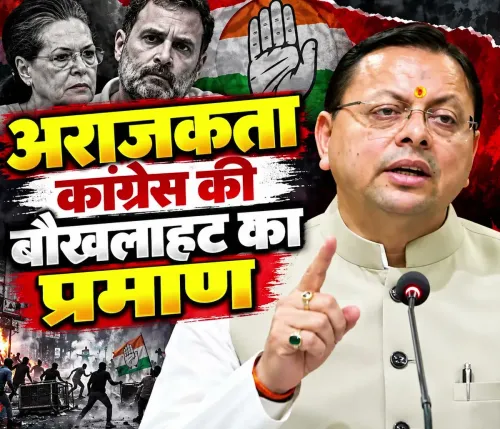
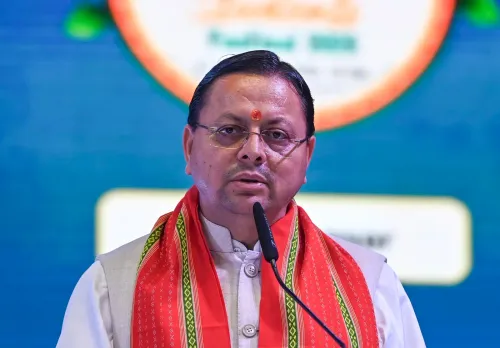
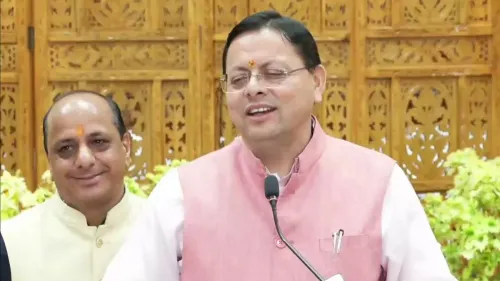
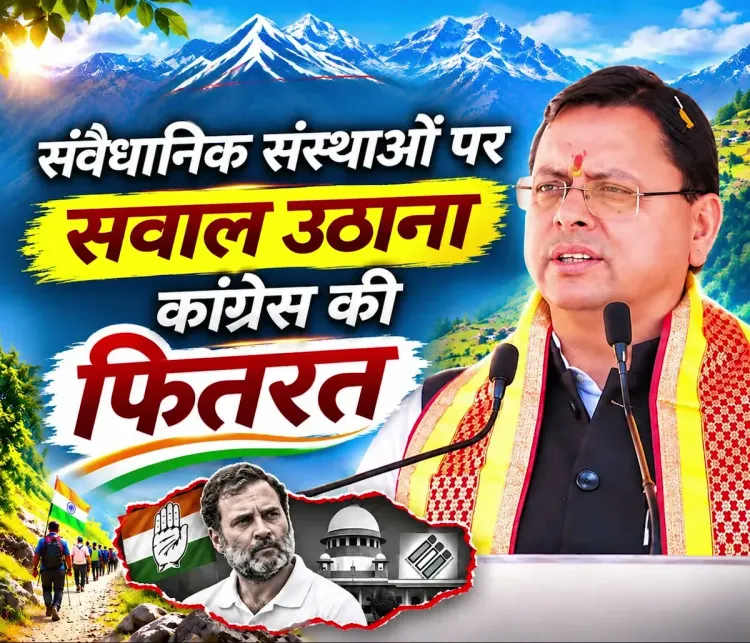
Uttarakhand CM Pushkar Singh Dhami accused Congress of making it a 'habit' to blame constitutional bodies like the Election Commission for its successive electoral losses since 2014, continuing a long-running BJP counter-narrative against the opposition.
Key Takeaways
CM Pushkar Singh Dhami posted on 31 October 2026 accusing Congress of deflecting responsibility for electoral losses onto constitutional institutions.
He described questioning constitutional bodies as Congress's 'fitrat' (habit or nature) rather than a reasoned objection.
The BJP–Congress dispute over EVMs and the Election Commission of India has recurred after every major election since 2014 .
The Congress has periodically questioned EVM reliability and Election Commission conduct following successive national and state election defeats.
Dhami's framing is designed to pre-emptively delegitimise future opposition challenges to election outcomes.
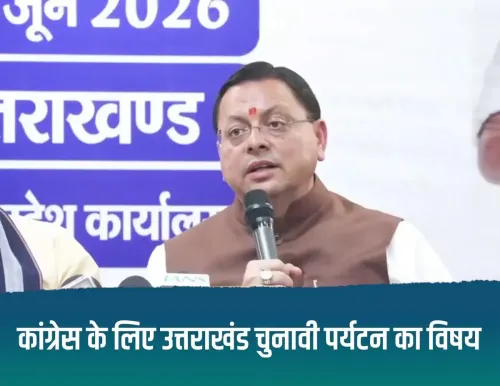
Twelve years of consecutive electoral setbacks, and Uttarakhand Chief Minister Pushkar Singh Dhami says the Indian National Congress has still not looked inward — choosing instead to point fingers at the very institutions that underpin India's democracy. The BJP leader fired the broadside on Saturday, 31 October 2026, in a pointed Hindi-language post on X.
Posting in Hindi, CM Dhami wrote: '2014 ke baad se lagatar mil rahi chunavi parajayon se Congress sabak lene ke bajay apni vifaltaon ka thikra sanvaidhanik sansthao par fodti aa rahi hai.' — ('Instead of learning from the continuous electoral defeats it has suffered since 2014, Congress has been blaming its failures on constitutional institutions.') He added pointedly: 'Questioning constitutional institutions has become Congress's habit.'The EVM fault-line that never goes away
The target of Dhami's remarks is a well-worn pattern in Indian electoral politics. After the BJP's landmark 2014 Lok Sabha victory — and every major loss for the Congress in the years since — senior opposition figures have questioned the integrity of Electronic Voting Machines (EVMs) and raised doubts about the conduct of the Election Commission of India, one of the country's premier constitutional bodies. The BJP has consistently characterised those objections as sour-grapes deflection rather than legitimate institutional scrutiny.
Dhami's formulation is sharper than most: he is not merely defending a particular election result, but framing the behaviour itself as a character flaw — 'fitrat' (habit or nature) — embedded in the Congress's political DNA. That framing is designed to pre-empt future complaints as much as rebut past ones.
A BJP counter-narrative built over a decade
The exchange is not new, but it has grown more entrenched with each election cycle. Since 2014, the Congress has lost multiple Lok Sabha and state assembly contests. Each loss has triggered a fresh round of institutional questioning from the opposition and a fresh round of 'accept the verdict' messaging from the ruling party. CM Dhami's post compresses that decade-long dynamic into two sentences — reflecting how thoroughly it has been absorbed into BJP's political vocabulary.
With state assembly elections periodically on the horizon, the timing of such messaging is rarely accidental. Accusations framed now seed a public narrative that any future opposition challenge to election outcomes will be dismissed as a reflex rather than a reasoned objection.
What Congress and the Election Commission may say next
Congress spokespersons are likely to push back — arguing that raising institutional concerns is not deflection but democratic accountability, and that the party has won elections since 2014 where its objections were not raised. The Election Commission of India, which guards its constitutional independence carefully, has historically declined to engage with partisan point-scoring from either side.
The sharper question hanging over Indian democracy is whether the EVM and institutional-integrity debate ever gets resolved on its merits — or whether it simply becomes permanent ammunition in the BJP-Congress war of narratives, fired and returned with every poll result. Dhami's post suggests the BJP, at least, is comfortable keeping it that way.
Point of View
Suggesting both parties are now locked into fixed roles — one perpetually challenging the umpire, the other perpetually defending it — regardless of which specific election is being contested.
NationPress
31 Oct 2026
Frequently Asked Questions
Why is CM Dhami criticising Congress over constitutional institutions?
Dhami accused Congress of blaming constitutional bodies like the Election Commission for its own electoral failures rather than introspecting, calling it a habitual pattern since the party began losing elections in 2014.
Which constitutional institution is Congress accused of questioning?
The Election Commission of India is the primary constitutional body Congress has questioned, particularly over the reliability of Electronic Voting Machines (EVMs) after successive defeats since 2014.
What is the BJP's stand on Congress's EVM criticism?
The BJP consistently argues that Congress's EVM and Election Commission complaints are a deflection from its own policy failures and inability to connect with voters, not a genuine institutional concern.
How many elections has Congress lost since 2014?
Congress has lost two consecutive Lok Sabha elections in 2014 and 2019 and a large number of state assembly elections since 2014, though it has won some state polls in that period.
Who is Pushkar Singh Dhami?
Pushkar Singh Dhami is the Chief Minister of Uttarakhand and a senior BJP leader who has held the post since 2021.