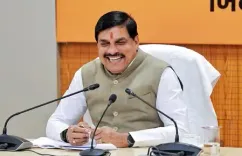
CM Dhami targets Congress over 'politics of anarchy'

Synopsis
Uttarakhand CM Pushkar Singh Dhami attacked Congress on November 3, 2026, accusing it of abandoning democratic norms and indulging in 'politics of anarchy' while praising PM Modi's development and self-reliance agenda.
Key Takeaways
Pushkar Singh Dhami , Uttarakhand Chief Minister, posted a sharp attack on Indian National Congress on November 3, 2026 .
He praised Prime Minister Narendra Modi 's leadership for steering India toward development, good governance, and self-reliance.
Dhami accused Congress of being 'disturbed' by India's transformation and resorting to 'politics of anarchy' out of a craving for power.
He compared Congress's desperation to 'a fish out of water' — a vivid metaphor that anchored his political charge.
The Atmanirbhar Bharat programme, announced in 2020 , was cited as part of the BJP's governance legacy being contrasted with Congress conduct.
Congress had not issued a formal response at the time of publication; party rebuttals and legislative debates are expected to follow.
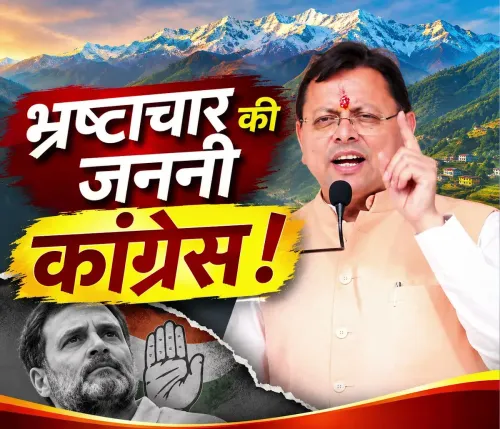
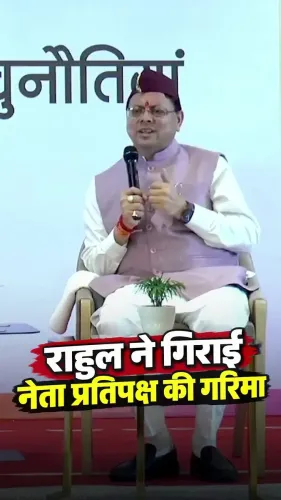
Uttarakhand Chief Minister Pushkar Singh Dhami turned up the political heat on Tuesday, November 3, 2026, firing a sharp broadside at the Indian National Congress, accusing the opposition party of abandoning democratic norms in its desperation to return to power.
Posting on X, Dhami praised Prime Minister Narendra Modi's leadership before pivoting to a pointed attack: 'सत्ता की तड़प में कांग्रेस की स्थिति बिना पानी की मछली जैसी हो गई है' — 'In its craving for power, Congress has become like a fish out of water.' The metaphor was blunt, the intent unmistakable.
The charge: democratic norms 'thrown out the window'
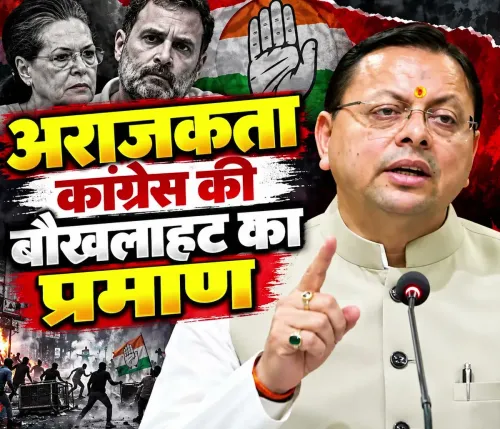
Dhami argued that India's development trajectory — anchored in Prime Minister Modi's vision of Atmanirbhar Bharat (self-reliant India) — has unsettled the Congress. He described the opposition as 'विचलित' (disturbed) by the country's transformation, and accused it of descending into what he called the 'politics of anarchy' (अराजकता की राजनीति) by sidelining democratic propriety in its bid to recapture office.
The language is characteristically combative but fits a well-worn pattern: BJP leaders at both the state and national level routinely contrast their governance record — citing flagship programmes like the Atmanirbhar Bharat package announced in 2020 — with what they frame as Congress's policy failures and political conduct.
Routine clash or escalating political temperature?
Such salvos are standard political currency between India's two largest national parties. Yet the timing and the sharpness of Dhami's phrasing — 'lust for power,' 'lawlessness,' 'ignoring democratic limits' — suggest the rhetoric is being dialled up ahead of what observers expect to be a charged political season. BJP leaders in states like Uttarakhand often serve as forward voices for national-level messaging, road-testing attack lines that later find wider amplification.
Congress has not yet formally responded to Dhami's specific remarks. Any rebuttal from party spokespersons or a scheduled parliamentary debate on governance is likely to sharpen this exchange further.
For now, Dhami's post signals one thing clearly: the ruling party intends to keep development credentials and opposition conduct at the centre of the political conversation — and it has no plans to lower the volume.
Point of View
However, suggests this is ambient political positioning rather than a response to a concrete trigger.
NationPress
3 Nov 2026
Frequently Asked Questions
What did CM Pushkar Singh Dhami say about Congress?
CM Dhami accused Congress of abandoning democratic norms and resorting to 'politics of anarchy' out of desperation to return to power, comparing the party's condition to 'a fish out of water.'
Why did Dhami praise PM Modi in his post?
Dhami credited PM Modi's leadership for steering India toward development, good governance, and self-reliance, framing it as the backdrop that has left Congress 'disturbed' by the country's transformation.
What is Atmanirbhar Bharat and why is it relevant here?
Atmanirbhar Bharat is a self-reliance economic programme announced by the Modi government in 2020. BJP leaders routinely cite it as evidence of their governance record when contrasting it with Congress's performance.
Has Congress responded to Dhami's attack?
Congress had not issued a formal response at the time of publication. Party rebuttals and possible legislative debate on governance issues are expected to follow.
Is this a new trend or routine BJP-Congress sparring?
It fits a well-established pattern where BJP leaders at state and national level contrast their governance record with Congress conduct; the sharpness of the language, however, points to an escalating political temperature ahead of a likely election cycle.