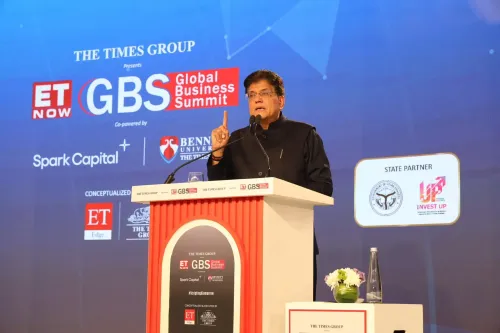
Goyal: India shields sensitive sectors in FTA talks

Synopsis
Commerce Minister Piyush Goyal reaffirmed India's core FTA doctrine on 3 November 2026 — market access yes, but sensitive sectors stay shielded. The stance traces directly to the 2019 RCEP exit and now shapes live India-EU and India-UK negotiations.
Key Takeaways
Minister Piyush Goyal stated on 3 November 2026 that India 'strongly guards its sensitive sectors' in all FTA negotiations.
India withdrew from RCEP in 2019 specifically to protect dairy, agriculture, and manufacturing from import surges.
The India-UAE CEPA and India-Australia ECTA (both 2022 ) embedded carve-outs and extended phase-outs for sensitive tariff lines.
Domestic MSMEs , smallholder farmers, and dairy cooperatives are the constituencies driving this protective stance.
Ongoing India-EU and India-UK FTA talks on automobiles, dairy, and data localisation are the immediate battleground for this policy.
India's negotiating leverage rests on asymmetric concessions — offering access to a 1.4-billion-consumer market in exchange for protection of employment-intensive sectors.
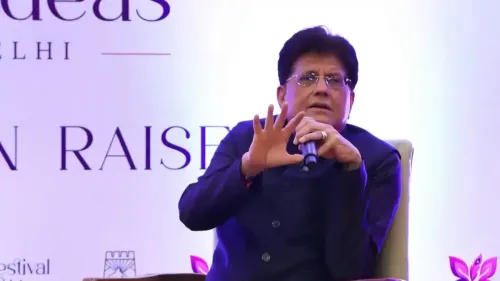
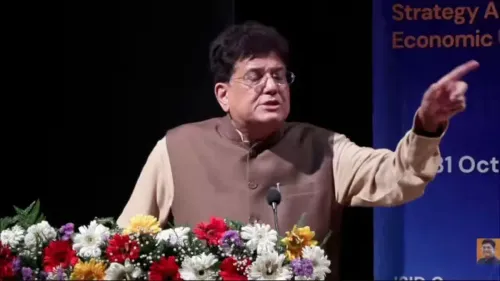
India's trade posture has never been a simple race to zero tariffs — and Union Commerce and Industry Minister Piyush Goyal made that calculus explicit on Tuesday, 3 November 2026, declaring that the country 'strongly guards its sensitive sectors' even as it pursues Free Trade Agreements with key partners.
The red lines India draws at every negotiating table
The statement is more than a talking point — it is the load-bearing principle of India's trade diplomacy since 2019, when New Delhi walked away from the Regional Comprehensive Economic Partnership (RCEP), the world's largest trade bloc. The exit was driven by fears that an unguarded tariff gate would expose domestic dairy farmers, agricultural producers, and manufacturers to an import surge, particularly from China. That decision set a template that every subsequent deal has had to honour.
The two FTAs India has concluded since — the India-UAE Comprehensive Economic Partnership Agreement (CEPA) and the India-Australia Economic Cooperation and Trade Agreement (ECTA), both inked in 2022 — were built around that template. Both contained explicit carve-outs and extended phase-out timelines for products where domestic producers would face structural strain. Sensitive lines did not simply open up; they were ring-fenced, with longer adjustment windows or outright exclusions.
Why dairy, agriculture, and MSMEs stay off the fast lane
India's employment-intensive sectors — smallholder farming, dairy cooperatives, MSMEs in textiles and leather — are not just economic categories; they are political constituencies of enormous weight. Any FTA that triggers a visible import surge in these segments carries immediate domestic political cost, which is why successive governments have insisted on asymmetric concessions: India opens sectors where it holds genuine export competitiveness, and partners absorb the asymmetry as the price of access to a 1.4-billion-consumer market.
Goyal, as the minister who oversees these negotiations, has consistently framed this not as protectionism but as calibrated liberalisation — sequenced to protect livelihoods while expanding market access for Indian exporters in goods and services where the country has a structural edge.
India-EU and India-UK talks: the current proving ground
The proof of that principle will be tested most visibly in the ongoing India-EU FTA and India-UK FTA negotiations, where chapter-wise outcomes on automobiles, dairy tariff lines, and data localisation provisions remain among the most contested items. Both partners have pressed for deeper access to India's goods market; India has pushed back on tariff lines it classifies as sensitive. Goyal's 3 November statement lands squarely in that context — a public signal of where the government's floor is, directed as much at domestic stakeholders as at foreign negotiators.
The strategic message is consistent: market access is on offer, but not at the cost of sectors that absorb tens of millions of workers and sit at the heart of India's rural economy. That is the deal India is selling — and, so far, partners have kept coming back to the table.
Point of View
In all likelihood, to manage domestic expectations as the India-EU and India-UK talks enter their most contested chapters. It reflects a consistent BJP-era trade doctrine: liberalisation is acceptable when it generates export wins, but not when it risks visible dislocation in politically salient sectors like dairy or smallholder farming. The post-RCEP bilateral-first pivot has given India more leverage over individual deals than it would have had inside a mega-regional pact, and Goyal's framing defends that strategic choice. Whether that floor is sustainable as partners demand deeper reciprocity will define the next phase of India's trade architecture.
NationPress
3 Nov 2026
Frequently Asked Questions
What did Piyush Goyal say about India's FTA negotiations?
On 3 November 2026, Goyal stated that India 'strongly guards its sensitive sectors' while negotiating Free Trade Agreements, reaffirming a protective stance toward dairy, agriculture, and manufacturing.
Why did India withdraw from RCEP in 2019?
India exited RCEP negotiations in 2019 over concerns that unrestricted market access — particularly from China — would flood domestic dairy, agricultural, and manufacturing sectors, threatening millions of livelihoods.
Which FTAs has India signed after leaving RCEP?
India signed the India-UAE Comprehensive Economic Partnership Agreement (CEPA) and the India-Australia Economic Cooperation and Trade Agreement (ECTA), both in 2022, each with carve-outs for sensitive sectors.
What sectors does India protect in FTA negotiations?
India consistently protects dairy, agriculture, MSMEs in textiles and leather, and other employment-intensive industries through tariff carve-outs, exclusions, or extended phase-out timelines.
What is the current status of India-EU and India-UK FTA talks?
Both negotiations are ongoing, with the most contested areas including tariff lines for automobiles and dairy, as well as provisions on data localisation — the exact sectors Goyal's protective stance is designed to shield.