Goyal: Modi-era FTAs with developed world drive mutual growth
Synopsis
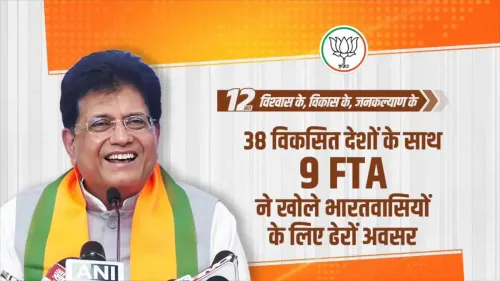
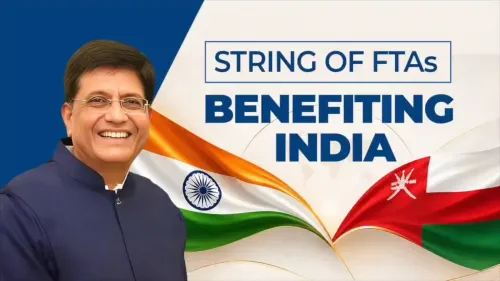
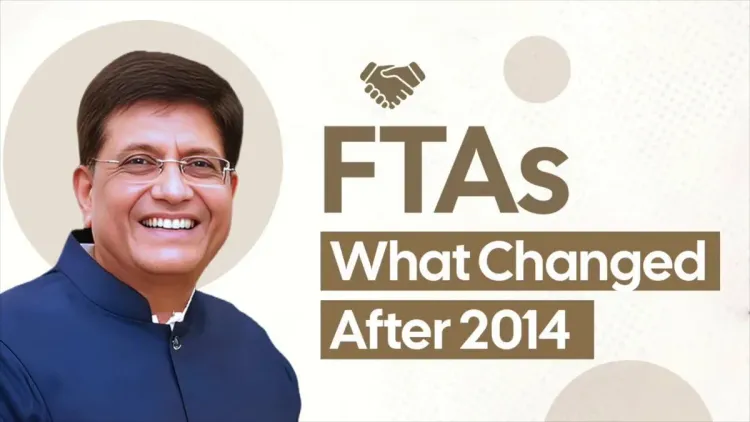
Commerce Minister Piyush Goyal has reaffirmed that India's free trade agreements with developed economies under PM Modi are complementary and growth-oriented, anchoring a bilateral FTA strategy that began with India's 2019 exit from RCEP and produced landmark deals with the UAE and Australia in 2022.
Key Takeaways
On 29 July 2026 , Commerce Minister Piyush Goyal stated that India's FTAs with the developed world under PM Modi are 'complementary in nature, driving mutual growth.' India exited the RCEP in 2019 and pivoted to bilateral FTAs with select, complementary economies.
India signed the India-UAE CEPA and India-Australia ECTA in 2022 , covering goods, services, and investment.
Ongoing negotiations with the UK and EU represent the next major milestones in this bilateral FTA push.
The strategy targets mutual market access, positioning Indian exporters in manufacturing, IT, and pharmaceuticals for structured entry into high-income markets.
India's trade architecture under Prime Minister Narendra Modi is built on a deliberate bet — that carefully chosen bilateral deals with complementary economies outperform sprawling multilateral compacts. On Wednesday, 29 July 2026, Union Commerce and Industry Minister Piyush Goyal made that case explicitly on X, asserting that the free trade agreements concluded with the developed world under PM Modi's leadership are 'complementary in nature, driving mutual growth.'
The bilateral pivot: why India walked away from RCEP
The strategic logic behind Goyal's statement runs back to 2019, when India made the consequential decision to walk away from the Regional Comprehensive Economic Partnership (RCEP) — the vast Asia-Pacific trade bloc. New Delhi's concern was straightforward: a multilateral deal with asymmetric partners risked flooding Indian markets without delivering proportionate access for Indian exporters. The pivot that followed was towards bilateral agreements with economies whose demand structures and industrial profiles complement India's own. The results of that pivot began materialising in 2022. India signed the India-UAE Comprehensive Economic Partnership Agreement (CEPA) and the India-Australia Economic Cooperation and Trade Agreement (ECTA) — both covering goods, services, and investment, with phased tariff reductions designed to give Indian exporters a structured runway into high-income markets. These were not incremental adjustments; they represented the most significant expansion of India's bilateral trade architecture in over a decade.What 'complementary' means in practice
Goyal's choice of the word 'complementary' is precise. The argument is that India's FTA partners in the developed world — with their capital, technology, and services demand — fit alongside India's strengths in manufacturing, IT services, pharmaceuticals, and a large labour force, rather than competing head-on with them. The framework targets mutual market access rather than one-sided concessions, a deliberate contrast to the anxieties that drove the RCEP exit. For Indian exporters and the manufacturing sector, phased tariff reductions under these agreements represent real cost advantages in competitive markets. The services chapters, often overlooked, matter equally — professional mobility and digital trade provisions open doors that goods-only deals never could.UK and EU deals: the next tests of the thesis
The credibility of the 'complementary FTA' thesis will face its sharpest test in the negotiations still underway with the United Kingdom and the European Union — two of the world's largest and most demanding trade partners. A concluded deal with either would dwarf the UAE and Australia agreements in economic scale. Trade data releases measuring actual export growth under existing FTAs will, over time, provide the empirical verdict on whether the strategy is delivering. For now, Goyal's post signals that the Modi government is doubling down on the bilateral FTA model — and framing it not as a defensive retreat from multilateralism, but as an affirmative, growth-oriented strategy for integrating India into global value chains on its own terms.Point of View
Particularly as high-profile negotiations with the UK and EU approach conclusion. The emphasis on 'mutual growth' also pre-empts domestic criticism that these deals favour foreign partners. Whether the trade data ultimately validates the thesis will shape the political durability of this framing.
NationPress
28 Oct 2026
Frequently Asked Questions
What FTAs has India signed under PM Modi?
Under PM Modi, India signed the India-UAE CEPA and the India-Australia ECTA , both in 2022 , covering goods, services, and investment. Negotiations with the UK and EU are ongoing.
Why did India exit RCEP in 2019?
India withdrew from the Regional Comprehensive Economic Partnership (RCEP) in 2019 over concerns that a multilateral deal with asymmetric partners could flood Indian markets without delivering proportionate export access for Indian industries.
What is the India-Australia ECTA?
The India-Australia Economic Cooperation and Trade Agreement (ECTA) , signed in 2022 , is a bilateral deal covering goods, services, and investment with phased tariff reductions aimed at expanding market access for Indian exporters in Australia.
What did Piyush Goyal say about India's FTAs on 29 July 2026?
Commerce Minister Piyush Goyal posted on X that India's FTAs concluded with the developed world under PM Modi are 'complementary in nature, driving mutual growth,' reaffirming the government's bilateral trade strategy.
Which FTA negotiations is India currently pursuing?
India is currently in advanced negotiations for FTAs with the United Kingdom and the European Union , which would be the largest bilateral trade agreements India has pursued to date.