Goyal Pins RCEP Exit as Modi Government's Defining Trade Call
Synopsis
Commerce Minister Piyush Goyal pinned a post calling India's 2019 RCEP exit 'a tragedy averted,' signalling the Modi government's continued defence of its decision to walk away from the 15-nation Asia-Pacific free trade pact over fears of a Chinese import surge and risks to farmers and MSME manufacturers.
Key Takeaways
Minister Piyush Goyal pinned a post on October 29, 2026 labelling India's RCEP exit 'a tragedy that the Modi government averted.' India walked away from RCEP at the 2019 ASEAN Summit in Bangkok after seven years of negotiations with a 15-nation bloc .
Primary concern was a potential surge of Chinese goods into Indian markets following deep tariff cuts, amid a large bilateral trade deficit.
Sensitive domestic sectors — dairy, agriculture, and MSME manufacturing — were central to the decision to withdraw.
India has since pivoted to bilateral FTAs with Australia and the UAE , with talks ongoing with the EU and UK .
Goyal's pin signals the government continues to frame the RCEP exit as strategic foresight rather than a missed integration opportunity.
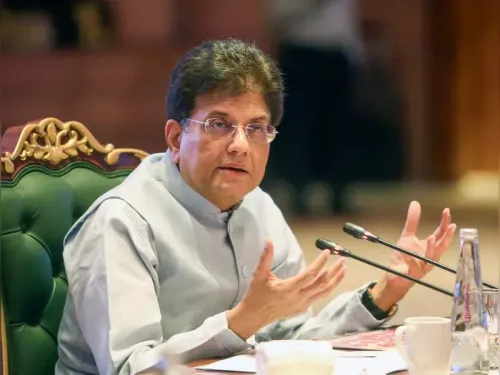
Seven years of negotiations, fifteen nations at the table, and one fateful walk-away — Union Commerce and Industry Minister Piyush Goyal on Thursday, October 29, 2026 pinned a pointed message to his X profile, calling India's refusal to join the Regional Comprehensive Economic Partnership (RCEP) 'a tragedy that the Modi government averted.'
What India said no to in Bangkok
At the 2019 ASEAN Summit in Bangkok, Prime Minister Narendra Modi announced that India would not sign RCEP, ending seven years of negotiations with the 15-nation Asia-Pacific bloc. The partnership, which brought together the 10 ASEAN members plus China, Japan, South Korea, Australia, and New Zealand, represented the world's largest free trade agreement by population and GDP at the time of its signing in 2020. India was the only major negotiating party to exit before the finish line. The core anxiety was straightforward: China. India's trade deficit with Beijing had been widening for years, and New Delhi feared that deep tariff cuts under RCEP would throw open Indian markets to a flood of Chinese goods — particularly in manufacturing — with little reciprocal benefit. Sensitive sectors like dairy, agriculture, and MSME manufacturing stood to bear the heaviest blow.The sectors that breathed easier
Indian farmers and dairy cooperatives had lobbied hard against RCEP, warning that New Zealand and Australian agricultural exports, entering at reduced or zero tariffs, could undercut domestic producers who operate on thin margins with limited mechanisation. MSME manufacturers raised parallel alarms about Chinese industrial goods. By walking away, the government effectively shielded these constituencies from tariff liberalisation commitments that, once locked in, would have been difficult to reverse. The Atmanirbhar Bharat campaign, launched in 2020, gave the exit a positive ideological frame — self-reliance over deep integration into supply chains dominated by a single large neighbour.Goyal's pin — a deliberate political signal
Pinning a post is a deliberate act: it sits permanently at the top of a public figure's profile, functioning as a statement of identity rather than a news update. That Goyal chose this framing — 'tragedy averted' — rather than a neutral policy note signals that the Commerce Ministry continues to hold the RCEP exit as a badge of strategic foresight, not a missed opportunity. India has since pursued bilateral trade deals with Australia and the UAE, and has ongoing negotiations with the European Union and the United Kingdom — a playbook that trades the breadth of mega-regional agreements for tighter, more controllable terms. The question that lingers over every trade ministry briefing is unchanged: as global supply chains rewire and RCEP members deepen integration without India, does staying out remain the right call — or does the cost of absence compound quietly, year by year?Point of View
Goyal is doing something more than revisiting history — he is pre-emptively defending the exit against any future argument that India's absence from RCEP has imposed an economic cost. The framing of 'tragedy averted' is calibrated to resonate with constituencies — farmers, dairy cooperatives, small manufacturers — who were the loudest voices against RCEP in 2019 and remain electorally significant. It also fits a consistent Modi-era trade doctrine that prizes domestic industry protection and bilateral deal-making over the market-access ambitions of large multilateral pacts. Whether this doctrine holds as RCEP members deepen integration and India continues to run a widening trade deficit with China is the central unresolved tension the post quietly sidesteps.
NationPress
29 Oct 2026
Frequently Asked Questions
Why did India not join RCEP?
India withdrew from RCEP at the 2019 ASEAN Summit in Bangkok primarily over concerns that the agreement's tariff cuts would trigger a surge of cheap Chinese imports , widen India's already large trade deficit with China, and harm domestic farmers, dairy producers, and MSME manufacturers.
What is RCEP and which countries are members?
RCEP (Regional Comprehensive Economic Partnership) is a free trade agreement among 15 Asia-Pacific nations , including the 10 ASEAN members plus China, Japan, South Korea, Australia, and New Zealand . It was signed in 2020 and is the world's largest trade bloc by population and GDP.
Can India still join RCEP?
RCEP's founding text left a door open for India to rejoin, but the Modi government has shown no inclination to do so, instead pursuing bilateral FTAs with Australia, the UAE, the EU, and the UK as an alternative trade strategy.
What is Piyush Goyal's role in India's trade policy?
Piyush Goyal is India's Union Minister of Commerce and Industry and leads all trade negotiations, including bilateral FTA talks. He is also a senior BJP leader and Leader of the House in the Rajya Sabha .
How did India's RCEP exit affect farmers and MSMEs?
By staying out of RCEP, India shielded its dairy, agriculture, and MSME manufacturing sectors from the tariff reductions that would have been required under the pact, protecting them from potentially cheaper competing imports, particularly from China, Australia, and New Zealand .