CM Dhami Launches City Bus, 9 Projects Worth ₹9.13 Cr in Srinagar
Synopsis
Chief Minister Pushkar Singh Dhami visited Srinagar in Pauri Garhwal on 31 October 2026, inaugurating nine civic schemes worth ₹9.13 crore, relaunching the city bus service after nine years, distributing SHG incentives under 'Sashakt Bahna', and inaugurating an EV charging station.
Key Takeaways
₹9.13 crore worth of nine development schemes were inaugurated and foundation-stoned at Shriyanta Tapu, Srinagar, Pauri Garhwal on 31 October 2026 .
CM Dhami relaunched Srinagar's city bus service after a gap of nearly nine years , personally flagging off the first bus.
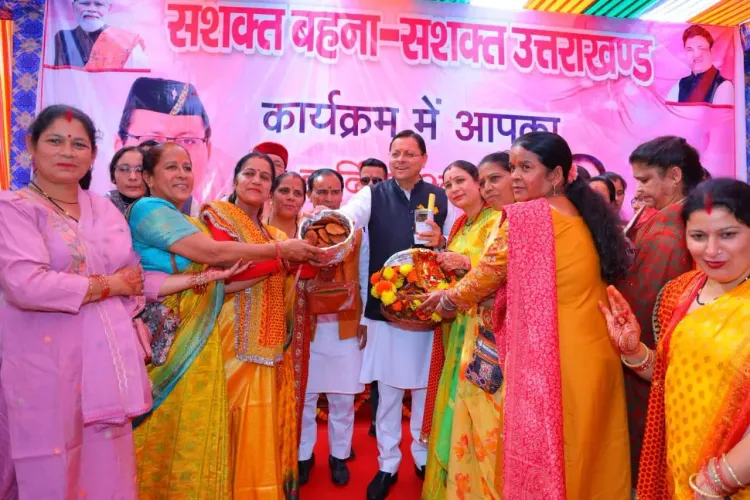
Under 'Sashakt Bahna, Sashakt Uttarakhand' , women's SHGs received incentive cheques totalling ₹2,01,530 ; 51 Paryavaran Mitras received health and hygiene kits.
An EV charging station was inaugurated in Srinagar to promote eco-friendly urban transport.
Civic works inaugurated include solid waste management facilities , a rain-water harvesting park, road and drain construction, and park beautification under Nagar Nigam Srinagar.
Dhami highlighted the Rishikesh-Karnprayag Railway Line's planned Srinagar station and the Char Dham All Weather Road as transformative connectivity projects benefiting the region.
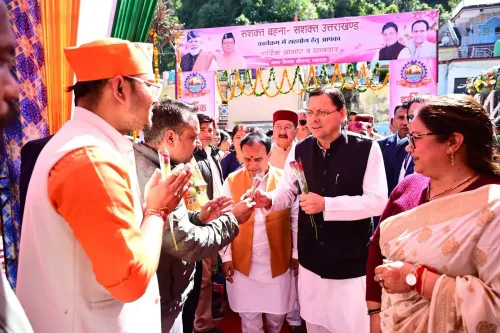
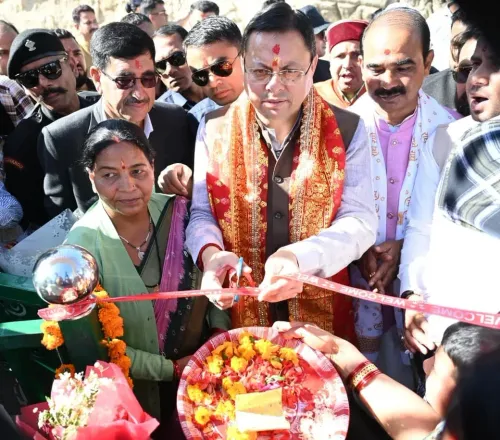
Nine years after Srinagar lost its city bus service, Chief Minister Pushkar Singh Dhami revived it on Saturday, 31 October 2026 — flagging off a bus packed with councillors at Shriyanta Tapu, Srinagar, Pauri Garhwal, and delivering a burst of civic development worth ₹9.13 crore across nine schemes in a single visit.
A bus return nine years in the making
The relaunch of the city bus service was the most visceral symbol of the day. Srinagar residents had been waiting nearly a decade for reliable intra-city public transport, and Dhami personally flagged off the first bus — a gesture that drew loud crowds of women, elders, and young people who turned out to welcome him at the town's entry. The revival speaks directly to a longstanding gap in urban mobility for a town that sits at the crossroads of the Char Dham pilgrimage route.
'Sashakt Bahna, Sashakt Uttarakhand' — cheques and health kits for SHGs
The development push was paired with a welfare centrepiece. Through the state's 'Sashakt Bahna, Sashakt Uttarakhand' ('Empowered Sisters, Empowered Uttarakhand') programme, Dhami distributed incentive cheques worth ₹2,01,530 to women's self-help groups (SHGs), alongside health and hygiene kits to 51 'Paryavaran Mitras' — women appointed as environment-community liaison workers. The programme extends a policy lineage of rural SHG support that Uttarakhand has operated since the early 2000s, now sharpened with a branding push under the current state government.
Green infrastructure and civic works inaugurated
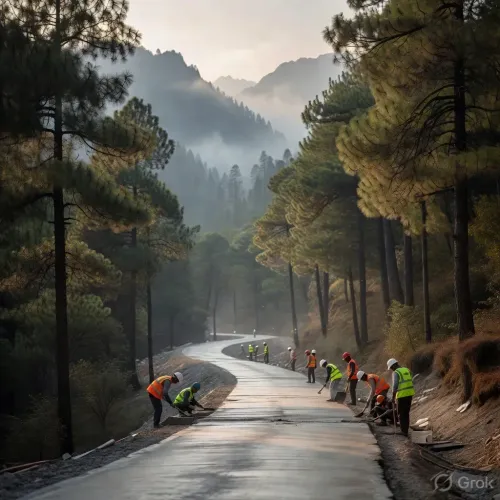
On the infrastructure side, Dhami inaugurated and laid foundation stones for projects spanning solid waste management and disposal facilities, a rain-water harvesting park named Swargiya Ranjit Singh Bhandari Vatika, road and drain construction, Lakshminarayan Park beautification, and broader civic amenity upgrades under Nagar Nigam Srinagar. The day also saw the inauguration of an EV charging station in Srinagar — a nod toward greener urban transport in a Himalayan town where air quality and pilgrimage-season congestion are growing concerns.
Rail corridor, Char Dham roads, and Srinagar's strategic position
Dhami framed the local investments within a larger connectivity arc. He highlighted that the Char Dham All Weather Road — the central government's flagship Himalayan highway project initiated around 2016 — has its main hub in Srinagar itself. The Rishikesh-Karnprayag Railway Line, he said, is progressing at pace and will include a station at Srinagar, promising direct rail access to a community that has long relied on winding mountain roads. Both projects, he noted, are delivering tangible returns already through a surge in Char Dham Yatra footfall that benefits local livelihoods.
When the CM stepped off protocol
A quieter moment cut through the ribbon-cutting: near a college gate, Dhami spotted students, stepped out of his official motorcade unannounced, and spent time talking with them — asking about their lives, their concerns. The students, visibly surprised, crowded around him with evident enthusiasm. It was an unscripted beat in an otherwise programme-heavy day, and it travelled fastest on social media.
Cabinet Ministers Dr. Dhan Singh Rawat, Satpal Maharaj, and Bharat Chaudhary, along with Mayor Aarti Bhandari, District Panchayat President Rachna Butola, and District Magistrate Swati S. Bhadauria were present at the event.
For Srinagar — a Garhwal town carrying pilgrimage economy ambitions and a backlog of municipal demands — Saturday's programme was less a ceremony and more a claim: that the infrastructure cycle is finally turning in its favour.
Point of View
Blurring the line between state and central credit. The unscripted student interaction — however organic — functions as a counterweight to the programmatic heaviness, humanising the CM in a politically active college town.
NationPress
1 Nov 2026
Frequently Asked Questions
What projects did CM Dhami inaugurate in Srinagar on 31 October 2026?
CM Pushkar Singh Dhami inaugurated and laid foundation stones for nine civic schemes worth ₹9.13 crore, including a city bus service revival, an EV charging station, solid waste management facilities, a rain-water harvesting park, road and drain works, and park beautification projects in Srinagar, Pauri Garhwal.
Why was Srinagar's city bus service relaunched?
Srinagar had been without a city bus service for nearly nine years. CM Dhami fulfilled the longstanding demand of local residents by relaunching the service on 31 October 2026, flagging off the first bus personally at the event.
What is the 'Sashakt Bahna, Sashakt Uttarakhand' programme?
'Sashakt Bahna, Sashakt Uttarakhand' is an Uttarakhand state programme that provides financial incentives and support kits to women's self-help groups to promote their livelihoods. At the Srinagar event, SHGs received cheques totalling ₹2,01,530 and 51 Paryavaran Mitra women received health and hygiene kits.
Will Srinagar have a station on the Rishikesh-Karnprayag railway line?
Yes. CM Dhami confirmed that the Rishikesh-Karnprayag Railway Line, which is progressing at a fast pace, includes a planned station at Srinagar, which will provide direct rail connectivity to residents of the Pauri Garhwal town.
How does Srinagar connect to the Char Dham All Weather Road project?
CM Dhami stated that Srinagar serves as the main hub of the Char Dham All Weather Road, the central government project connecting the four major Himalayan pilgrimage sites. The road has already boosted Char Dham Yatra numbers, directly benefiting local residents and businesses.