CM Dhami Spotlights Malyanath Swami Temple in Pithoragarh
Synopsis
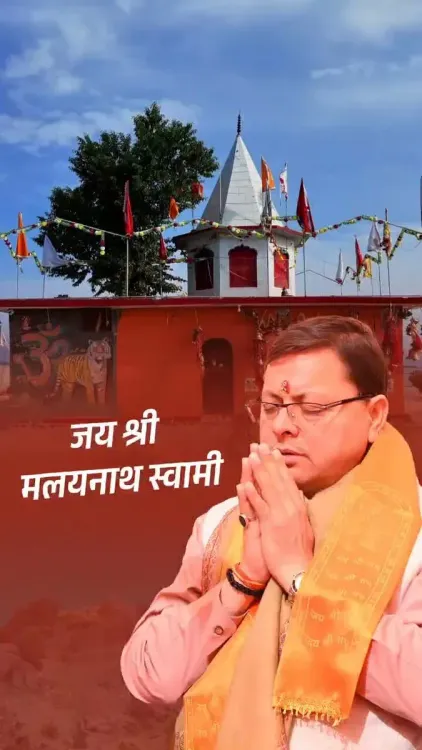
Uttarakhand Chief Minister Pushkar Singh Dhami spotlighted the ancient Shri Malyanath Swami Ji Shiva temple in Didihat, Pithoragarh, urging visitors to the border district to include the shrine in their itinerary. The appeal aligns with the state's wider push to diversify pilgrimage tourism beyond the Char Dham circuit into Kumaon's lesser-known sites.
Key Takeaways
CM Pushkar Singh Dhami urged visitors to Pithoragarh to visit the Shri Malyanath Swami Ji Temple in Didihat.
The ancient shrine is dedicated to Bhagwan Shiva and set in the Kumaon Himalayas.
The post fits Uttarakhand's long-running 'Devbhoomi' tourism strategy since statehood in 2000.
Pithoragarh borders Nepal and is a gateway to Adi Kailash and Om Parvat circuits.
Promotion of remote shrines is linked to local livelihoods and anti-migration efforts in hill districts.
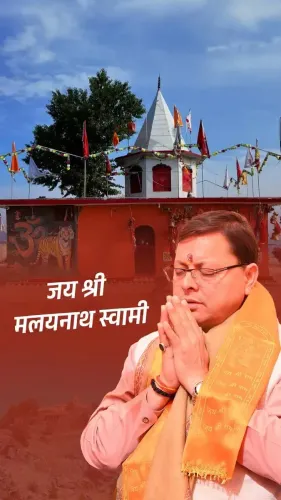
Uttarakhand Chief Minister Pushkar Singh Dhami on Thursday urged visitors to the state's eastern hills to make time for the Shri Malyanath Swami Ji Temple, an ancient Shiva shrine located in Didihat in Pithoragarh district. In a post on X, the chief minister described the temple as a confluence of faith, spirituality and cultural heritage set amid the Kumaon Himalayas.
Context
In his message, Dhami wrote that the temple 'is a wonderful confluence of devotion, spirituality and a rich cultural heritage', adding that the shrine 'holds a special identity for its historic glory, religious significance and enchanting natural surroundings'. He appealed to travellers: 'Aap bhi Pithoragarh janpad aagaman par is paavan mandir ke darshan avashya karen' (Do visit this sacred temple whenever you come to Pithoragarh district).
The chief minister's note was accompanied by a short video showcasing the temple precinct. The shrine, dedicated to Bhagwan Shiva, sits in the hill town of Didihat, roughly midway along the route that connects district headquarters Pithoragarh with the higher reaches near the Nepal border.
Policy backdrop
Since the formation of Uttarakhand in 2000, successive state governments have positioned the hill state as 'Devbhoomi' (Land of the Gods), building tourism strategy around its temple circuits. While the Char Dham yatra to Badrinath, Kedarnath, Gangotri and Yamunotri remains the dominant draw, planners have steadily tried to extend pilgrim footfall to lesser-known shrines across Kumaon and Garhwal.
Pithoragarh, a border district abutting Nepal and Tibet, has been a recurring focus of this diversification push. The district hosts several Shaiva and Shakta sites and serves as a gateway for the Adi Kailash and Om Parvat circuits, both of which have received fresh policy attention in recent years.
Stakeholders and impact
The chief minister's appeal is aimed squarely at domestic pilgrims and trekkers, who form the backbone of Uttarakhand's tourism economy. For residents of Didihat and surrounding villages, increased visitor traffic typically translates into demand for homestays, transport services, local produce and temple-economy livelihoods such as priests, flower sellers and prasad vendors.
Promoting remote shrines also dovetails with broader connectivity work in the border belt, where road upgrades, mobile network expansion and helipad construction have been pitched as dual-use investments serving both pilgrims and strategic needs. Hill districts like Pithoragarh have long flagged out-migration as a structural concern, and tourism-linked employment is one of the levers the state has cited to slow it.
What's next
The post fits a familiar pattern in which Dhami uses social media to surface lesser-known religious sites ahead of peak travel seasons. Watchers of the state's tourism portfolio will look for follow-on announcements on precinct development, signage, parking and access roads around the Malyanath temple, as well as any inclusion in curated Kumaon circuits promoted by the state tourism department.
For now, the chief minister's message functions as a soft nudge — an invitation to fold a quieter Shiva shrine into itineraries that have traditionally been dominated by the Garhwal Char Dham, with the longer-term aim of spreading both reverence and revenue across Uttarakhand's hill economy.
Point of View
Dhami signals continuity with the state's 'Devbhoomi' branding while quietly building the case for infrastructure spending in Pithoragarh. The political subtext is twofold: shoring up cultural credentials with the BJP's core base, and addressing the persistent out-migration problem in the hills through tourism-linked livelihoods. Expect more such targeted shout-outs as the summer travel window opens.
NationPress
21 Oct 2026
Frequently Asked Questions
Where is the Malyanath Swami temple located?
The Shri Malyanath Swami Ji Temple is located in Didihat town in Pithoragarh district of Uttarakhand. It is an ancient shrine dedicated to Bhagwan Shiva, set amid the Kumaon Himalayas near the Nepal border.
Why did CM Dhami post about the Malyanath temple?
Chief Minister Pushkar Singh Dhami posted to encourage visitors to Pithoragarh district to include the temple in their itinerary. He described it as a confluence of faith, spirituality and cultural heritage.
How do you reach Didihat in Pithoragarh?
Didihat is reached by road from Pithoragarh town, which is the district headquarters. Pithoragarh is connected to the plains via Tanakpur and Haldwani, with the nearest major rail and air links in Kathgodam and Pantnagar respectively.
What is the Devbhoomi tourism strategy in Uttarakhand?
Devbhoomi is Uttarakhand's long-standing branding that positions the state as the Land of the Gods. Successive governments have used it to expand pilgrimage tourism beyond the Char Dham to lesser-known temples across Kumaon and Garhwal.
Which other pilgrimage sites are near Pithoragarh?
Pithoragarh district serves as a gateway to several important sites including Adi Kailash and Om Parvat. It also hosts a number of Shaiva and Shakta shrines that have been promoted under the state's tourism diversification push.