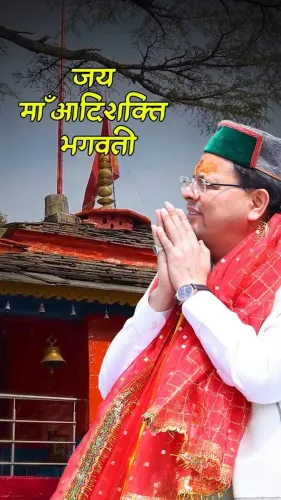
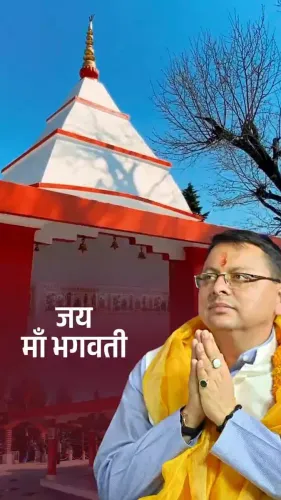
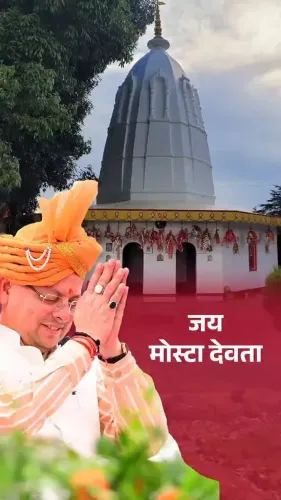
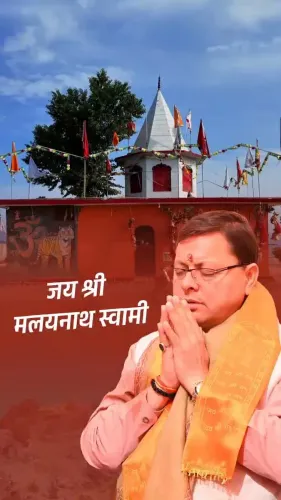
CM Dhami Promotes Maa Chamunda Devi Temple in Pithoragarh
Synopsis
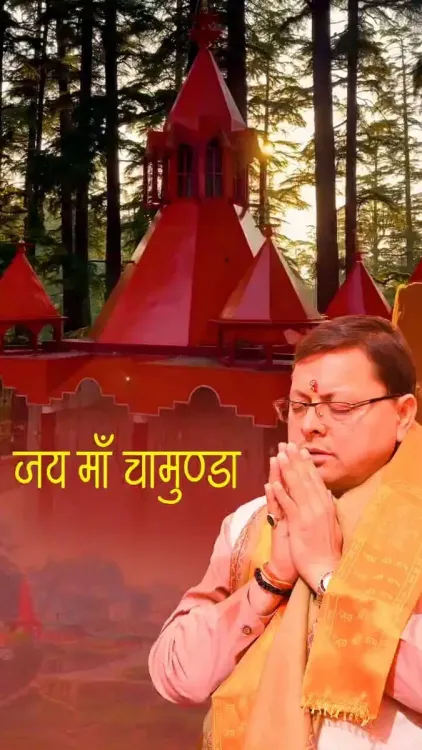
Uttarakhand Chief Minister Pushkar Singh Dhami on 22 May 2026 spotlighted the Maa Chamunda Devi Temple in Gangolihat, Pithoragarh, urging pilgrims to visit the shrine and experience the divine culture of Devbhoomi during their travels to the district.
Key Takeaways
CM Pushkar Singh Dhami promoted the Maa Chamunda Devi Temple in Gangolihat, Pithoragarh via X on 22 May 2026 .
He described the temple as 'an unparalleled confluence of devotion, faith, and spiritual energy.' The shrine is located in Pithoragarh district , Kumaon division , near the Nepal border.
Uttarakhand has promoted its Devbhoomi identity for religious tourism since statehood in 2000 .
The promotion targets pilgrims and local tourism operators in a remote hill district.
Further announcements on Kumaon temple infrastructure or monsoon yatra campaigns may follow.
Uttarakhand Chief Minister Pushkar Singh Dhami on Friday, 22 May 2026, took to X to promote the Maa Chamunda Devi Temple in Gangolihat, Pithoragarh, describing it as a rare confluence of devotion, faith, and spiritual energy, and urging pilgrims visiting the district to make the shrine a part of their itinerary.
Context
In his post, Chief Minister Dhami described the temple as 'श्रद्धा, आस्था और आध्यात्मिक ऊर्जा का अनुपम संगम' — 'an unparalleled confluence of devotion, faith, and spiritual energy.' He added that the sacred site offers devotees a 'special spiritual experience through its divinity, natural beauty, and transcendental peace.' He concluded by inviting visitors to experience 'देवभूमि की दिव्य संस्कृति और आस्था' — 'the divine culture and faith of Devbhoomi' — through a visit to the temple during any trip to Pithoragarh.
The Maa Chamunda Devi Temple is located in Gangolihat, a town in Pithoragarh district in Uttarakhand's Kumaon division. The shrine is dedicated to Goddess Chamunda and is set against a backdrop of Himalayan terrain, drawing pilgrims from across the region. Pithoragarh district borders Nepal to the east and Tibet to the north, making it both a strategic and culturally significant part of the state.
Policy Backdrop
Since Uttarakhand's formation as a separate state in November 2000, successive governments have actively promoted the state's identity as Devbhoomi — literally 'Land of Gods' — leveraging its dense concentration of Hindu pilgrimage centres for economic and tourism growth. Religious tourism circuits have been a consistent policy priority, with major sites such as the Char Dham — Badrinath, Kedarnath, Gangotri, and Yamunotri — receiving sustained attention and infrastructure investment.
Chief Minister Dhami's administration has extended this approach to lesser-known shrines in the Kumaon region, using social media outreach to spotlight temples that fall outside the primary pilgrimage circuits. This mirrors a broader pattern seen across Indian states, where spiritual heritage is packaged as a tourism product to drive footfall to hill districts and support local livelihoods. Promotion of such sites often accompanies parallel investments in road connectivity and basic pilgrim amenities.
Stakeholders and Impact
The primary beneficiaries of heightened visibility for the Maa Chamunda Devi Temple are pilgrims seeking spiritual destinations in the Kumaon Himalayas and local tourism operators — including guesthouses, transport providers, and small traders — in and around Gangolihat. Greater footfall at the shrine can translate into tangible economic activity in one of Uttarakhand's more remote hill districts.
For the state government, social media promotion of such shrines reinforces the Devbhoomi brand without requiring immediate capital expenditure, while building a digital archive of the state's cultural and religious heritage. The approach also resonates with a voter base that holds religious tourism in high regard.
What's Next
Observers will watch for follow-up announcements regarding infrastructure upgrades — including road access, pilgrim rest facilities, or digital connectivity — at Gangolihat and other Kumaon shrines. With the monsoon yatra season approaching, the state government may roll out a broader campaign spotlighting pilgrimage destinations across both the Garhwal and Kumaon divisions. Sustained promotion of sites like the Maa Chamunda Devi Temple signals that Uttarakhand's religious tourism strategy is expanding well beyond its flagship Char Dham circuit, with implications for investment in hill-district connectivity and hospitality infrastructure.
Point of View
The administration signals an intent to distribute pilgrimage traffic — and its economic benefits — more evenly across the state's hill districts. The timing, ahead of the monsoon yatra season, suggests a deliberate effort to sustain pilgrim interest through a period when major high-altitude routes face weather disruptions. Politically, such outreach reinforces the BJP government's alignment with religious heritage as a core governance theme in Uttarakhand.
NationPress
7 Oct 2026
Frequently Asked Questions
Where is the Maa Chamunda Devi Temple located?
The Maa Chamunda Devi Temple is located in Gangolihat town in Pithoragarh district, part of the Kumaon division of Uttarakhand. It is dedicated to Goddess Chamunda and is set amid Himalayan terrain.
Why did CM Dhami post about the Chamunda Devi Temple?
Chief Minister Pushkar Singh Dhami posted about the temple on 22 May 2026 to promote it as a pilgrimage and spiritual tourism destination, urging visitors travelling to Pithoragarh to include the shrine in their itinerary.
What is Devbhoomi and why is it significant for Uttarakhand?
Devbhoomi means 'Land of Gods' and is the official identity Uttarakhand promotes to highlight its concentration of Hindu pilgrimage centres. Since statehood in 2000, the term has anchored the state's religious tourism and cultural branding strategy.
What are the main pilgrimage sites in Pithoragarh, Uttarakhand?
Pithoragarh district is home to several revered shrines, with the Maa Chamunda Devi Temple in Gangolihat being among the most prominent. The district's Himalayan setting and proximity to the Nepal border also make it part of broader Kumaon pilgrimage circuits.
How does Uttarakhand promote lesser-known temples?
The Uttarakhand government regularly uses social media, including posts by Chief Minister Dhami, to spotlight shrines outside the flagship Char Dham circuit. This digital outreach is often paired with investments in road connectivity and pilgrim amenities in hill districts.