CM Sai launches salary-linked short-term loan scheme for Chhattisgarh govt staff
Synopsis
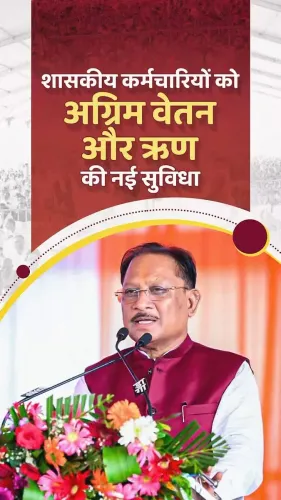
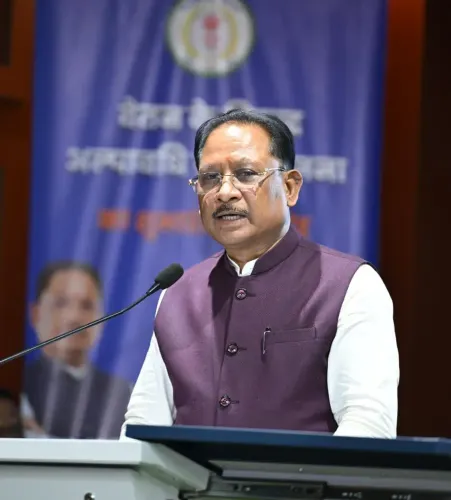
The Chhattisgarh Chief Minister's Office launched the 'Vetan ke Viruddh Alpaavadhi Rin Yojana' on 8 July 2026, offering state government employees structured short-term loans against their salaries to reduce reliance on informal, high-interest borrowing.
Key Takeaways
The Chhattisgarh CMO announced the launch of the 'Vetan ke Viruddh Alpaavadhi Rin Yojana' (Short-Term Loan Scheme Against Salary) on 8 July 2026 .
The scheme provides state government employees with short-term loans structured against their monthly salaries.
The initiative aims to reduce employee dependence on informal, high-interest borrowing for short-term financial needs.
Chief Minister Vishnu Deo Sai has led Chhattisgarh since December 2023 , with employee welfare forming part of his administration's policy agenda.
The launch ceremony was broadcast live, reflecting the government's intent to maximise outreach among the state workforce.
Key scheme details — including interest rates, loan ceilings, and eligibility — are expected to be formalised in subsequent official notifications.
The Chief Minister's Office of Chhattisgarh announced the launch of a short-term loan scheme against salary for state government employees on Wednesday, 8 July 2026, marking a new welfare initiative aimed at providing quick credit access to public servants in the state.
Context
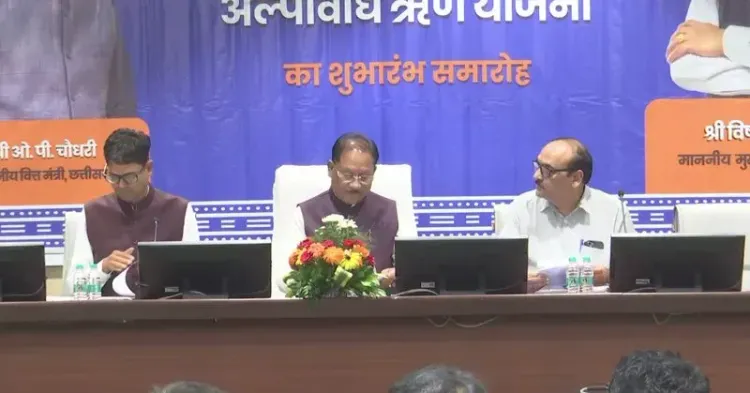
The official post, shared by the Chhattisgarh CMO, announced the Vetan ke Viruddh Alpaavadhi Rin Yojana ka Shubharambh Samaroh — the inauguration ceremony of the short-term loan scheme against salary. The event was broadcast live, underscoring the government's intent to give the launch wide visibility among the state's employee community.
The scheme is designed to allow government employees to borrow against their monthly salary, providing a structured, institutional alternative to informal borrowing. Chief Minister Vishnu Deo Sai, who has led Chhattisgarh since December 2023, has positioned employee welfare as a priority of his administration.
Policy Backdrop
Salary-linked advance and short-term loan facilities for public servants are not new to Indian governance. Several state governments have introduced similar mechanisms over the years to address the short-term liquidity needs of their workforce, particularly at times of medical emergencies, school fee payments, or household contingencies.
Such schemes are typically administered through state treasuries, cooperative banks, or designated financial institutions, with repayment structured as automatic salary deductions. They are designed to reduce dependence on moneylenders and private financiers who often charge significantly higher interest rates, making them a meaningful component of employee welfare policy.
Stakeholders and Impact
Chhattisgarh has a substantial workforce of state government employees across departments including education, health, revenue, and police. A salary-backed loan facility directly benefits this group by offering predictable repayment terms and institutional credibility, reducing financial stress that can affect job performance and personal well-being.
For the state government, such a scheme also signals administrative responsiveness to employee concerns — a politically significant gesture, particularly given that public sector workers represent an organised and vocal constituency. The scheme's success will likely be measured by uptake figures, interest rates offered, and the ceiling on loan amounts, details that are expected to emerge as the rollout progresses.
What's Next
The formal launch ceremony marks the beginning of implementation, but the scheme's real impact will depend on how efficiently eligible employees can apply and receive disbursements. Watchers of Chhattisgarh state policy will look for official notifications detailing eligibility criteria, maximum loan limits, applicable interest rates, and the repayment window.
If the scheme gains strong uptake, it could serve as a model for further employee-welfare financial products in the state, and may inform similar efforts by other state administrations watching CM Sai's governance record ahead of future electoral cycles.
Point of View
Whose government is still in its early years, such schemes serve a dual purpose: addressing a genuine financial pain point for employees while demonstrating governance credibility. The live broadcast of the launch ceremony signals a deliberate effort to amplify visibility beyond the immediate beneficiary group. How the scheme is operationalised — interest rates, loan ceilings, and disbursal speed — will determine whether it becomes a substantive welfare milestone or a routine administrative exercise.
NationPress
7 Oct 2026
Frequently Asked Questions
What is the Chhattisgarh short-term salary loan scheme?
It is a state government scheme that allows Chhattisgarh government employees to take short-term loans against their monthly salary, providing an institutional credit option as an alternative to informal borrowing.
Who launched the salary loan scheme in Chhattisgarh?
The scheme was launched by the Chhattisgarh government under Chief Minister Vishnu Deo Sai, with the launch ceremony announced by the Chief Minister's Office on 8 July 2026.
Who is eligible for the Chhattisgarh salary-linked loan scheme?
The scheme targets state government employees in Chhattisgarh. Specific eligibility criteria, including department coverage and service requirements, are expected to be detailed in official notifications following the launch.
What is the benefit of a salary-linked loan for government employees?
Such schemes offer structured, low-interest credit with automatic salary-deduction repayment, helping employees manage short-term cash needs without resorting to high-interest informal lenders.
What is the full name of the scheme launched by Chhattisgarh CMO?
The scheme is called 'Vetan ke Viruddh Alpaavadhi Rin Yojana', which translates to the 'Short-Term Loan Scheme Against Salary'.