Who is the New Director General of Naval Armament?
Synopsis
Divakar Jayant has officially taken charge as the Director General of Naval Armament, succeeding P Upadhyay. With over three decades of experience in the Indian Navy, Jayant is set to lead the Naval Armament Organisation. As India prepares for the International Fleet Review, the INS Vikrant will showcase its capabilities, marking a significant moment in naval history.
Key Takeaways
Divakar Jayant is the new Director General of Naval Armament .
He has over 33 years of service in various critical roles within the Indian Navy.
The INS Vikrant will be a major highlight at the upcoming International Fleet Review .
Jayant specializes in life-cycle management of naval armaments.
His leadership is expected to significantly enhance India's naval capabilities.
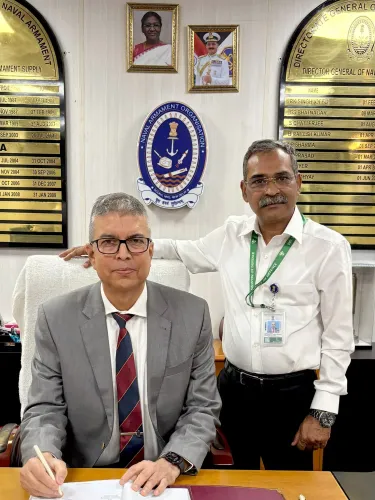
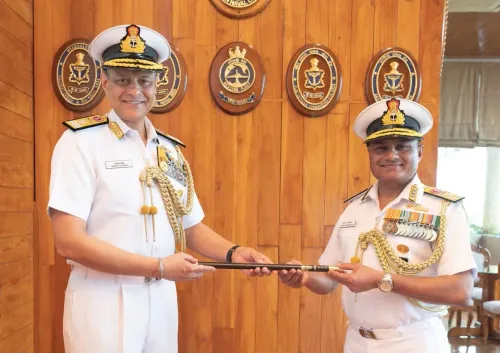
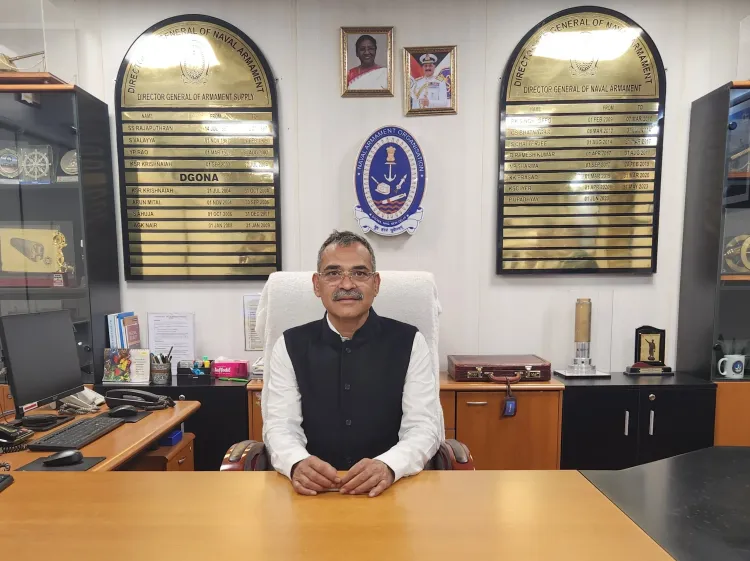
New Delhi, Feb 3 (NationPress) Divakar Jayant has assumed the role of Director General of Naval Armament (DGONA) at the Naval Headquarters, Ministry of Defence, as confirmed by an official announcement on Tuesday.
Jayant, a member of the 1991 batch of the Indian Naval Armament Service (INAS), takes over from P Upadhyay, who retired on January 31. He officially took command on Monday, according to a statement released by the Defence Ministry.
The new DG began his journey with the Naval Armament Organisation of the Indian Navy on December 28, 1992, and has occupied several senior roles, including Chief General Manager and General Manager/Principal Director, at various Naval Armament Depots in Mumbai, Visakhapatnam, and Alwaye, as well as at NHQ/MoD, over his 33 years of dedicated service.
An Electrical Engineering graduate from IIT Delhi, Jayant specializes in life-cycle management of Torpedoes and is adept in the planning of explosive infrastructure projects. He has also gained extensive experience in HR and administration and completed the prestigious APPPA course (2017–18).
Earlier, the Indian Navy teased an upcoming International Fleet Review (IFR) scheduled for February 18 in Visakhapatnam, showcasing the naval capabilities of friendly nations.
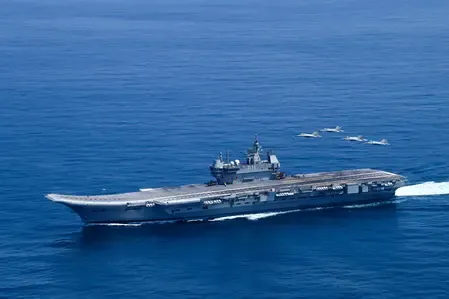
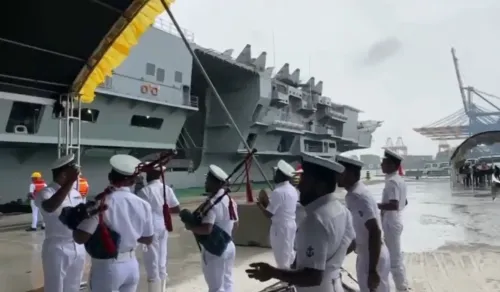
INS Vikrant, the star of Operation Sindoor’s naval component, will be a major highlight of the IFR, allowing international navies to explore India’s indigenous aircraft carrier up close, as stated by an official.
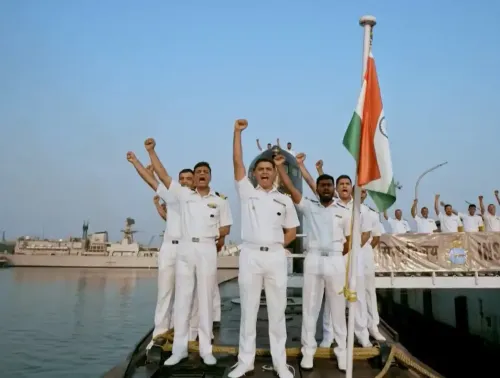
The IFR serves as a ceremonial gathering of international naval delegations, ships, submarines, and aircraft, where the President, as the Supreme Commander of the Armed Forces, reviews the fleet, according to a Navy statement.
During Operation Sindoor, the Vikrant carrier battle group was pivotal in establishing the Indian Navy’s offensive deterrent strategy, compelling the Pakistan Navy into a defensive stance and prompting a request for an urgent ceasefire. For the IFR, it will navigate to the Bay of Bengal.
The aircraft carrier boasts the capacity to host up to 30 aircraft, including MiG-29 K fighter jets, MiG-29 KUB, Chetak, Kamov 31, MH 60R helicopters, and Advanced Light Helicopters (ALH).
Measuring 262.5 meters in length and 61.6 meters in width, the INS Vikrant carries a displacement of approximately 45,000 tonnes. It can reach a maximum designed speed of 28 knots and accommodate around 1,600 personnel, including women officers.
INS Vikrant derives its name from India’s first aircraft carrier, INS Vikrant (R11), which was decommissioned in 1997. The original INS Vikrant played a vital role in the 1961 Goa Liberation Operation and the 1971 Indo-Pak War, securing a revered status in India’s naval legacy.
Point of View
It’s crucial to acknowledge the strategic importance of the appointment of Divakar Jayant as the new Director General of Naval Armament. His extensive experience and expertise will play a vital role in enhancing India's defense capabilities, especially in light of the upcoming International Fleet Review. It's a pivotal moment for the Indian Navy as it showcases its strengths on an international platform, aligning with national interests.
NationPress
23 Sept 2026
Frequently Asked Questions
Who is Divakar Jayant?
Divakar Jayant is the newly appointed Director General of Naval Armament at the Naval Headquarters, Ministry of Defence.
What is the significance of the INS Vikrant?
INS Vikrant is India's indigenous aircraft carrier and played a crucial role during Operation Sindoor, showcasing India's naval capabilities.
When is the International Fleet Review scheduled?
The International Fleet Review is scheduled for February 18 in Visakhapatnam.
What are the responsibilities of the Director General of Naval Armament?
The Director General oversees the operations and management of naval armaments, ensuring the effectiveness and readiness of naval capabilities.
What is the history of INS Vikrant?
INS Vikrant was India's first aircraft carrier, active in key historical operations, and was decommissioned in 1997.