DMK's A. Raja withdraws remarks on CM Vijay after cross-party backlash
Synopsis
DMK MP A. Raja's withdrawal of his remarks against Tamil Nadu CM C. Joseph Vijay came with a sting in the tail — his post on X retained a combative warning even as he took back his words. The episode backfired on the DMK's anti-TVK campaign, drew fire from its own allies, and reignited concerns about declining standards of political discourse in Tamil Nadu.
Key Takeaways
Raja withdrew controversial remarks against Tamil Nadu Chief Minister C.
Joseph Vijay on 13 September 2026 after widespread backlash.
The controversy erupted during DMK -organised statewide protests against the TVK government held on Saturday.
Leaders from TVK , allied parties, and Tamil Nadu Congress Committee president Manickam Tagore condemned Raja's remarks as personal and offensive.
Raja's withdrawal, posted on X , retained a defiant tone: 'If you do not change, you will be corrected.' The episode deepened the TVK–DMK political confrontation and renewed debate over standards of political discourse in Tamil Nadu.
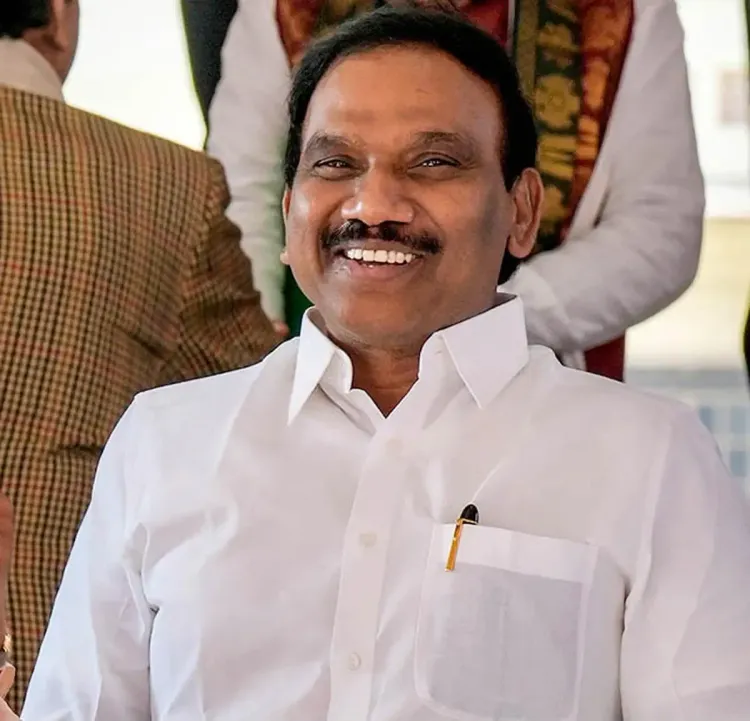
DMK Member of Parliament A. Raja on 13 September 2026 withdrew his controversial remarks targeting Tamil Nadu Chief Minister C. Joseph Vijay, after a wave of condemnation from political parties across the spectrum — including leaders within the DMK-led alliance itself. The episode has deepened the ongoing political confrontation between the ruling Tamilaga Vettri Kazhagam (TVK) and the Opposition Dravida Munnetra Kazhagam (DMK), while triggering a wider debate about the standards of political discourse in Tamil Nadu.
How the Controversy Erupted
The row began during statewide demonstrations organised by the DMK on Saturday against the TVK government. The Opposition party had accused Chief Minister Vijay and Law Minister C.T.R. Nirmal Kumar of disrespecting the sacrifices of DMK leaders and those imprisoned during the Emergency. Senior DMK figures P.K. Sekar Babu and R.S. Bharathi spoke sharply against the Chief Minister at protests held in different parts of Tamil Nadu.
However, Raja's remarks against CM Vijay and Nirmal Kumar ignited a separate controversy, effectively pulling attention away from the DMK's stated grievances against the government and putting the Opposition on the defensive.
Condemnation from All Sides
Several TVK functionaries and ministers condemned Raja's comments, calling them personal, offensive, and unbecoming of a senior parliamentarian. Leaders of some parties allied with the DMK also expressed disapproval, and a section of DMK supporters reportedly distanced themselves from the remarks through social media posts.
Tamil Nadu Congress Committee president Manickam Tagore was among the most vocal critics. He argued that personally insulting a state's Chief Minister and using abusive language posed a serious threat to democratic values. Tagore also questioned why the DMK leadership had remained silent as senior party functionaries repeatedly crossed the boundaries of acceptable political discourse. Political disagreements, he maintained, must be expressed without resorting to personal attacks or indecent language.
Raja's Withdrawal — And Its Combative Tone
Faced with mounting criticism, Raja announced he was withdrawing his remarks. In a post on X, he said he had no hesitation in taking back his words. Yet the withdrawal itself carried a defiant edge. Raja wrote that he regretted questioning the 'identity' and 'truth' of a person who had, in his view, deliberately mocked the identity and truth of a leader born out of sacrifice.
'I have no hesitation in withdrawing my words. If you do not change, you will be corrected,' Raja said in the post — a phrasing that critics noted did little to soften the confrontational spirit of his original speech.
Broader Impact on Tamil Nadu Politics
The episode has intensified the political fault lines between TVK and DMK in Tamil Nadu. Notably, the controversy underscores a pattern seen repeatedly in recent Tamil Nadu politics: Opposition demonstrations meant to target the government end up generating internal damage through intemperate remarks by senior leaders. Leaders across party lines have called for restraint and respect in public speeches, signalling that the fallout from this episode is unlikely to dissipate quickly.
With the DMK's original allegations against the TVK government now overshadowed, political observers will watch whether the Opposition can recalibrate its messaging — and whether Raja's qualified withdrawal is sufficient to close the chapter.
Point of View
'If you do not change, you will be corrected,' undercuts any conciliatory intent and will likely keep the controversy alive. More damaging for the DMK is that a protest campaign designed to target the TVK government ended up generating its own internal crisis, with allies and party supporters publicly breaking ranks. Manickam Tagore's pointed question — why does the DMK leadership stay silent when senior figures cross the line? — is the one that will linger, because it frames this not as an isolated outburst but as a pattern the party has failed to discipline.
NationPress
13 Sept 2026
Frequently Asked Questions
Why did DMK MP A. Raja withdraw his remarks against CM Vijay?
A. Raja withdrew his remarks on 13 September 2026 after widespread criticism from TVK functionaries, ministers, DMK-allied party leaders, and Tamil Nadu Congress Committee president Manickam Tagore, who called his language offensive and a threat to democratic values. The backlash also came from within the broader DMK-led alliance, making his position untenable.
What did A. Raja say in his withdrawal post on X?
Raja posted on X that he had no hesitation in taking back his words, but his statement retained a combative tone. He wrote that he regretted questioning the 'identity' and 'truth' of someone who had, in his view, mocked the identity of a leader born out of sacrifice, adding: 'If you do not change, you will be corrected.'
What was the context of the DMK protests where Raja's remarks were made?
The DMK organised statewide demonstrations against the TVK government, accusing Chief Minister C. Joseph Vijay and Law Minister C.T.R. Nirmal Kumar of disrespecting the sacrifices of DMK leaders and those imprisoned during the Emergency. Raja's remarks at these protests triggered a separate controversy that overshadowed the DMK's original campaign.
Who criticised A. Raja's remarks and why?
Tamil Nadu Congress Committee president Manickam Tagore, TVK ministers, TVK functionaries, and leaders of some DMK-allied parties criticised Raja's remarks as personal, offensive, and unbecoming of a senior parliamentarian. Tagore argued that using abusive language against a sitting Chief Minister posed a serious threat to democratic values.
What is the broader political impact of this episode in Tamil Nadu?
The episode has intensified the political confrontation between the ruling TVK and the Opposition DMK, while also exposing divisions within the DMK alliance. It has renewed debate about the deteriorating standards of political discourse in Tamil Nadu, with leaders across party lines calling for restraint in public speeches.