Is the Trinamool Congress Exploiting Religion for Political Gain Ahead of Elections?
Click to start listening
Synopsis
The BJP has accused the Trinamool Congress of using religious sentiments for electoral gain, highlighting the recent announcements of constructing a Shri Krishna temple and a Babri mosque. With elections approaching, this issue raises questions about the politicization of religion in West Bengal.
Key Takeaways
- BJP accuses Trinamool Congress of exploiting religion.
- Construction of a Shri Krishna temple announced.
- Previous announcements included a Babri mosque plan.
- Opposition leaders call for focus on development instead.
- Concerns raised over religious polarization ahead of elections.
New Delhi, Dec 22 (NationPress) The BJP has accused the Trinamool Congress of exploiting religious sentiments for political advantage just before the upcoming Assembly elections next year.
This accusation follows the announcement from Trinamool MLA Zakir Hussain about the construction of a Shri Krishna temple with an estimated budget of Rs one crore. Previously, another suspended MLA from the party had declared plans for a Babri mosque, a replica of the one in Ayodhya that was destroyed in 1992.
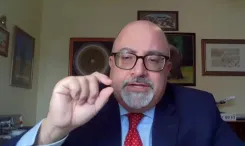
BJP leader Gourav Vallabh commented to IANS, stating that the timing of these declarations highlights the Trinamool Congress’ approach of mingling politics and faith.
“Initially, one Trinamool Congress member announced the construction of a Babri Masjid, only to be removed afterward. Now, another leader proposes a Shri Krishna temple. Who knows what’s next? This pattern indicates that the Trinamool Congress is trying to utilize religion for electoral gains,” Vallabh remarked.
He further criticized the ruling party for neglecting crucial issues in recent years.
“For the past four years, they have done nothing for the citizens. Instead, they have supported rapists and overlooked justice. Now, right before elections, they’re suddenly focused on temples and mosques. What were they up to before? Such remarks only incite religious tensions and fracture society,” he added.
BJP MP Manan Kumar Mishra also expressed discontent, questioning why such religious matters are being brought up at this moment.
“Why now? What temples are they planning to build? Anyone genuinely wishing to construct a temple can do so independently. In West Bengal, however, politics has become entwined with temples and mosques as elections approach. This is a calculated move to polarize voters. They think merely mentioning temples will guarantee Hindu votes,” he stated.
BJP leader Raj Purohit criticized the feasibility of building a temple with a mere one crore budget. “One crore is insufficient even for installing a deity. A grand temple for Krishna would require around Rs 20,000 crore. This is India, where Krishna and Ram reign. Those who reminisce about the Babri Masjid should come to terms with its obliteration,” he asserted.
Opposition leaders also shared their views, albeit more cautiously. Congress leader Udit Raj emphasized that the party does not wish to engage in religious discussions.
“If someone wants to construct a temple or mosque, let them proceed. The nation's priority should be human development—jobs, reservations, and quality education for Dalits and backward communities. We must not be sidetracked by religious structures,” he remarked.
Senior Congress leader Adhir Ranjan Chowdhury stated that while there is no issue with individuals building places of worship, the use of public funds for this purpose is unacceptable.
“Constructing a temple or mosque is fine, but funding it with taxpayer money is out of the question,” he said.
Chowdhury also condemned the use of public funds for building religious replicas and new pilgrimage sites, calling such expenditures unnecessary.
Samajwadi Party MLA Ravidas Mehrotra added, “The Constitution allows individuals to build temples or mosques. If it’s on private property, there shouldn’t be any objections.”
Controversy arose when suspended Trinamool Congress MLA Humayun Kabir laid the foundation stone for a proposed Babri Masjid in Murshidabad on December 6. Kabir was suspended on December 4, 2025, after he publicly endorsed the mosque's construction.
Despite being suspended, Kabir reiterated his commitment on December 19, stating that the Babri Masjid would be built in Murshidabad within three years, asserting that no political pressure could hinder it. He indicated that work would commence in February and claimed that the project was fully prepared financially and logistically.
Point of View
It is crucial to maintain an unbiased perspective while observing the evolving political dynamics in India. The intersection of religion and politics, especially during election seasons, often leads to heightened tensions and polarization. It is essential to prioritize constructive dialogue and focus on pressing issues concerning development and social justice.
NationPress
22/12/2025
Frequently Asked Questions
What is the controversy surrounding the Trinamool Congress?
The controversy involves accusations from the BJP that the Trinamool Congress is politicizing religion for electoral benefits ahead of the Assembly elections.
What recent announcements have been made by Trinamool leaders?
Trinamool MLA Zakir Hussain announced plans to construct a Shri Krishna temple, while another suspended MLA proposed building a Babri mosque.
How have opposition leaders responded to these announcements?
Opposition leaders, including those from Congress, have expressed that while building places of worship is acceptable, using public funds for such projects is not.
What are the implications of these political maneuvers?
These maneuvers may serve to polarize voters along religious lines, raising concerns about the future of communal harmony in the region.
What does this mean for the upcoming elections?
The focus on religious structures as the elections approach suggests a strategic play by parties to sway voter sentiment, potentially impacting the electoral landscape.