Dr. Jitendra Singh at SRIHER: AI and Precision Medicine Key
Synopsis
Union Science Minister Dr. Jitendra Singh told SRIHER Chennai graduates that AI-guided, gene-driven precision medicine is reshaping global healthcare, urged them to balance technology with clinical judgment, and tied preventive health directly to the Viksit Bharat 2047 national vision.
Key Takeaways
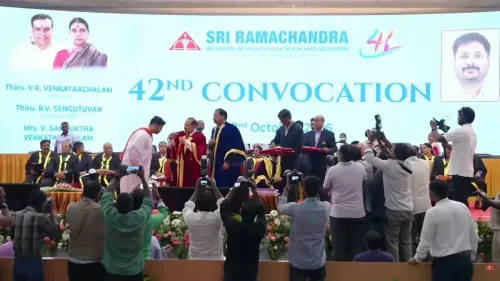
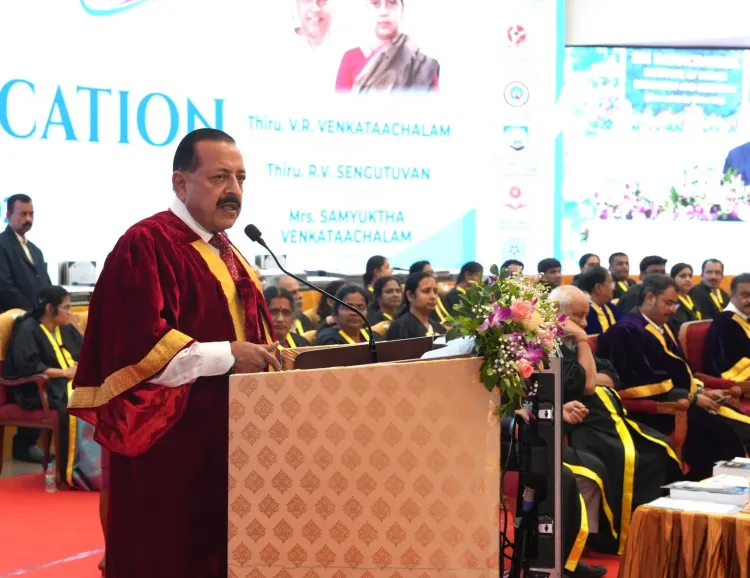
Jitendra Singh delivered the convocation address at SRIHER, Chennai on 22 October 2026 , awarding medical degrees to a new cohort of professionals.
He declared that the world is entering an era of AI-guided, gene-driven precision medicine , with India positioned among front-line providers of new healthcare solutions.
The minister stressed that the future of medicine depends on combining technological advances with sound clinical orientation — not replacing one with the other.
Both communicable and non-communicable diseases continue to burden India's healthcare systems even as rising life expectancy creates new medical demands.
Preventive healthcare was identified as a strategic priority for protecting India's youth and delivering on the Viksit Bharat 2047 vision set by PM Narendra Modi.
The speech implicitly pressures medical education bodies to embed AI and genomics training into core curricula, not just elective modules.
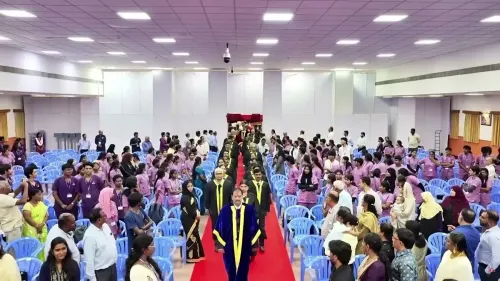
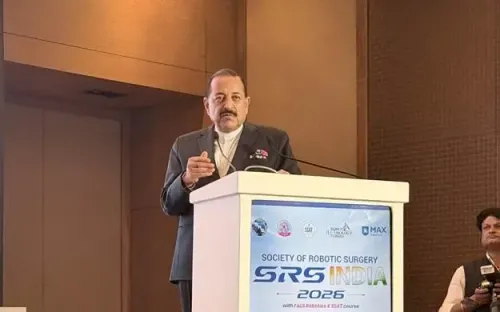
India's next generation of doctors is stepping into a world being remade by algorithms and genomics — and the country's Science Minister wants them to feel the weight of that moment. Union Science and Technology Minister Dr. Jitendra Singh delivered the convocation address at Sri Ramachandra Institute of Higher Education and Research (SRIHER) in Chennai on 22 October 2026, awarding medical degrees and laying out a vision for what twenty-first-century healthcare in India must become.
Speaking to the graduating cohort, Dr. Singh framed the moment as both a privilege and a challenge: 'The next generation of medical professionals would have the privilege of using enabling technologies while, at the same time, facing the challenge of integrating these optimally with clinical practice.'
The AI-and-genomics inflection point in Indian medicine
The minister's sharpest claim was unambiguous — the world is entering 'an era of AI-guided, gene-driven precision medicine, with India emerging among the front-line providers of new healthcare solutions.' That framing matters. It positions India not merely as a market absorbing foreign medical innovation but as an originator. Precision medicine — treatments calibrated to an individual's genetic profile and real-time clinical data — is already reshaping oncology and rare-disease management globally, and AI-assisted diagnostics are being piloted across Indian public and private hospitals.
Dr. Singh's call to 'combine technological advances with sound clinical orientation' is a pointed caution against over-automation. The risk is real: a generation trained on algorithm outputs without deep bedside reasoning produces practitioners who cannot function when the technology fails or the edge case falls outside training data. His address pushed back on that trajectory before it sets in.
India's dual disease burden and the Viksit Bharat 2047 link
The speech did not stop at technology. Dr. Singh underscored that both communicable and non-communicable diseases continue to strain India's healthcare systems even as rising life expectancy creates entirely new medical demands — a demographic double bind that no single policy has yet resolved. National Health Policy 2017 flagged the swelling burden of non-communicable diseases, and Ayushman Bharat, launched in 2018, expanded access to secondary and tertiary care, but the systemic challenge persists.
The minister anchored preventive healthcare firmly to the national development agenda. 'Preventive healthcare will have to be a priority to protect the productive potential of India's youth for achieving Viksit Bharat 2047,' he said, invoking the vision set by Prime Minister Narendra Modi. The logic is economic as much as clinical: a country aiming to be a developed nation by the centenary of independence cannot afford a workforce eroded by preventable illness.
What SRIHER's graduates carry out of the auditorium
SRIHER is a deemed university in Chennai with strong roots in medical, dental, and allied health sciences education — a fitting stage for a speech about the profession's future. The graduating doctors leave with a mandate that goes beyond prescriptions: integrate AI tools without ceding clinical judgment, treat disease before it manifests, and see their careers as infrastructure for a national economic target twenty-one years away.
The curricula that will train the cohorts behind them may need to catch up fast — medical education experts have long called for structured AI and genomics modules that move beyond elective add-ons into core training. Dr. Singh's address, delivered from a ministerial platform, sharpens the pressure on regulatory and academic bodies to act.
India is producing some of the world's largest numbers of medical graduates each year. If those graduates leave well-equipped for precision medicine and genuinely committed to prevention, that pipeline becomes one of the country's most powerful development assets. If they don't, the technology era arrives anyway — just without the doctors ready to use it well.
Point of View
Elevating public health from a welfare concern to a human-capital argument. By invoking precision medicine and AI on a convocation stage rather than a policy seminar, his ministry is signalling that the next wave of healthcare reform must be driven by the clinicians being trained today, not retrofitted onto reluctant practitioners later. The dual-disease-burden framing also keeps a politically uncomfortable reality in view: India's rising life expectancy is itself a system stress, not just a success metric. Whether this rhetorical pressure translates into revised Medical Council curricula or fresh genomics programme funding will determine whether the speech becomes a policy hinge or a notable moment that passed without structural follow-through.
NationPress
22 Oct 2026
Frequently Asked Questions
What did Dr. Jitendra Singh say at the SRIHER convocation?
Dr. Jitendra Singh said the future of medicine depends on combining AI-guided, gene-driven precision medicine with strong clinical judgment, and linked preventive healthcare to the Viksit Bharat 2047 national vision.
What is Viksit Bharat 2047?
Viksit Bharat 2047 is Prime Minister Narendra Modi's national vision to make India a fully developed nation by the centenary of its independence in 2047.
What is SRIHER Chennai?
Sri Ramachandra Institute of Higher Education and Research (SRIHER) is a deemed university in Chennai specialising in medical, dental, and allied health sciences education and research.
Why is preventive healthcare important for India's development goals?
Dr. Singh argued that protecting the health of India's youth through prevention is essential to maintaining the productive workforce needed to achieve the Viksit Bharat 2047 economic targets.
What is AI-guided precision medicine and why does it matter for India?
AI-guided precision medicine tailors treatment to a patient's genetic profile and real-time clinical data; Dr. Singh stated India is emerging as a front-line provider of such solutions, making it a strategic healthcare and economic priority.