Dr. Jitendra Singh Flags GI Tags for Udhampur-Kathua-Doda

Synopsis
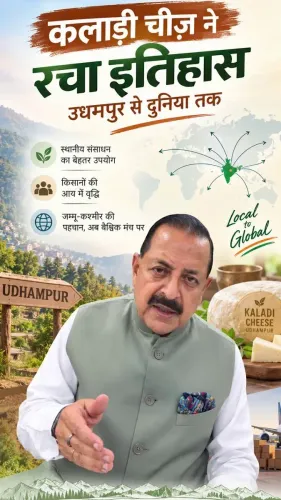
Union Minister Dr. Jitendra Singh drew attention to Geographical Indication tags linked to his Udhampur-Kathua-Doda Lok Sabha constituency, highlighting the Central Government's push to protect and promote J&K's traditional products through GI recognition after the 2019 reorganisation.
Key Takeaways
Union Minister and Udhampur-Kathua-Doda MP Dr.
Jitendra Singh posted about GI tags for his constituency on 11 November 2026 .
Geographical Indication tags are legally protected under India's GI Act of 1999 , giving exclusive regional branding rights to local producers.
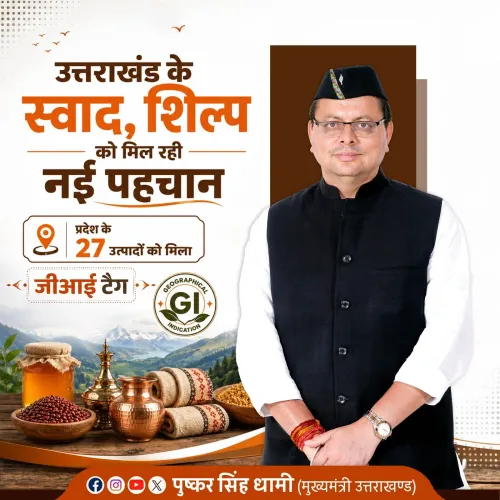
The Central Government has accelerated GI registrations for Jammu and Kashmir products since the UT's reorganisation in 2019 .
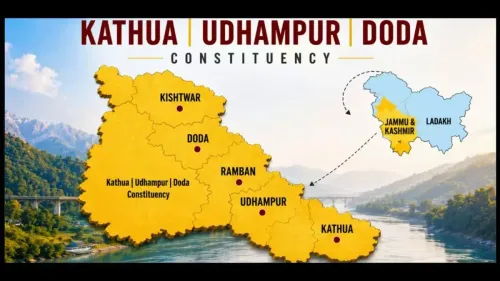
The three districts — Udhampur, Kathua, and Doda — form a constituency with distinct craft, agricultural, and forest-based products.
Key beneficiaries of GI status are local artisans and regional producers who gain market recognition and premium pricing.
Follow-up measures such as branding support and market linkages will determine the real-world impact of GI recognition.
A parliamentary constituency nestled in the hills of Jammu and Kashmir is in the spotlight — Union Science and Technology Minister Dr. Jitendra Singh, who also represents Udhampur-Kathua-Doda in the Lok Sabha, highlighted Geographical Indication (GI) tags linked to his constituency on Wednesday, 11 November 2026.
What GI Tags Mean for Udhampur, Kathua and Doda
A Geographical Indication tag is not a ceremonial stamp — it is a legally enforceable shield. Granted under India's Geographical Indications of Goods (Registration and Protection) Act, 1999, a GI tag ensures that only producers from a designated region can market a product under its traditional name, protecting both artisans and authenticity.
For the three districts that make up Udhampur-Kathua-Doda — a region rich in craft traditions, agricultural produce, and forest-based goods — such recognition translates directly into market access and premium pricing for local communities.
J&K's GI Push Since the 2019 Reorganisation
The post arrives in the context of a broader Central Government drive to register and promote traditional products from Jammu and Kashmir after the Union Territory's reorganisation in 2019. Multiple J&K products have received GI status in the years since — an effort that spans Kashmiri handicrafts, agricultural specialities, and heritage food items, aimed at safeguarding regional identity and linking local producers to national and global markets.
The Udhampur-Kathua-Doda belt contributes its own distinct products to this heritage map, and Dr. Singh's post signals continued political attention to ensuring those products receive the formal protection they warrant.
Local Artisans and Producers: The Real Beneficiaries
Behind every GI tag is a community — weavers, farmers, craftspeople — whose livelihoods depend on the distinctiveness of what they make or grow. By drawing attention to GI recognition for his constituency, Dr. Jitendra Singh is amplifying a message that goes beyond bureaucratic registration: that products from these districts deserve a name, a standard, and a market.
The next measure to watch is whether this spotlight is followed by branding support and supply-chain linkages that actually move tagged goods to buyers at scale.
Point of View
The real test of this political signalling lies downstream: GI tags without active market linkages and artisan support remain symbolic victories. The post, thin on specifics, invites the question of whether a formal product announcement or a government scheme activation is imminent for the Udhampur-Kathua-Doda belt.
NationPress
11 Nov 2026
Frequently Asked Questions
What is a GI tag and why does it matter for Jammu and Kashmir?
A Geographical Indication tag is a legal certification under the GI Act, 1999 that ties a product's identity to its region of origin. For J&K, it means traditional goods from the region can only be sold under their authentic name by local producers, protecting heritage and enabling premium pricing.
Which products from Udhampur-Kathua-Doda have GI tags?
The specific products from the Udhampur-Kathua-Doda constituency referenced in Dr. Jitendra Singh's post have not been individually named in the available information. The post signals GI recognition for the region without listing specific items.
Who is Dr. Jitendra Singh and which constituency does he represent?
Dr. Jitendra Singh is the Union Minister of State (Independent Charge) for Science and Technology and Earth Sciences, and also holds charge in the Prime Minister's Office. He is the Lok Sabha MP from the Udhampur-Kathua-Doda constituency in Jammu and Kashmir.
How many GI tags has Jammu and Kashmir received in recent years?
Since the reorganisation of Jammu and Kashmir as a Union Territory in 2019, the Central Government has pushed for multiple GI registrations covering J&K handicrafts, agricultural produce, and food heritage products, though precise counts for 2026 are not yet verified.
What benefits do local artisans get from GI tag recognition?
GI tags give local artisans and producers exclusive rights to market their products under a protected regional name, which typically leads to premium pricing, reduced counterfeiting, and better access to national and global markets.