Dr. Jitendra Singh leads Tiranga Rally at India-Pak Zero Line
Synopsis
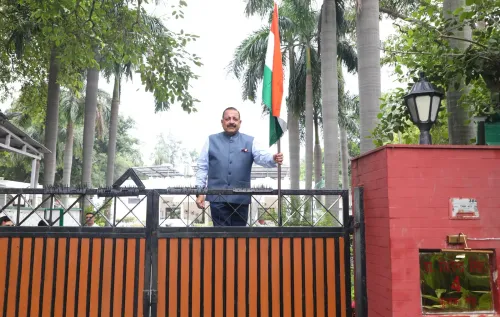
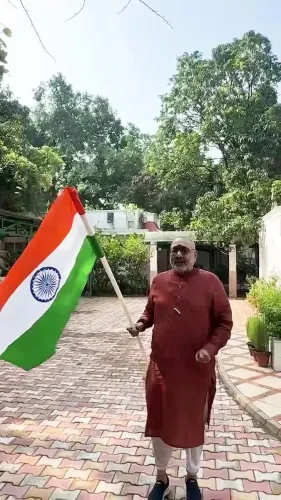
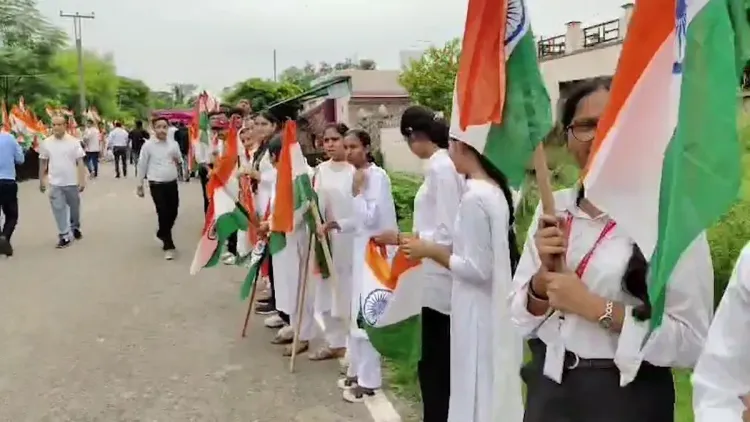
Union Minister Dr. Jitendra Singh participated in a Har Ghar Tiranga rally on 14 August 2026 that marched from Bobiya village on the International Border in Hiranagar to the India-Pakistan Zero Line, culminating in patriotic chants at the frontier on the eve of Independence Day.
Key Takeaways
Jitendra Singh joined a Tiranga Rally in the Hiranagar constituency of Jammu and Kashmir on 14 August 2026 .
The rally began at Bobiya village , located on the International Border , and concluded at the Zero Line — the physical edge of Indian territory.
Students, BJP workers, local functionaries, and residents participated, chanting Jai Mata Bharat at the Zero Line.
The event was organised under PM Narendra Modi 's Har Ghar Tiranga campaign, launched in July 2022 under the Azadi Ka Amrit Mahotsav framework.
Border-district Tiranga rallies have become an annual Independence Day tradition, combining civic patriotism with political outreach in frontier areas.
On the eve of Independence Day, the tricolour reached all the way to the Zero Line. Union Science and Technology Minister Dr. Jitendra Singh participated in a spirited Tiranga Rally on 14 August 2026 that began at Bobiya village on the International Border in the Hiranagar area of Jammu and Kashmir — and concluded right at the fence that separates India from Pakistan.
Posting on X, Dr. Singh quoted the timeless patriotic verse — 'Vijayee vishwa tiranga pyara, jhanda ooncha rahe hamara' ('Victorious across the world, our beloved tricolour — may our flag always fly high') — and described how students, BJP functionaries, workers, and local residents marched together with what he called 'enthusiasm, exuberance, and indomitable patriotism,' culminating in chants of Jai Mata Bharat at the Zero Line.Bobiya village to the Zero Line: the rally's symbolic arc
The choice of Bobiya as the starting point carries weight. The village sits in Kathua district, one of Jammu and Kashmir's most border-sensitive constituencies, where the International Border is not an abstraction but a daily reality for residents. Ending the march at the Zero Line itself — the physical edge of Indian territory — turned a civic campaign into a vivid assertion of national presence at the frontier.
Dr. Singh represents the Hiranagar assembly constituency, making his participation a blend of ministerial duty and local outreach. Border-district rallies of this kind have become a recurring feature of Independence Day mobilisations, with elected representatives joining party workers and students to signal both symbolic nationalism and grassroots connectivity.
Har Ghar Tiranga: from 2022 campaign to annual frontier ritual
Har Ghar Tiranga was launched by Prime Minister Narendra Modi in July 2022 under the Azadi Ka Amrit Mahotsav framework — a nationwide push to place the Indian tricolour in every home during the independence anniversary period. What began as a flag-display drive has evolved into a canvas for large-scale public processions, especially in sensitive border regions where the symbolism of the flag resonates beyond the ceremonial.
The participation of students alongside party workers and local citizens reflects the campaign's design: broad-based civic engagement anchored by political mobilisation. In border districts like Hiranagar, that combination carries an additional charge — a reminder, on the eve of 15 August, of who lives closest to the line that defines the nation.
As flag-hoisting ceremonies prepare to unfold across Jammu and Kashmir and the rest of India on Independence Day, the image of a rally ending at the Zero Line — tricolour in hand, chants in the air — is exactly the kind of frame the Har Ghar Tiranga campaign was built to generate.
Point of View
Participation in his home constituency fuses ministerial visibility with local representation. The broader pattern suggests the BJP has institutionalised border-district flag mobilisations as a durable Independence Day playbook.
NationPress
14 Aug 2026
Frequently Asked Questions
What is the Har Ghar Tiranga campaign?
Har Ghar Tiranga is a nationwide initiative launched by Prime Minister Narendra Modi in July 2022 under the Azadi Ka Amrit Mahotsav framework, encouraging every household and community to display the Indian tricolour during the Independence Day period.
Where is Bobiya village and why was it chosen for the rally?
Bobiya is a village in the Hiranagar area of Kathua district , Jammu and Kashmir, situated directly on the International Border with Pakistan. Its frontier location made it a symbolically powerful starting point for a patriotic march that concluded at the Zero Line.
What is the Zero Line on the International Border?
The Zero Line refers to the physical boundary marker on the India-Pakistan International Border in the Jammu region — the last point of Indian territory before the border fence.
Who is Dr. Jitendra Singh?
Dr. Jitendra Singh is the Union Minister of State (Independent Charge) for Science and Technology and Earth Sciences , and also a Minister of State in the Prime Minister's Office. He represents the Hiranagar assembly constituency in Jammu and Kashmir.
When is Independence Day celebrated in India?
India celebrates Independence Day on 15 August every year, marking the country's independence from British rule in 1947 . The Hiranagar rally took place on the eve, 14 August 2026 .