CM Himanta hails extradition of drug kingpin Navpreet Singh
Synopsis
Assam CM Himanta Biswa Sarma announced the extradition of drug kingpin Navpreet Singh, who had been operating from abroad, praising the multi-agency operation and reaffirming the Modi government's goal to end narco terror by 2029 under the NashaMuktBharat mission.
Key Takeaways
Navpreet Singh , a drug kingpin operating from outside India, has been tracked down and extradited back to India.
Assam CM Himanta Biswa Sarma credited multi-agency teams for the successful cross-border operation.
The operation is framed as part of the #NashaMuktBharat (drug-free India) national mission.
Sarma set a firm deadline: End Narco Terror by 2029 .
The announcement signals that India is actively pursuing drug traffickers who seek shelter abroad.
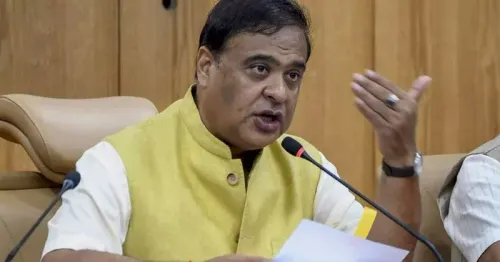
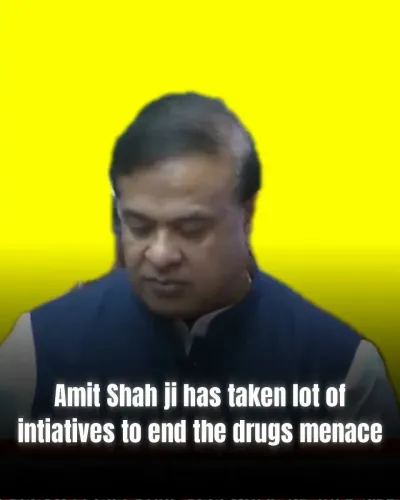
A fugitive drug lord is back on Indian soil — and Assam Chief Minister Himanta Biswa Sarma wants the country to know exactly what that means for the war on narco-terror. On Saturday, 3 October 2026, Sarma took to X to announce that Navpreet Singh, a drug kingpin who had been operating from beyond India's borders, has been tracked down and brought back to India by coordinated law-enforcement teams.
The fugitive who thought distance was protection
Navpreet Singh's case is precisely the kind that emboldens criminal networks — a drug lord who believed that crossing an international boundary was enough of a shield. It wasn't. Sarma's post signals that Indian agencies pursued Singh across jurisdictions, coordinated with foreign counterparts or intelligence channels, and executed a successful repatriation. The Chief Minister called it 'commendable work by all the teams involved,' a phrase that points to a multi-agency, likely cross-border operation rather than a routine arrest.
Narco terror and the 2029 deadline
Sarma framed the extradition squarely within the #NashaMuktBharat — drug-free India — mission championed by the Modi government. He put a hard timestamp on the ambition: 'End Narco Terror by 2029.' That is a three-year countdown, and the language of 'narco terror' is deliberate — it places drug trafficking not in a routine law-and-order category but in the higher-stakes register of national security, linking cartels to financing of terror networks. The framing signals that enforcement will continue to be aggressive, and that fugitives abroad should expect no permanent refuge.
What Navpreet Singh's return signals to the network
In narcotics enforcement, the symbolic value of a high-profile capture is often as important as the operational one. When a kingpin who has evaded Indian jurisdiction is visibly brought back, it fractures the confidence of the network beneath him — suppliers, couriers, and financiers recalculate their risk. Sarma's public announcement amplifies that deterrent effect, making clear that the state's reach is not bounded by its borders. The political message is equally pointed: Prime Minister Narendra Modi's government, Sarma argues, commands the credibility and diplomatic leverage to pursue such operations wherever they lead.
Point of View
Sarma is doing double duty — signalling operational urgency to enforcement agencies and drawing a political contrast with opposition narratives on law and order. The 'narco terror' framing is significant: it elevates drug trafficking from a policing issue to a national-security one, potentially opening doors to more aggressive intelligence and foreign-cooperation tools. Whether the 2029 target translates into measurable metrics or remains aspirational rhetoric will be the real test.
NationPress
3 Oct 2026
Frequently Asked Questions
Who is Navpreet Singh and why was he arrested?
Navpreet Singh is a drug kingpin who had been operating from outside India. He was tracked down by Indian law-enforcement teams and extradited back to India as part of the NashaMuktBharat anti-narcotics mission.
What is the NashaMuktBharat mission?
NashaMuktBharat, meaning 'drug-free India,' is a national mission championed by the Modi government to eliminate drug trafficking and narco-terror networks across India by 2029.
What did Himanta Biswa Sarma say about Navpreet Singh's extradition?
Sarma praised the multi-agency teams that tracked and brought Singh back to India, calling it 'commendable work' and reaffirming the mission to end narco terror by 2029.
What does 'narco terror' mean in the Indian context?
Narco terror refers to the nexus between drug trafficking networks and terrorist financing — where proceeds from drug sales are used to fund militant or extremist activities. Indian authorities treat it as a national-security threat, not merely a law-and-order issue.
When did Himanta Biswa Sarma make this announcement?
CM Sarma made the announcement on Saturday, 3 October 2026 , via a post on the social media platform X.