CM Himanta Hails Crackdown on Shahzad Bhatti Terror Network

Synopsis
Assam Chief Minister Himanta Biswa Sarma welcomed the dismantling of the Shahzad Bhatti Network, with 200 operatives neutralised nationwide and 2 arrested in Assam, framing the sweep as a product of PM Modi and Home Minister Amit Shah's uncompromising counter-terror policy.
Key Takeaways
200 operatives of the Shahzad Bhatti Network were neutralised in a coordinated nationwide crackdown.
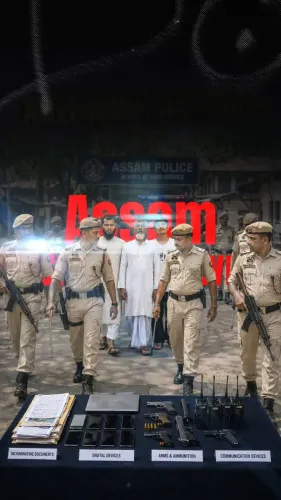
Assam arrested 2 operatives from the same network, confirming the group's presence in the northeast.
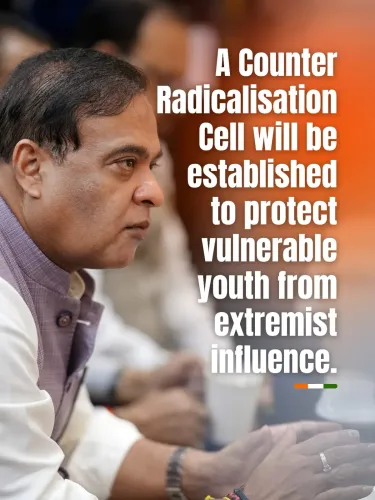
CM Himanta Biswa Sarma described the operation as 'a BIG breakthrough in India's fight against terror.' The operation was framed as part of PM Narendra Modi and Home Minister Amit Shah's counter-terror governance doctrine.
The crackdown is described as having prevented 'an impending threat' from the network.
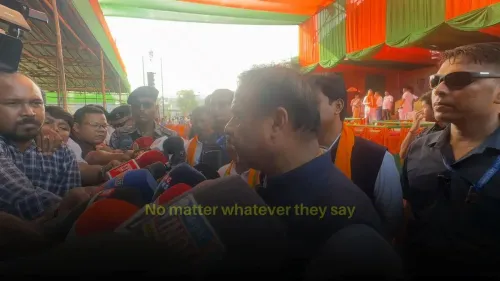
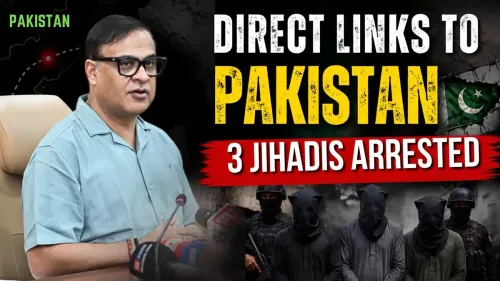
A coordinated security operation dismantling 200 operatives of the Shahzad Bhatti Network has drawn sharp attention from Assam Chief Minister Himanta Biswa Sarma, who called it a 'BIG breakthrough in India's fight against terror' — and pointedly linked it to two arrests his own state had already made as part of the same sprawling network.
Assam's Piece of a Nationwide Terror Sweep
The crackdown is not an isolated operation. CM Sarma confirmed that Assam had recently arrested 2 operatives from the Shahzad Bhatti Network, situating the state squarely within a larger, coordinated national counter-terror effort. The arrests signal that the network's reach extended well into India's northeast — a region that security agencies have long flagged as vulnerable to cross-border infiltration and radicalisation pipelines.
The Shahzad Bhatti Network, described by CM Sarma as 'infamous for its notoriety,' was dealt what he termed a 'body blow' by security forces, with the crackdown described as preventing 'an impending threat.' The scale — 200 operatives neutralised in a single coordinated sweep — points to an operation months, if not longer, in the making.
Modi-Shah Security Doctrine at Work
CM Sarma framed the operation explicitly within the counter-terror governance architecture of Prime Minister Narendra Modi and Union Home Minister Amit Shah. His post credited PM Modi's 'decisive leadership' and Shah's 'sharp uncompromising approach to terror' for what he described as India 'tearing apart every nefarious design of the enemy.'
That framing is deliberate and consistent with how the BJP-led government has positioned its internal security record — zero tolerance, proactive disruption, and inter-agency coordination as a political and operational signature. The language of 'coordinated crackdown' reinforces that this was not a reactive arrest but a planned, intelligence-led takedown.
Northeast on Alert, But Holding
The northeast has historically been a pressure point for India's internal security apparatus — porous borders, insurgent histories, and documented attempts by external actors to exploit ethnic and religious fault lines. Assam's role in this crackdown, with 2 Shahzad Bhatti operatives already in custody, suggests state-level intelligence machinery is feeding into the national grid effectively.
For CM Sarma, a BJP leader who also convenes the North-East Democratic Alliance (NEDA), highlighting Assam's contribution to a national security win serves both a governance and a political purpose: proof that the northeast is not a passive recipient of central security policy, but an active participant in it.
Two hundred operatives down, a network fractured, and Assam's own arrests now part of the official record — the next question is how deep the Shahzad Bhatti Network's roots ran, and how many more threads remain to be pulled.
Point of View
With 200 operatives swept up and Assam contributing 2 arrests, reflects the BJP government's sustained push to demonstrate a hardened, intelligence-led internal security posture ahead of ongoing geopolitical pressures. CM Sarma's public attribution to PM Modi and Amit Shah is consistent with a pattern of aligning state-level security wins to the central government's political brand. For the northeast, where cross-border terror pipelines remain a documented concern, Assam's active role in a national sweep signals improved vertical integration between state and central intelligence agencies. The unanswered question — the full scope and foreign linkages of the Shahzad Bhatti Network — will determine whether this crackdown is a decisive blow or one chapter in a longer campaign.
NationPress
2 Oct 2026
Frequently Asked Questions
What is the Shahzad Bhatti Network?
The Shahzad Bhatti Network is a terror network described by Assam CM Himanta Biswa Sarma as 'infamous for its notoriety.' Indian security forces conducted a coordinated crackdown neutralising 200 of its operatives in what officials called a major counter-terror breakthrough.
How many terror operatives were arrested in the Shahzad Bhatti Network crackdown?
200 operatives were neutralised in the nationwide crackdown. Additionally, Assam had separately arrested 2 operatives from the same network prior to the larger operation.
What was Assam's role in the Shahzad Bhatti Network crackdown?
Assam arrested 2 operatives of the Shahzad Bhatti Network as part of the broader, coordinated national counter-terror effort, confirming the network's footprint in India's northeast.
What did CM Himanta Biswa Sarma say about the terror crackdown?
CM Himanta Biswa Sarma called it 'a BIG breakthrough in India's fight against terror,' crediting PM Narendra Modi's decisive leadership and Home Minister Amit Shah's uncompromising approach to security.
Is the Shahzad Bhatti Network linked to Pakistan or cross-border terror?
The post by CM Sarma does not specify the network's foreign linkages. He referred to 'nefarious designs of the enemy' but did not name a specific country or external sponsor.