CM Himanta's Assam Drug Crackdown: 943 Arrests, ₹125 Cr Seized

Synopsis
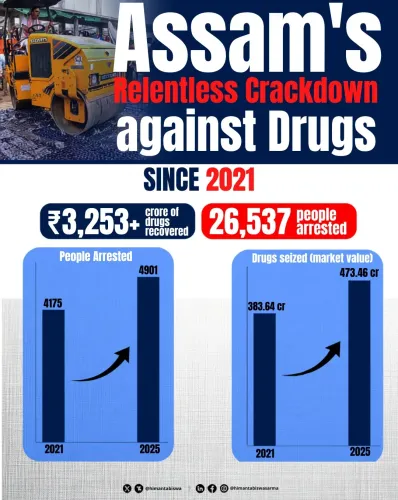
Assam Chief Minister Himanta Biswa Sarma announced 943 anti-narcotics arrests and seizures worth over ₹125 crore, reinforcing the state's enforcement drive under the national Nasha Mukt Bharat Abhiyan launched in 2020.
Key Takeaways
Assam CM Himanta Biswa Sarma announced 943 arrests in the state's ongoing anti-drug crackdown.
Drug seizures in the drive are valued at over ₹125 crore across Assam.
The drive operates under the national Nasha Mukt Bharat Abhiyan , launched in 2020 by India's Ministry of Social Justice and Empowerment.
Assam's northeastern geography makes it a significant corridor for cross-border narcotics trafficking, particularly from Myanmar and the Golden Triangle.
The campaign targets the 15–40 age group, with enforcement paired with awareness and rehabilitation as pillars of the national framework.
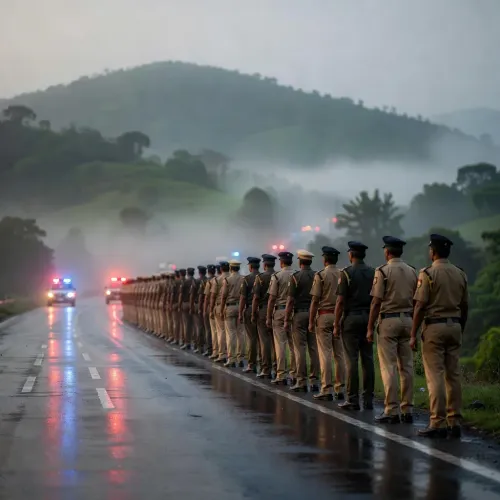
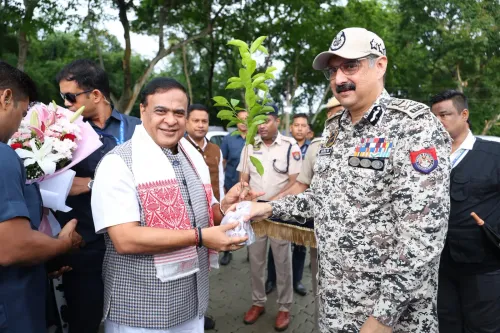
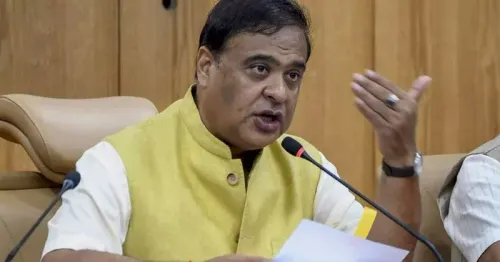
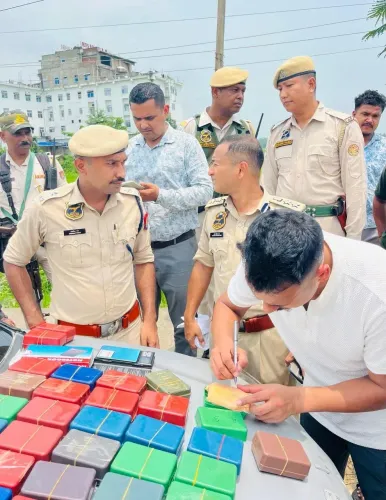
Drug traffickers in Assam have been handed a blunt message: run. Assam Chief Minister Himanta Biswa Sarma on Saturday, October 17 announced that the state's intensifying anti-narcotics offensive has resulted in 943 arrests and drug seizures valued at over ₹125 crore across Assam — figures that signal a sustained squeeze on supply chains feeding one of India's most narcotics-exposed regions.
A crackdown built on geography and political will
Assam sits at a strategic crossroads in India's northeast, sharing international borders that have historically served as entry corridors for narcotics flowing from Southeast Asia's Golden Triangle and from neighbouring Myanmar. That geography makes enforcement both urgent and complex. Sarma's announcement — delivered with characteristic sharpness, invoking the word 'Bhaago!' (Run!) — is the latest public signalling that the state government intends to make trafficking a losing proposition.
The drive operates under the umbrella of the Nasha Mukt Bharat Abhiyan, the national campaign launched in 2020 by India's Ministry of Social Justice and Empowerment to coordinate awareness, prevention and rehabilitation efforts across states. Assam has periodically sharpened its enforcement response within that framework, deploying state police in targeted operations that translate central policy into ground-level action.
943 arrests and ₹125 crore — what the numbers mean
The scale of the claimed seizures — ₹125 crore worth of contraband and nearly a thousand individuals in custody — speaks to both the depth of the problem and the bandwidth of the response. Northeastern states face persistent cross-border supply pressures that no single drive can permanently disrupt. But cumulative enforcement action does raise the cost and risk for trafficking networks, eroding their operational confidence over time.
Sarma's post, tagged #NashaMuktBharatAbhiyan, also signals alignment with New Delhi's national welfare and law-and-order agenda — a pattern of visible, metrics-driven policing that the BJP-led state government has consistently emphasised since Sarma took office. The political calculus is straightforward: demonstrable outcomes, framed clearly for a public audience, reinforce the image of a decisive administration.
The ground-level stakes for Assam's youth
Behind every arrest statistic is a constituency with the most direct stake in the outcome: Assam's youth. The Nasha Mukt Bharat framework explicitly targets the 15–40 age group, and northeastern states have flagged rising substance abuse rates as a social emergency alongside the trafficking threat. Enforcement alone does not break addiction cycles — rehabilitation infrastructure and community awareness are equally critical levers. Whether the state's seizure-and-arrest figures translate into expanded rehabilitation capacity is the question that will define long-term impact.
For now, the direction is clear: Assam is pushing hard, and CM Sarma is making sure everyone — traffickers included — knows it.
Point of View
However, is whether enforcement momentum is matched by rehabilitation infrastructure — without that second pillar, seized drugs and filled cells do not translate into lower addiction rates. For the northeast, where cross-border supply chains are structural rather than incidental, sustainable impact will require regional coordination beyond state borders.
NationPress
17 Oct 2026
Frequently Asked Questions
How many arrests have been made in Assam's drug crackdown?
Assam Chief Minister Himanta Biswa Sarma announced 943 arrests as part of the state's ongoing anti-narcotics enforcement drive.
What is the value of drugs seized in Assam's crackdown?
Drug seizures in the Assam crackdown are valued at over ₹125 crore across the state, according to CM Sarma's announcement.
What is the Nasha Mukt Bharat Abhiyan?
The Nasha Mukt Bharat Abhiyan is a national campaign launched in 2020 by India's Ministry of Social Justice and Empowerment to combat drug abuse through coordinated state-level awareness, prevention and rehabilitation efforts.
Why is Assam a drug trafficking hotspot?
Assam shares international borders that have historically served as entry corridors for narcotics from Southeast Asia's Golden Triangle and neighbouring Myanmar, making the state particularly vulnerable to cross-border trafficking networks.
Who is Himanta Biswa Sarma?
Himanta Biswa Sarma is the Chief Minister of Assam and a senior BJP leader. He also serves as the convenor of the North-East Democratic Alliance (NEDA).