Rijiju fires back at 'Regime Change' talk, backs Indian youth
Synopsis
Union Minister Kiren Rijiju sharply rejected 'regime change' narratives on Saturday, invoking Bangladesh's 2024 political upheaval as a contrast and championing Indian youth achievements in sports, skilling, startups, and technology as proof of a nation being built — not broken.
Key Takeaways
Union Minister Kiren Rijiju publicly rejected what he called 'regime change' attempts targeting India in a post on Saturday, 17 October 2026 .
He declared 'India is not Bangladesh,' evoking the 2024 student-led political upheaval in Dhaka that toppled the ruling government.
Rijiju asserted that Indian youth are 'building India, not destroying India,' naming medals, skilling, startups, innovation, technology, and cultural icons as evidence.
The statement maps closely onto BJP government flagship programmes including Skill India and Startup India .
The identity of the 'regime change' proponents was left unnamed, a deliberate political ambiguity that keeps the charge in play without a specific target.
The post signals that the government plans to defend its youth and stability narrative aggressively ahead of what analysts expect to be a heightened political period.
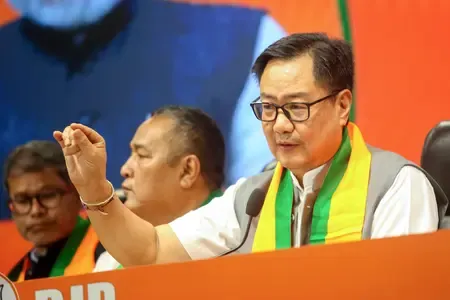
A sharp political warning landed on Saturday when Union Parliamentary Affairs and Minority Affairs Minister Kiren Rijiju pushed back forcefully against what he framed as 'regime change' narratives targeting India, drawing an pointed contrast with Bangladesh and staking the argument on the achievements of Indian youth.
The 'Regime Change' rebuke — and the Bangladesh comparison
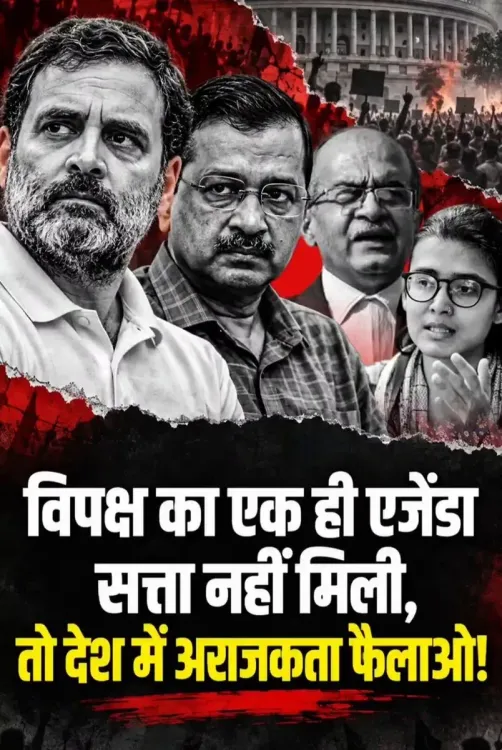
Rijiju opened with a combative line in Hindi — 'Bade aaye 'Regime Change' karne wale!!' ('So they've come to engineer a regime change!') — and followed it with a direct challenge: 'Kaan kholkar sun lo, Bharat Bangladesh nahin hai' ('Listen carefully: India is not Bangladesh'). The reference to Bangladesh carries unmistakable weight. The country witnessed a dramatic rupture in 2024 when a student-led mass movement toppled the long-ruling government, an event that reverberated across South Asia and fed anxious conversations in New Delhi about the stability of neighbourhood regimes. Rijiju's invocation of that episode is deliberate — a signal that India's political establishment will not countenance any analogous disruption narrative.
Medals, startups, and skills — Rijiju's counter-narrative on youth
Having drawn the geopolitical line, the minister pivoted quickly to affirmation. 'Indian youth are not fools,' he wrote. 'They will build India, not destroy India.' He listed the arenas where he says Indian youth are already winning: medals on international sporting podiums, skilling initiatives, innovation, startups, technology, and cultural icons. The list maps almost exactly onto flagship government priorities — the Skill India programme, the Startup India initiative, and the government's sustained push to convert Olympic and Commonwealth podium finishes into national narrative. The framing positions youth achievement as both a rebuttal to destabilisation talk and a vindication of state-backed programmes.
Combative politics, recurring BJP playbook
Statements of this kind from senior BJP leaders tend to surface during peaks of political rhetoric — election seasons, protest movements, or when opposition voices sharpen criticism of the government. Rijiju's language — 'regime change', 'build not destroy' — is pointed and unmistakably adversarial, yet the target of his criticism is left unnamed. That ambiguity is itself a political tool: it keeps the accusation in circulation without requiring a specific counter-party to answer it. The Bangladesh parallel will, however, read loudly in diplomatic circles and in the Indian foreign-policy community, given ongoing tensions in India-Bangladesh bilateral ties following the political churn next door.
Whether the 'regime change' reference provokes a formal parliamentary response or stays confined to social-media sparring, the minister has placed a marker: the government intends to defend its narrative on youth, stability, and national direction with energy — and without apology.
Point of View
The BJP signals it will frame any domestic destabilisation narrative as externally influenced rather than organically Indian, borrowing the emotional charge of a neighbourhood rupture that unsettled the entire region. The 'build, not destroy' binary is also structurally significant: it repositions state-sponsored youth programmes as national-security assets, making criticism of those programmes easier to paint as anti-national. The unanswered question — who exactly is pushing 'regime change'? — is the most revealing part of the message, suggesting the government is responding to a diffuse anxiety rather than a single identifiable opponent. If parliamentary debates on youth policy or India-Bangladesh bilateral ties sharpen in the coming weeks, this post may be looked back on as the opening salvo.
NationPress
17 Oct 2026
Frequently Asked Questions
What did Kiren Rijiju mean by 'regime change' in his post?
Rijiju used the term 'regime change' to reject what he characterised as narratives or efforts aimed at destabilising India's government, though he did not name a specific group or country. He framed it as a challenge that India, unlike Bangladesh in 2024, would firmly resist.
Why did Rijiju compare India to Bangladesh?
Bangladesh experienced a dramatic student-led political upheaval in 2024 that removed its long-ruling government. Rijiju invoked that episode to argue that India's political stability is on a fundamentally different footing and will not be similarly disrupted.
What did Rijiju say about Indian youth?
Rijiju said Indian youth 'are not fools' and will 'build India, not destroy India,' citing their achievements in winning international medals, skilling, innovation, startups, technology, and becoming cultural icons.
Is Kiren Rijiju's 'regime change' statement linked to any specific event?
Rijiju did not specify a trigger in his post. Such statements from senior BJP leaders typically arise during periods of heightened political rhetoric, but the precise event or group he was responding to on 17 October 2026 has not been publicly identified.
What government programmes does Rijiju's youth message reference?
Rijiju's list — skilling, startups, technology, medals, and cultural icons — closely mirrors BJP government flagship initiatives such as Skill India and Startup India, framing those programmes as evidence of youth nation-building.