Kejriwal asserts right to fly Tiranga in patriotic post

Synopsis
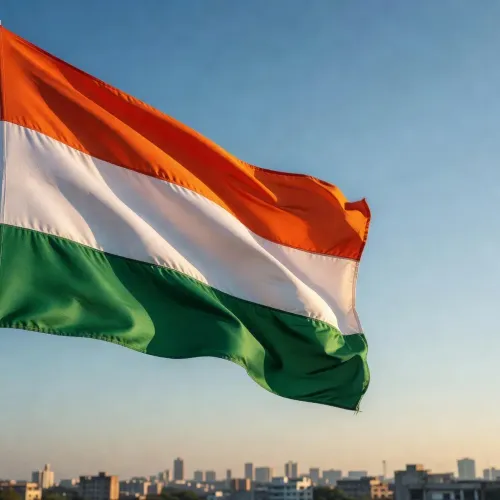
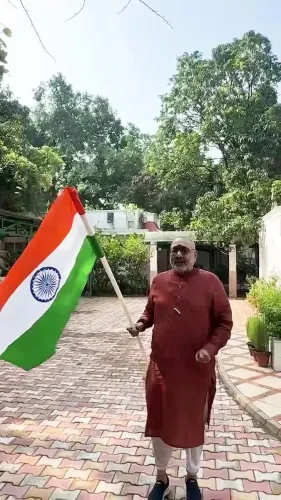
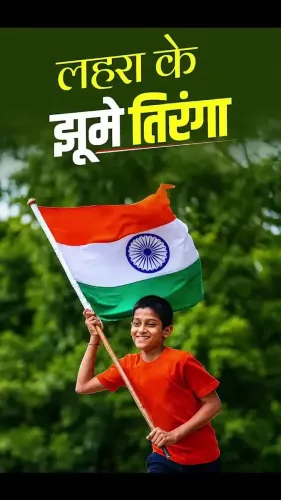
AAP convenor Arvind Kejriwal posted a crisp patriotic declaration on X — 'Flying the Tiranga was, is, and will always remain our right' — invoking India's national flag as an enduring civic entitlement, with no specific policy event cited as a trigger.
Key Takeaways
Arvind Kejriwal , AAP national convenor and former Delhi CM, posted a patriotic assertion on 17 October 2026 .
The post declares in Hindi that flying the Tiranga (Indian national flag) is a right that 'was, is, and will always remain' every citizen's.
The Flag Code of India was amended in 2002 to allow citizens to display the national flag throughout the year, not just on national holidays.
The Har Ghar Tiranga campaign in 2022 further popularised mass flag-display as a civic act during India's 75th Independence Day.
No specific policy announcement or verifiable external trigger for the post has been confirmed.
A simple tricolour emoji. Three lines of Hindi. And a declaration that has echoed through India's political landscape for decades — AAP convenor Arvind Kejriwal on Saturday, 17 October 2026, posted a sharp patriotic affirmation on X, asserting that flying the national flag is every Indian's unassailable right.
Kejriwal's post reads: 'जय हिन्द 🇮🇳 तिरंगा लहराना हमारा अधिकार था, है और रहेगा।' — translated: 'Jai Hind. Flying the Tiranga was, is, and will always remain our right.' The phrasing — past, present, and future tense stacked deliberately — carries the cadence of a constitutional assertion, not a casual greeting.
The Tiranga as political symbol and civic right
The right to display India's national flag has a specific legal history. For decades after independence, the Flag Code of India restricted private citizens from hoisting the Tiranga on days other than national holidays. That changed in 2002, when the government amended the code to allow citizens to display the flag year-round — a shift widely celebrated as restoring a civic right that had long felt withheld. The Har Ghar Tiranga campaign, launched under the 75th Independence Day celebrations in 2022, further embedded flag-flying as an act of mass public participation.
Against that backdrop, Kejriwal's three-line post lands as more than sentiment. Indian political figures across the spectrum have periodically invoked the national flag — sometimes in solidarity, sometimes in contest — making the Tiranga one of the most charged symbols in the country's public discourse. No specific policy trigger or event is confirmed in connection with this post.
Why a three-line post still carries weight
Kejriwal's political identity has been built, in part, on direct, unadorned communication — short posts, plain language, appeals to civic identity. A declaration this compressed, on a Saturday afternoon, addressed to millions of followers, functions as a reminder of where his party plants its flag — literally and symbolically. The Aam Aadmi Party has, over the years, been drawn into debates about nationalism and patriotism, making an unambiguous 'Jai Hind' post a pointed, if brief, statement of positioning.
India's national flag remains one of the few symbols that commands reverence across political divides. Whoever claims it most convincingly, claims something powerful. Kejriwal's post does not elaborate — it simply stakes the claim, in three tenses, and stops.
Point of View
The national flag is rarely just a symbol; it is a contested site of patriotic credibility. AAP has repeatedly faced challenges to its nationalist credentials from rival parties, making even a brief, unambiguous 'Jai Hind' post a form of political positioning. The deliberate use of past-present-future tense ('was, is, will remain') echoes constitutional language, framing the right to fly the Tiranga not as a favour granted by any government but as an inherent civic entitlement — a subtle but pointed distinction in the current political climate.
NationPress
17 Oct 2026
Frequently Asked Questions
What did Arvind Kejriwal post about the Tiranga?
Kejriwal posted on X on 17 October 2026 declaring that flying India's national flag — the Tiranga — 'was, is, and will always remain' every citizen's right, accompanied by a 'Jai Hind' salutation and the Indian flag emoji.
Do Indian citizens have the right to fly the national flag?
Yes. The Flag Code of India was amended in 2002 to allow all citizens to display the national flag on any day of the year, not just national holidays, provided they follow the code's guidelines on respectful use.
What is the Har Ghar Tiranga campaign?
Har Ghar Tiranga is a government initiative launched in 2022 as part of India's 75th Independence Day celebrations, encouraging citizens to hoist the national flag at their homes to foster a sense of national pride and civic participation.
Why do Indian politicians frequently invoke the Tiranga?
The national flag is one of India's most unifying symbols and commands reverence across political lines. Invoking it allows political figures to signal patriotism and civic commitment to a broad audience, often transcending party-specific messaging.
Is Arvind Kejriwal still the Chief Minister of Delhi?
No. Arvind Kejriwal is the national convenor of the Aam Aadmi Party and a former Chief Minister of Delhi.