Karnataka CM's Office Orders Probe into RIMS Raichur Treatment Complaints
Synopsis
The Chief Minister's Office of Karnataka says a four-doctor committee has reviewed treatment allegations at RIMS Raichur, examined records and staff statements, and submitted its inquiry report to the CM's Secretariat, citing the government's commitment to accountability in public health.
Key Takeaways
The RIMS Raichur hospital administration constituted a four-doctor inquiry committee in response to allegations about patient treatment.
The committee reviewed treatment records and gathered statements from relevant medical staff .
The inquiry report has been formally submitted to the Chief Minister's Secretariat of Karnataka.
The Chief Minister's Office of Karnataka announced the development on 17 October 2026 under the hashtag #CMSolves .
The government stated that accountability and transparency in public health services remain its stated priority.
Specific allegations, the identities of the four doctors, and the committee's findings have not been made public.
When allegations surfaced about patient care at Raichur Institute of Medical Sciences (RIMS), a government teaching hospital serving one of Karnataka's most underserved regions, the administration did not wait. A four-doctor inquiry committee was constituted, treatment records were examined, medical staff were questioned, and the report has now been submitted directly to the Chief Minister's Office of Karnataka — all in rapid sequence.
The Chief Minister's Office of Karnataka confirmed the development on Saturday, 17 October 2026, posting in Kannada that the hospital administration had 'responded immediately' (ತಕ್ಷಣ ಸ್ಂದಿಸಿದೆ) to allegations related to patient treatment at RIMS. The post underlined that the government's priority is 'accountability and transparency in public health services' — a phrase that signals the matter is being treated as more than routine paperwork.
RIMS Raichur: A Critical Hospital Under Scrutiny
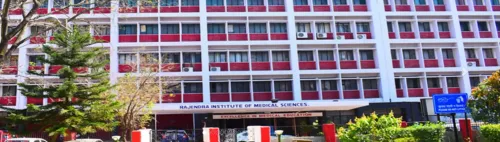
RIMS is the principal government medical college and teaching hospital in Raichur district, a region historically characterised by limited healthcare infrastructure. For communities across the Hyderabad-Karnataka belt, it is often the first and only port of call for serious medical care. Allegations of lapses in treatment at such a facility carry significant public weight — which is precisely why the escalation to the Chief Minister's office reflects the seriousness with which the state is treating this complaint.
The four-member panel of medical officers reviewed treatment documentation and gathered statements from the relevant clinical staff. That report now sits with the CM's Secretariat, the standard escalation channel for sensitive health-related allegations at district-level institutions in Karnataka.
What the #CMSolves Tag Signals
The post was filed under the hashtag #CMSolves, a recurring label the Chief Minister's Office uses to flag grievance-redressal actions taken at the highest level of the state government. Its use here is deliberate — it frames the inquiry not merely as hospital administration doing its job, but as a direct intervention from the top, meant to reassure the public that complaints do not disappear into bureaucratic silence.
Karnataka governments have previously formed similar internal medical committees to examine complaints at district teaching hospitals, and such reviews are part of the standard administrative oversight framework. What is notable here is the speed of the response and the direct submission of findings to the CM's office, suggesting the allegations were considered sensitive enough to warrant the highest level of visibility.
The next test is whether the committee's recommendations translate into concrete action — because in public health accountability, a report submitted is only the beginning.
Point of View
A sector where Karnataka's Hyderabad-Karnataka region has historically faced infrastructure deficits. The use of the #CMSolves branding transforms a routine administrative inquiry into a visible accountability signal, raising public expectations for follow-through. The real test of the government's stated commitment to transparency will be whether the committee's recommendations are disclosed and acted upon, or whether the report quietly concludes the matter. In a state with a large network of district teaching hospitals, how this case is resolved could set a precedent for how similar complaints are handled going forward.
NationPress
17 Oct 2026
Frequently Asked Questions
What are the allegations against RIMS Raichur hospital?
The specific nature of the allegations has not been made public. The Chief Minister's Office of Karnataka confirmed that complaints related to patient treatment at RIMS Raichur prompted an immediate inquiry, but the details of those allegations remain undisclosed.
What is RIMS Raichur?
The Raichur Institute of Medical Sciences (RIMS) is a government medical college and teaching hospital in Raichur district, Karnataka. It is a primary public healthcare facility serving the Hyderabad-Karnataka region, one of the state's more underserved areas.
What did the four-doctor committee do at RIMS Raichur?
The four-member panel of medical officers reviewed treatment records related to the patient in question and gathered statements from the relevant medical staff at RIMS Raichur before submitting its inquiry report to the Chief Minister's Secretariat.
Has the Karnataka government taken any action after the RIMS Raichur inquiry report?
As of the announcement on 17 October 2026, the inquiry report has been submitted to the Chief Minister's Secretariat. No further action or public release of the report's findings has been announced yet.
What is #CMSolves used for by the Karnataka government?
#CMSolves is a hashtag used by the Chief Minister's Office of Karnataka to highlight grievance-redressal actions taken at the government's highest level, signalling direct intervention by the Chief Minister's Office in public complaints.