CM Shivakumar Approves Revised CGHS Rates for Karnataka Govt Staff
Synopsis
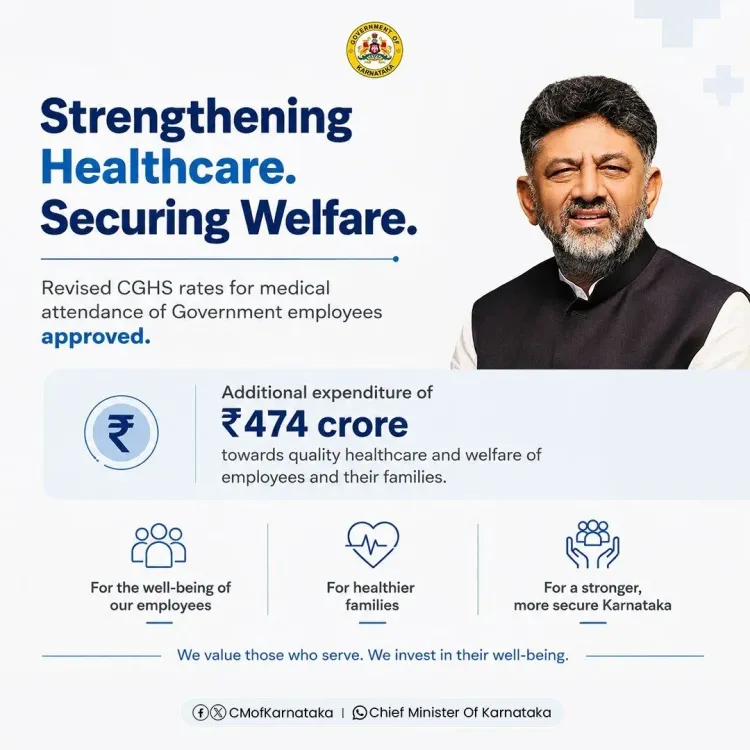
Chief Minister D. K. Shivakumar has approved revised CGHS rates for Karnataka government employees, committing nearly ₹474 crore in additional expenditure to improve medical reimbursement and healthcare access for the state's public workforce and their families.
Key Takeaways
Shivakumar approved revised Central Government Health Scheme (CGHS) rates for Karnataka government employees on 16 June 2026 .
The revision entails an additional expenditure of nearly ₹474 crore for the state government.
The move aims to align Karnataka's medical attendance reimbursement with updated CGHS benchmarks, closing the gap between reimbursable amounts and actual hospital costs.
Primary beneficiaries are Karnataka's government employees and their families seeking treatment at empanelled hospitals.
The decision follows a broader national pattern of state governments periodically revising employee health benefits to keep pace with private healthcare inflation.
Implementation timelines and possible extension to pensioners or contractual staff are yet to be formally announced.
The Chief Minister's Office of Karnataka announced on Tuesday, 16 June 2026 that Chief Minister Shri D. K. Shivakumar has approved revised Central Government Health Scheme (CGHS) rates for the medical attendance of state government employees, signalling a significant upgrade in healthcare entitlements for the public workforce.
Context
The official announcement stated that the revision reflects 'the Chief Minister's resolve to invest in quality healthcare and social security for government employees and their families.' The move is expected to entail an additional expenditure of nearly ₹474 crore, underlining the fiscal weight of the decision. The government framed the outlay as an investment in 'a healthier and more secure future' for its workforce.
CGHS rates serve as a standard benchmark for reimbursement of medical expenses incurred at empanelled hospitals. By aligning Karnataka's medical attendance rules with revised CGHS package rates, the state aims to ensure that public servants can access quality private healthcare without facing significant out-of-pocket costs.
Policy Backdrop
The Central Government Health Scheme was originally designed to provide comprehensive medical care to central government employees, pensioners, and their dependants through a network of empanelled facilities. State governments across India periodically adopt or adapt CGHS rates for their own civil services, particularly when private healthcare inflation makes older rate schedules inadequate for real-world medical costs.
CGHS package rates at the central level were last substantially revised around 2014, with phased updates in subsequent years. Karnataka's latest revision follows a recurring administrative pattern seen across multiple states that seek to maintain parity with central benchmarks and to remain competitive in retaining experienced public servants.
Stakeholders and Impact
The primary beneficiaries of the revised rates are Karnataka's government employees and their families, who will now be eligible for higher reimbursement ceilings when seeking treatment at empanelled hospitals. The revision directly addresses a longstanding concern among public servants that outdated rate schedules left them exposed to the gap between reimbursable amounts and actual hospital bills.
The decision also carries implications for empanelled private hospitals in Karnataka, which may see revised package rates that better reflect current procedure costs. For the state exchequer, the additional outlay of nearly ₹474 crore represents a material commitment to employee welfare within the broader social security framework.
What's Next
Attention will now turn to the rollout timeline for implementing the revised rates across Karnataka's network of empanelled hospitals and government health facilities. Stakeholders, including employee unions and retiree associations, are expected to watch closely whether the revision will be extended to pensioners or to contractual and outsourced staff who currently fall outside standard CGHS-linked entitlements.
The Government of Karnataka has not yet announced a specific implementation date or a detailed rate schedule, and further administrative orders are anticipated to operationalise the revision. This decision could set a precedent for other state governments evaluating similar upgrades to their employee health benefit frameworks.
Point of View
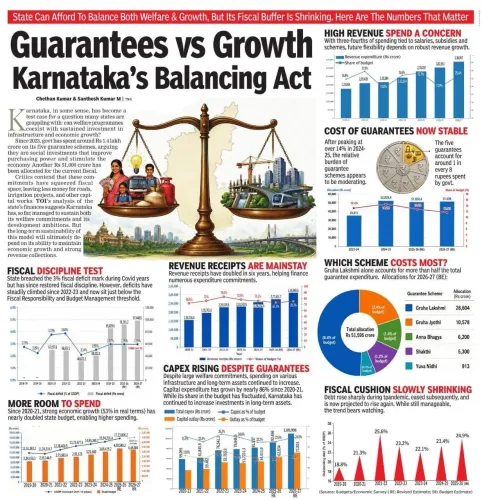
But state governments have historically found employee welfare spending to be among the more defensible items of public expenditure. This move fits into a wider pattern of Karnataka's current administration expanding social security commitments — from guarantee schemes for households to now enhanced health coverage for the bureaucracy. The real test will be in implementation: whether revised rates are operationalised swiftly and whether the benefit is extended to pensioners and contractual workers who often fall through the cracks of such revisions.
NationPress
15 Sept 2026
Frequently Asked Questions
What are CGHS rates and why do they matter for Karnataka government employees?
CGHS, or the Central Government Health Scheme, sets standardised package rates for medical procedures at empanelled hospitals. For Karnataka government employees, alignment with these rates determines how much the state will reimburse for hospitalisation and treatment, directly affecting out-of-pocket healthcare costs.
How much additional money will Karnataka spend on the revised CGHS rates?
The Government of Karnataka has stated that the revision will entail an additional expenditure of nearly ₹474 crore , reflecting the scale of the benefit enhancement for government employees and their families.
Who benefits from the revised CGHS rates approved by CM Shivakumar?
The immediate beneficiaries are Karnataka's government employees and their families . Whether the revision will be extended to pensioners or contractual staff has not yet been officially confirmed.
When were CGHS rates last revised before this Karnataka announcement?
At the central level, CGHS package rates were last substantially revised around 2014 , with phased updates in subsequent years. Karnataka's 2026 revision brings the state's medical attendance rules in line with more current benchmarks.
What happens next after Karnataka approves the revised CGHS rates?
The government is expected to issue detailed administrative orders specifying the revised rate schedule and an implementation timeline for empanelled hospitals across Karnataka . Stakeholders are also watching for possible extension of the benefit to pensioners and contractual workers.