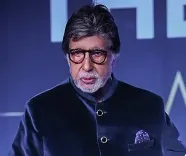
Kejriwal Questions Flag-Waving Curbs: 'Absolutely Ridiculous'
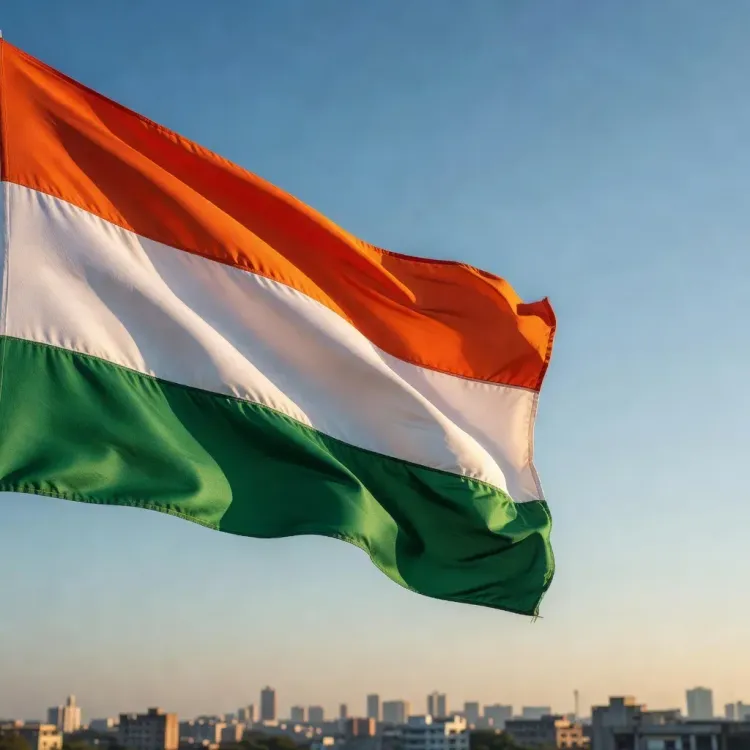
Synopsis
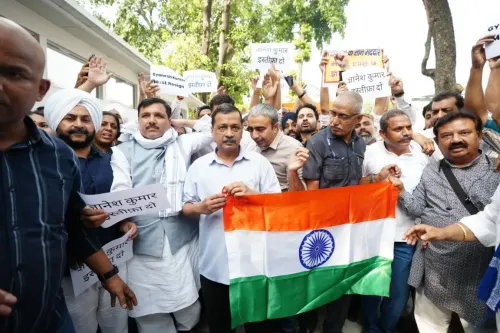
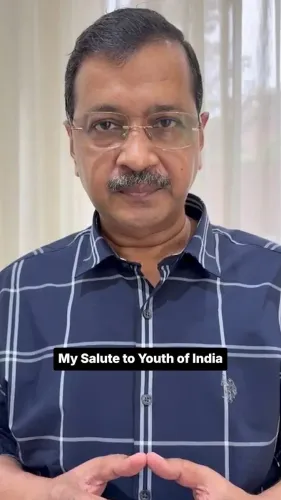
AAP convenor Arvind Kejriwal on October 14, 2026, questioned why waving the national flag in India could attract any restriction, calling it 'absolutely ridiculous' and reigniting debate over the application of flag-related laws to ordinary citizens.
Key Takeaways
Arvind Kejriwal posted on October 14, 2026 questioning whether waving the national flag in India is being treated as a criminal act.
The post calls the situation 'absolutely ridiculous,' framing it as a fundamental civic-rights issue.
Kejriwal has a record of using social media to highlight perceived inconsistencies in enforcement of laws on national symbols.
The Flag Code of India, 2002 , amended significantly in 2022 under the 'Har Ghar Tiranga' campaign, expanded citizens' rights to fly the Tricolour freely.
No specific incident, location, or official response has been confirmed as of the post's publication.
Authorities have not yet issued any clarification on a flag-related enforcement action that may have prompted the post.
Flying the national flag on your own soil — and being stopped for it. That contradiction is what AAP convenor Arvind Kejriwal put squarely before the public on Wednesday, October 14, 2026, in a pointed post that has sparked an immediate conversation about the limits of flag-related enforcement in India.
Kejriwal's post was blunt: 'Is waving our own flag in our own country a crime? This is absolutely ridiculous.' The question, spare and charged, carries an implicit accusation — that somewhere, someone in authority stopped or penalised an Indian citizen for displaying the national flag on Indian soil.
A Pattern of Calling Out Perceived Double Standards
This is not the first time Kejriwal has used social media to spotlight what he frames as inconsistent or overreaching application of laws governing national symbols. As a politician who built his brand on constitutional rights and civic pride, the framing here is deliberate: the national flag is the ultimate shared symbol, and any restriction on it cuts across party lines. The implicit message — 'even this is being policed' — is designed to resonate with citizens irrespective of their political allegiance.
The specific incident prompting the post has not been officially confirmed. But the rhetorical structure of the post — a question followed by a verdict — is a Kejriwal signature: put the absurdity on the record, let the public draw the conclusion.
What the Law Actually Says About the Tricolour
The Flag Code of India, 2002, and the Prevention of Insults to National Honour Act, 1971, govern how the national flag may be used. The flag code, significantly amended in 2022 under the 'Har Ghar Tiranga' campaign, expanded citizens' rights to fly the Tricolour — including at homes and public spaces, round the clock. That amendment was itself a landmark expansion of civic flag rights, championed by the central government. Kejriwal's post, intentionally or not, turns that very expansion into a mirror: if the government itself said 'every home should fly the flag,' how can waving it now attract any sanction?
The tension between national-symbol pride campaigns and ground-level enforcement actions — where police or local authorities may interpret rules differently — is a recurring friction point in Indian public life.
What Authorities Have Not Yet Said
As of the time of posting, no official clarification has emerged from law enforcement or administrative authorities regarding any specific flag-related enforcement action that may have triggered Kejriwal's response. Whether a formal complaint, a court proceeding, or a local administrative order follows will determine how far this particular flashpoint travels.
For now, the question hangs in the air — pointed, unanswered, and very much on the national feed. When the government has spent years urging every citizen to hoist the Tricolour, the political cost of a credible counter-example is not trivial.
Point of View
Making any ground-level restriction on the Tricolour politically indefensible by the government's own logic. By invoking the flag — a symbol above party — Kejriwal broadens his audience beyond AAP's base and forces a response from authorities that, if slow or defensive, only amplifies his point. The post is light on specifics by design; the ambiguity lets the question do the political work. Watch for whether an underlying incident surfaces, because the factual details will determine whether this remains a rhetorical salvo or grows into a sustained campaign.
NationPress
14 Oct 2026
Frequently Asked Questions
Why did Kejriwal say waving the flag is 'absolutely ridiculous'?
Kejriwal posted on October 14, 2026, reacting to what he described as enforcement action against someone for waving the national flag in India, calling the situation fundamentally contradictory in a democratic republic.
Is it legal to wave the Indian national flag anywhere in India?
Yes, under the Flag Code of India, 2002 — significantly amended in 2022 — citizens have broad rights to display the Tricolour at homes and public spaces at any time, as long as it is done with dignity and in accordance with the code's guidelines.
What is the Har Ghar Tiranga campaign?
'Har Ghar Tiranga' (Every Home a Tricolour) was a government initiative launched in 2022 urging every Indian household to hoist the national flag, accompanied by an amendment to the Flag Code that removed restrictions on round-the-clock flag display.
Has any authority responded to Kejriwal's flag post?
As of October 14, 2026, no official clarification or response from law enforcement or administrative authorities had been issued in connection with the specific incident Kejriwal appears to be referencing.
What laws govern use of the Indian national flag?
The primary laws are the Flag Code of India, 2002 (which regulates proper display), and the Prevention of Insults to National Honour Act, 1971 (which penalises disrespect to national symbols). Amendments in 2022 substantially expanded citizens' rights to fly the flag.