Dr. Jitendra Singh marks Janjatiya Gaurav Divas with DST tribal tech film
Synopsis
On Janjatiya Gaurav Divas, Union Minister Dr. Jitendra Singh released a Ministry of Science and Technology film showcasing DST's SEED Division and NECTAR-led science interventions for tribal communities across Car Nicobar, Ladakh, Assam, Nagaland, Jharkhand and Odisha.
Key Takeaways
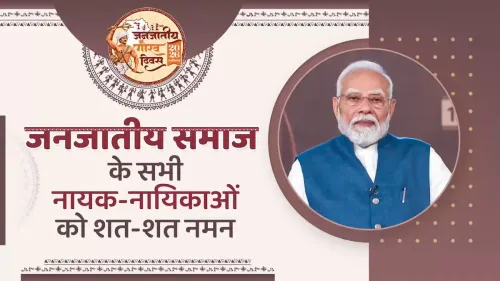
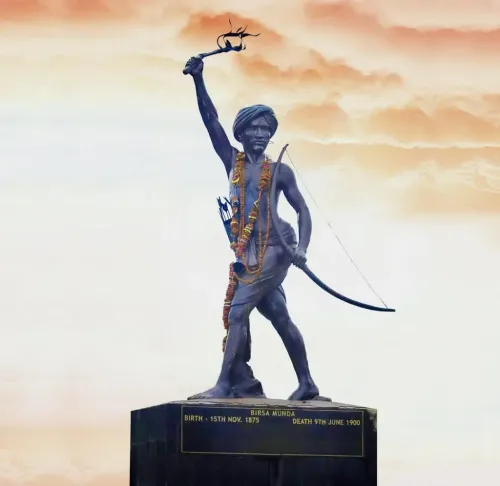
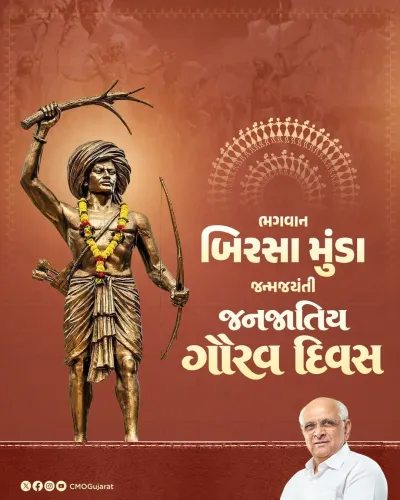
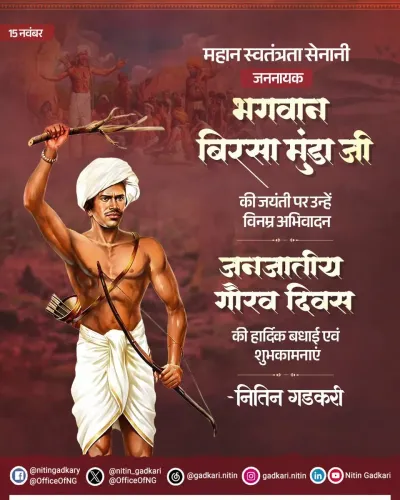
15 November is observed as Janjatiya Gaurav Divas , declared by the Government of India in 2021 to honour the birth anniversary of Bhagwan Birsa Munda .
Jitendra Singh shared a special film from the Ministry of Science and Technology showcasing tribal technology and innovation outreach.
The initiative is led by DST's SEED Division and the autonomous body NECTAR , covering tribal regions from Car Nicobar to Ladakh , Assam , Nagaland , Jharkhand and Odisha .
Prime Minister Narendra Modi became the first PM to visit Birsa Munda's birthplace in 2023 .
Multiple Ministries and Departments are holding their own events this year, reflecting institutional deepening of the annual observance.
From the forests of Jharkhand to the high-altitude passes of Ladakh, science is quietly transforming the lives of India's tribal communities — and on Janjatiya Gaurav Divas, 15 November, Union Science and Technology Minister Dr. Jitendra Singh made that story visible. The Minister shared a special film produced by the Ministry of Science and Technology documenting how technology and innovation are reaching Adivasi communities across the country's most remote geographies.
Birsa Munda's legacy and a national day of honour
Bhagwan Birsa Munda, born on 15 November 1875 in present-day Jharkhand, led one of the most significant tribal resistance movements against British colonial rule in the 19th century. Revered as Dharti Aba — 'Father of the Earth' — among Adivasi communities, he remains a towering symbol of indigenous dignity and defiance. The Government of India formalised his legacy in 2021 by declaring his birth anniversary as Janjatiya Gaurav Divas, a national observance to honour the bravery, sacrifices and contributions of India's tribal peoples.
The day gained further historical weight in 2023, when Prime Minister Narendra Modi became the first sitting Prime Minister to visit Birsa Munda's birthplace — a moment that underlined the administration's stated commitment to mainstreaming tribal heritage into national memory.
SEED and NECTAR: science reaching Car Nicobar to Ladakh
The film released by Dr. Singh spotlights on-ground interventions organised by the Department of Science and Technology (DST) through two key bodies: its SEED Division (Science for Equity, Empowerment and Development) and the autonomous body NECTAR (North East Centre for Technology Application and Reach). Together, they represent DST's operational arms for taking science-led solutions to communities that formal infrastructure often bypasses.
The geographic sweep is striking: the initiative spans Car Nicobar in the Andaman and Nicobar Islands, Ladakh, Assam, Nagaland, Jharkhand and Odisha — essentially a diagonal cut across India's most ecologically and culturally diverse tribal belts. This breadth signals an intent not to treat tribal technology access as a regional footnote, but as a pan-India design challenge.
A ministry-wide mobilisation for the occasion
Dr. Singh noted that this year, different Ministries and Departments are organising their own events to mark Janjatiya Gaurav Divas — with the Ministry of Science and Technology contributing through this film. The coordination across government signals an institutional deepening of the observance since it was first declared in 2021. What began as a calendrical recognition is evolving into a whole-of-government demonstration exercise, with each ministry presenting its tribal outreach record on the same annual stage.
The DST film format — a documentary showcase rather than a press release — also reflects a sharper communications instinct: concrete, visual proof of science delivery rather than policy rhetoric.
Five years after Janjatiya Gaurav Divas was first declared, the question the annual observance implicitly poses is sharpening: does the technology reach the village, or does it stop at the scheme document? The DST's geographic spread from Car Nicobar to Ladakh is the government's answer — and it will be measured, region by region, year by year.
Point of View
Particularly for Scheduled Tribe populations historically underserved by formal infrastructure. The SEED-NECTAR combination represents an institutional effort to operationalise that frame at the ground level, stretching from island territories to Himalayan districts. Anchoring this effort to Birsa Munda's legacy each November serves a dual purpose: it embeds the government's tribal development record within a culturally resonant narrative, and it creates an annual accountability moment for delivery on the ground. Whether the science interventions demonstrably improve tribal livelihoods — rather than merely featuring in commemorative films — will determine the credibility of that narrative over time.
NationPress
17 Nov 2026
Frequently Asked Questions
What is Janjatiya Gaurav Divas and when is it celebrated?
Janjatiya Gaurav Divas is a national observance held every year on 15 November , the birth anniversary of tribal leader Bhagwan Birsa Munda . The Government of India declared the day in 2021 to honour the bravery, sacrifices and contributions of India's tribal communities.
Who was Bhagwan Birsa Munda?
Bhagwan Birsa Munda , also known as Dharti Aba ('Father of the Earth'), was a 19th-century tribal leader from present-day Jharkhand who led a major resistance movement against British colonial rule. He is revered as a symbol of Adivasi dignity and rights.
What is DST's SEED Division?
The SEED Division (Science for Equity, Empowerment and Development) is a programme under India's Department of Science and Technology focused on delivering science-led interventions to marginalised and geographically remote communities, including tribal populations.
What does NECTAR do in tribal areas?
NECTAR (North East Centre for Technology Application and Reach) is an autonomous body under DST that focuses on applying technology solutions in the North East and other remote regions of India, often in coordination with SEED for tribal outreach.
Which regions are covered under the DST tribal technology initiative?
The DST initiative highlighted on Janjatiya Gaurav Divas covers tribal communities across Car Nicobar , Ladakh , Assam , Nagaland , Jharkhand and Odisha , spanning India's island, Himalayan and central-eastern tribal belts.