Do Societies Targeted by Terrorism Have a Right to Defend Themselves? EAM Jaishankar Thinks So!
Synopsis
In a bold statement, EAM Jaishankar emphasizes the importance of international cooperation against terrorism, advocating for a zero-tolerance approach. As the 2nd India-Arab Foreign Ministers Meeting unfolds, he highlights the urgent need to address regional challenges and foster stronger ties among nations.
Key Takeaways
International cooperation is essential in combating terrorism.
Zero-tolerance for terrorism should be a universal standard.
Cross-border terrorism violates international relations principles.
India is committed to strengthening ties with Arab nations .
Future cooperation will include emerging technologies and counter-terrorism efforts.
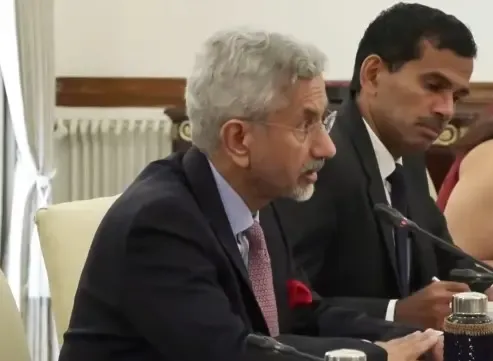
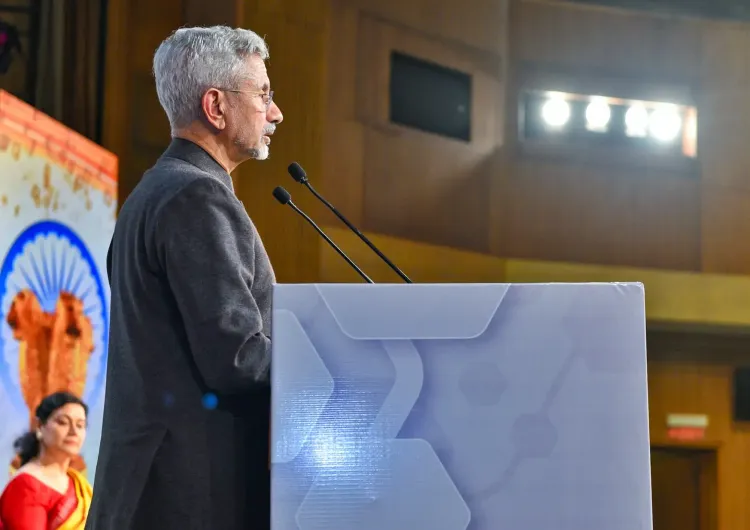
New Delhi, Jan 31 (NationPress) Stressing the urgency of enhancing global collaboration to tackle the “global scourge” of terrorism, External Affairs Minister (EAM) S Jaishankar emphasized on Saturday that a zero-tolerance approach towards terrorism should be a steadfast universal principle.
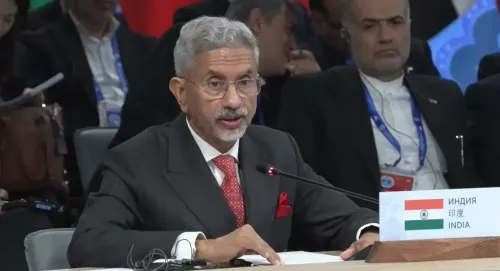
During his initial statements at the 2nd India Arab Foreign Ministers meeting in the capital, EAM Jaishankar underscored that terrorism, in all its forms, poses a shared threat to both regions.
“Cross-border terrorism is especially intolerable as it infringes upon the fundamental tenets of international relations and diplomacy. Societies facing terrorist threats possess the right to defend themselves and will naturally exercise this right. It is vital that we bolster international collaboration to combat what is a global menace. A zero-tolerance stance on terrorism must be a universally accepted norm,” he stated.
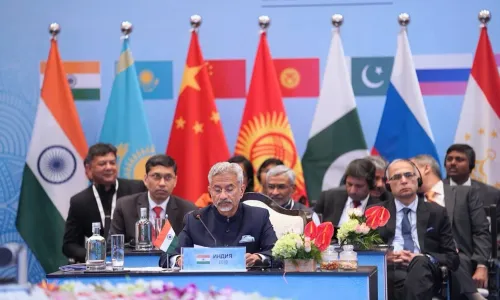
India and the United Arab Emirates (UAE) are co-hosting the 2nd India-Arab Foreign Ministers’ Meeting (IAFMM), which is occurring after a decade. The meeting includes Foreign Ministers from other Arab League Member States as well as the Arab League Secretary General.
EAM Jaishankar noted that the gathering is happening at a crucial moment when the global order is shifting due to various factors.
“Politics, economics, technology, and demographics are all in play. Nowhere is this more evident than in West Asia or the Middle East, where the landscape has dramatically transformed in the past year. This obviously impacts all of us, including India as a neighboring region. Its implications are significant for India’s connections with Arab nations as well,” he remarked.
He pointed out that numerous developments—each of substantial importance—have unfolded in the Middle East/West Asia over recent years, many of which have resonated far beyond the region.
“The situation in Gaza has particularly captured the attention of the international community. Many of us participated in the Sharm-el-Sheikh Peace Summit in October 2025, which led to the UN Security Council Resolution 2803 of November 2025. Advancing the comprehensive plan to resolve the Gaza conflict is now a widely recognized priority. Various nations have made policy declarations regarding the peace plan, either individually or collectively. This forms the broader context in which we discuss the region’s challenges and future,” noted EAM Jaishankar.
In his opening remarks, EAM Jaishankar also referenced several other regional issues, including conflicts in Sudan, Yemen, Lebanon, Libya, and Syria.
This marks the first India-Arab FMM held in New Delhi, involving participation from all 22 Arab countries by Foreign Ministers, other Ministers, and Senior Officials from the Arab League.
The India Arab Foreign Ministers’ Meeting is the top institutional mechanism fostering this partnership, which was formalized in March 2002 when India and the League of Arab States (LAS) signed an MoU to institutionalize dialogue. A Memorandum of Cooperation was established for the Arab-India Cooperation Forum during a visit from the then Arab League Secretary General Amre Moussa to India in December 2008, which was later revised in 2013 for structural organization. India acts as an Observer to the League of Arab States, which includes 22 member nations.
“India maintains robust partnerships with all LAS nations, often evolving to a strategic level. Much of this is grounded in history, where we have long shared goods, people, and ideas. In contemporary times, this collaboration has taken various forms with different partners. The region hosts some of our largest expatriate communities, essential energy sources, major trade relationships, and increasingly, emerging technology and connectivity initiatives. We are vital to one another concerning food security and health security. Today’s discussions, while collective, will also invigorate many bilateral ties,” stated EAM Jaishankar.
He asserted that the India-Arab Cooperation Forum serves as a platform to transform positive sentiments into practical actions.
“Our meeting will outline an agenda for such cooperation for 2026-28, covering energy, environment, agriculture, tourism, human resource development, culture, and education, among other areas. India looks forward to incorporating more contemporary dimensions of cooperation, such as digital, space, start-ups, and innovation. We will also consider collaborative efforts on counter-terrorism and parliamentary exchanges. I note that we launched the India-Arab Chamber of Commerce, Industry, and Agriculture yesterday. These activities and initiatives will complement bilateral efforts and strengthen our ties,” concluded EAM Jaishankar.
Point of View
It's imperative to recognize that the discourse surrounding terrorism and self-defense is not merely a political issue; it resonates with the safety and security of millions. EAM Jaishankar's statements underline India's commitment to a collaborative global approach in combating terrorism, which is vital in today's interconnected world. The emphasis on bilateral ties and comprehensive cooperation is crucial for fostering peace and stability.
NationPress
16 Sept 2026
Frequently Asked Questions
What is EAM Jaishankar's stance on terrorism?
EAM Jaishankar asserts that societies targeted by terrorism have the right to defend themselves and emphasizes a zero-tolerance approach towards terrorism as a universal norm.
What is the significance of the 2nd India-Arab Foreign Ministers Meeting?
This meeting marks a significant moment for enhancing cooperation between India and Arab nations, addressing pressing regional challenges and fostering strategic partnerships.
How does India view its relationship with Arab nations?
India considers its relationships with Arab nations as strong partnerships that have evolved into strategic ties, rooted in historical exchanges and contemporary collaborations.