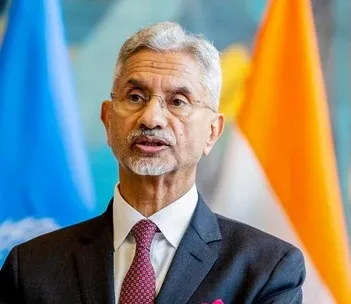
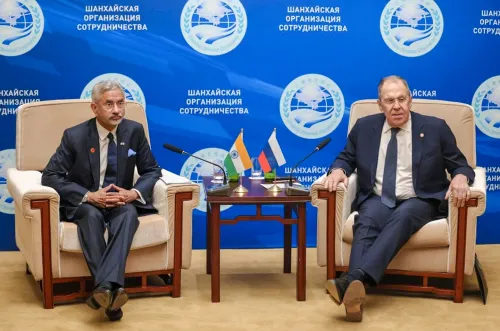
Jaishankar meets Lavrov in Moscow, discusses bilateral ties and global issues
Synopsis
In a packed single day of diplomacy in Moscow, EAM Jaishankar met both President Putin and FM Lavrov, co-chaired the 27th IRIGC-TEC session, and delivered a personal message from PM Modi — signalling that India-Russia ties are being actively managed at the highest levels even as global alignments shift.
Key Takeaways
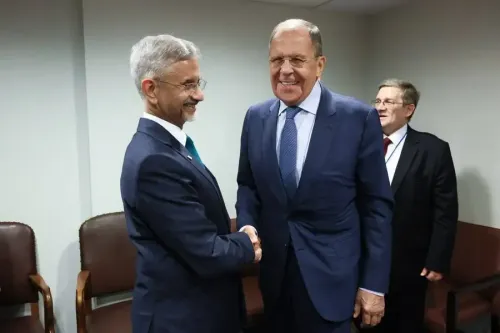
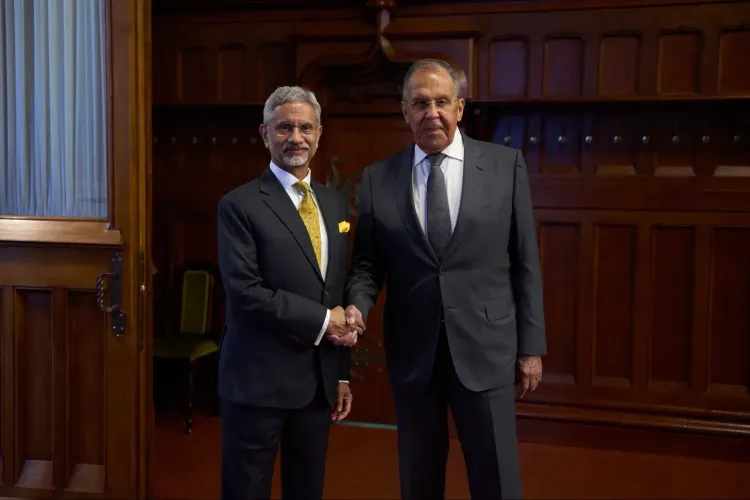
Jaishankar held wide-ranging talks with Russian FM Sergey Lavrov in Moscow on 25 August , covering bilateral, regional, and global issues.
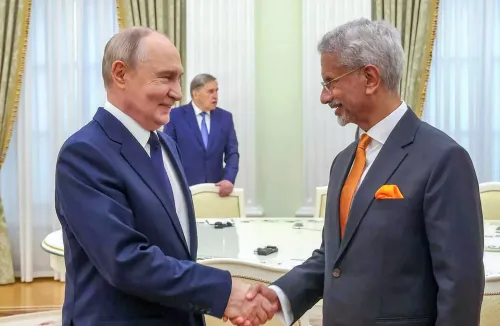
Jaishankar called on President Vladimir Putin and delivered a personal message from Prime Minister Narendra Modi .
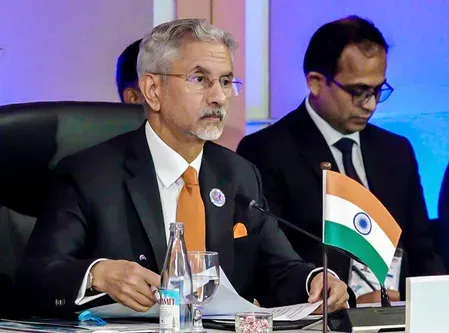
He co-chaired the 27th IRIGC-TEC session with Russia's First Deputy PM Denis Manturov , reviewing cooperation across trade, science, technology, and culture.
Putin noted that India-Russia trade turnover has grown in 2025 after a slight decline the previous year, crediting Modi's personal engagement.
The visit underscores India's continued strategic autonomy, maintaining active high-level dialogue with Moscow alongside Western partnerships.
External Affairs Minister S. Jaishankar held wide-ranging talks with Russian Foreign Minister Sergey Lavrov in Moscow on 25 August, covering bilateral cooperation, regional hotspots, global challenges, and multilateral affairs. The engagement reflects continued high-level diplomatic momentum between India and Russia across strategic and economic domains.
What Was Discussed
Jaishankar described the conversation as covering 'our bilateral cooperation, regional hotspots, global challenges and multilateral issues,' according to his post on X. The breadth of topics signals that the India-Russia dialogue has moved well beyond trade, encompassing geopolitical flashpoints and multilateral forum coordination.
Jaishankar Calls on Putin, Delivers Modi's Message
Earlier the same day, EAM Jaishankar met Russian President Vladimir Putin and handed over a 'personal message' from Prime Minister Narendra Modi. 'Pleased to call on President Vladimir Putin of Russia in Moscow today. Handed over a personal message from Prime Minister Narendra Modi,' Jaishankar posted on X following the meeting.
He also briefed Putin on the deliberations of the 27th Session of the India-Russia Inter-Governmental Commission on Trade, Economic, Scientific, Technological and Cultural Cooperation (IRIGC-TEC), which Jaishankar co-chaired alongside Russia's First Deputy Prime Minister Denis Manturov. 'Value his guidance in that regard. Also discussed regional and global issues of importance,' he added.
Putin Flags Growing Trade Turnover
According to a statement released by the Kremlin, Putin said Jaishankar's visit underscored the depth of ties built over several decades. 'We continue to work together in virtually all areas. This includes governmental ties, interparliamentary ties, and economic cooperation,' Putin said. He noted that bilateral trade turnover has grown this year after a slight dip last year, attributing the recovery in part to Prime Minister Modi's personal attention to the relationship.
Context and Significance
The Moscow visit comes amid sustained high-level India-Russia engagement at a time when global geopolitical alignments remain in flux. India has consistently maintained its strategic autonomy, engaging both Western partners and Moscow through independent diplomatic channels. The co-chairing of the 27th IRIGC-TEC session — covering trade, science, technology, and cultural cooperation — signals that the institutional framework underpinning the bilateral relationship remains active and expanding. This is one of the most comprehensive single-day diplomatic engagements between the two countries in recent months.
What Comes Next
The outcomes of the IRIGC-TEC session and the substance of Modi's personal message to Putin are expected to shape the next phase of India-Russia bilateral activity. Analysts will watch for follow-through on trade and energy cooperation, as well as any joint positions emerging from multilateral platforms where both countries are active.
Point of View
Combined with the institutional work of the IRIGC-TEC, shows that India is not merely maintaining ties with Russia but actively deepening them through parallel diplomatic and economic channels. What mainstream coverage tends to underplay is the IRIGC-TEC dimension: this commission is the workhorse of the bilateral relationship, and its 27th session suggests the two sides are expanding the cooperation architecture, not just preserving it. The trade recovery Putin flagged — after a dip — is worth tracking; it will test whether India-Russia economic ties can withstand the structural pressures of Western sanctions regimes and alternative supply chains.
NationPress
25 Aug 2026
Frequently Asked Questions
What did EAM Jaishankar discuss with Russian FM Lavrov in Moscow?
Jaishankar and Lavrov held wide-ranging talks on 25 August covering bilateral cooperation, regional hotspots, global challenges, and multilateral issues. The meeting was part of a packed day of high-level diplomatic engagements in Moscow.
Did Jaishankar meet President Putin during his Moscow visit?
Yes, Jaishankar called on President Vladimir Putin on 25 August and handed over a personal message from Prime Minister Narendra Modi. He also briefed Putin on the outcomes of the 27th IRIGC-TEC session.
What is the IRIGC-TEC and what was discussed at its 27th session?
The India-Russia Inter-Governmental Commission on Trade, Economic, Scientific, Technological and Cultural Cooperation (IRIGC-TEC) is the principal bilateral institutional mechanism between the two countries. Jaishankar co-chaired its 27th session with Russian First Deputy PM Denis Manturov, reviewing cooperation across a wide range of domains.
What did President Putin say about India-Russia trade?
According to a Kremlin statement, Putin said bilateral trade turnover has grown in 2025 after a slight decline the previous year, attributing the recovery partly to PM Modi's personal attention to the relationship.
Why is Jaishankar's Moscow visit significant?
The visit reflects India's sustained high-level engagement with Russia at a time of complex global geopolitical realignments. The combination of talks with both the Russian president and foreign minister, alongside institutional commission work, signals that India is actively managing and expanding the bilateral relationship.