Dunkey Route Case: ED arrests Delhi ticketing agent Tarun Khosla for money laundering
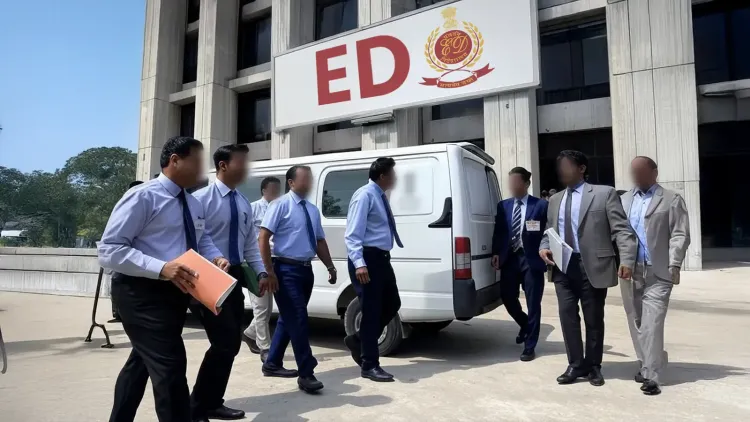
Synopsis
A Delhi ticketing agent at the centre of the Dunkey Route network — a racket that charged Indian migrants ₹30–60 lakh each to reach the US illegally via South American transit countries — has been arrested by the ED. With ₹30.38 crore in traced transactions, seized gold, silver, cash, and over 50 confiscated passports, the case exposes a sophisticated cross-border criminal infrastructure linking Punjab villages to Mexican border fixers.
Key Takeaways
The ED arrested Tarun Khosla , a Delhi-based ticketing agent, on 23 October 2025 in the Dunkey Route Case under the PMLA, 2002 .
Khosla has been remanded to ED custody until 30 October by a Special PMLA Court.
He allegedly coordinated illegal US-bound migration via transit countries including Guyana , Suriname , Ecuador , and El Salvador , charging ₹30 lakh to ₹60 lakh per person.
His firm BJ International recorded ₹30.38 crore in cash deposits across 414 transactions between FY 2022-23 and FY 2024-25.
Searches have so far yielded seized assets worth ₹19.14 crore , including ₹4.62 crore in cash, 5.9 kg of gold, and 313 kg of silver, plus over 50 original passports of third parties.
The case was triggered by the deportation of more than 300 Indian nationals from the US in February 2025 .
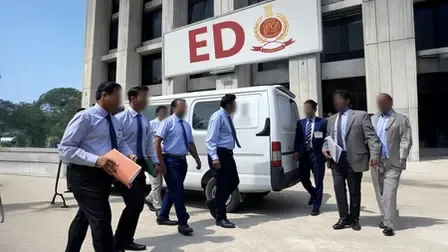
The Directorate of Enforcement (ED) has arrested Tarun Khosla, a Delhi-based ticketing agent, in connection with the Dunkey Route Case — a large-scale money laundering racket that facilitated the illegal transportation of Indian nationals to the United States via dangerous, unauthorised routes through South and Central America. The arrest was made on 23 October 2025 by the ED's Jalandhar Zonal Office under the provisions of the Prevention of Money Laundering Act (PMLA), 2002.
Khosla has been remanded to ED custody until 30 October by a Special PMLA Court, according to an official statement.
Who Is Tarun Khosla and What Was His Role
Investigators describe Khosla as a key decision-maker within the Dunkey Route network — responsible for determining routes and pricing for each individual trafficked through the system. According to the ED, Khosla coordinated with multiple agents across Punjab and Haryana who collected passports and cash from aspiring migrants before handing everything over to him in Delhi.
He then arranged visas and air tickets to transit countries including Guyana, Suriname, Ecuador, and El Salvador, facilitating onward movement toward the US-Mexico border through illegal and treacherous terrain. Data recovered from his mobile phones revealed incriminating chats in which he operated as an 'immigration-clearance fixer', according to the ED.
His communications with international contacts — identified in the ED statement as 'Mike' in Mexico, 'Ali' in Brazil, and 'Kristi' in Mexico — showed on-ground coordination at foreign airports, including arrangements for immigration clearance, ticket bookings, passenger handling, and dollar-denominated payments. The ED noted that instructions such as 'OK to Board' endorsements and coordination with airline and immigration personnel established his operational control over transit arrangements.
Scale of the Racket and Financial Trail
The case stems from the deportation of more than 300 Indian nationals from the US in February 2025, after they were found to have entered the country illegally through the Mexico border. The ED investigation was launched on the basis of multiple FIRs registered by Punjab Police and Haryana Police under provisions of the Bharatiya Nyaya Sanhita (BNS), 2023 and the Emigration Act, 1983.
According to the ED, would-be migrants were lured by agents with false promises of legal immigration pathways. They were ultimately routed through the Dunkey network at a cost of ₹30 lakh to ₹60 lakh per person. Cash deposits totalling ₹30.38 crore — spread across 414 cash-credit transactions — were traced through Khosla's proprietorship firm BJ International between FY 2022-23 and FY 2024-25.
Searches, Seizures and Attachments
Enforcement action in the case has been extensive. Searches conducted on 9 July 2025 and 11 July 2025 at 19 locations yielded incriminating documents, digital devices, and bogus immigration and visa stamps for Nicaragua and Ethiopia.
On 15 December, the ED provisionally attached movable and immovable properties worth ₹5.41 crore — including agricultural land, residential and business premises, and bank balances — identified as proceeds of crime.
Subsequent searches at multiple premises across Punjab, Haryana, and Delhi on 18 December 2025 and 19 December 2025 resulted in the seizure of ₹4.62 crore in cash, gold bars and coins weighing approximately 5.9 kg, silver bars weighing roughly 313 kg, with the total value of seized assets amounting to ₹19.14 crore. Over 50 original passports of third parties, transaction diaries, property documents, and digital devices were also recovered.
Khosla also allegedly arranged forged yellow fever vaccination certificates and managed the network of donkers — local guides used to shepherd migrants through border crossings in dangerous jungle and desert terrain.
Background: What Is the Dunkey Route
The 'Dunkey Route' — a colloquial term derived from the word 'donkey,' used in the Indian diaspora to describe clandestine border crossings — refers to a well-documented but dangerous pathway used by Indian nationals, predominantly from Punjab and Haryana, to reach the US illegally. Migrants typically fly to South or Central American countries on tourist or transit visas before being guided by local fixers and mafia operatives through multiple land borders toward the US-Mexico crossing point. The route is associated with significant risks including extortion, violence, detention, and death.
The ED's arrest of Khosla marks one of the most significant enforcement actions in the case so far, with investigators signalling that the probe into the broader network — spanning agents, money movers, and international facilitators — is ongoing.
Point of View
Visa-forging, and airport-clearance functions — more travel agency than street-level racket. The ₹30.38 crore traced through a single proprietorship firm is almost certainly the visible fraction of a far larger cash economy. What the case also underscores is a systemic failure: hundreds of families from Punjab and Haryana paid life savings of ₹30–60 lakh on false promises, suggesting the demand side — driven by desperation and poor legal awareness — remains wholly unaddressed by official emigration policy. Enforcement without a parallel crackdown on fraudulent recruitment agents and a credible legal migration pathway risks being a game of whack-a-mole.
NationPress
27 Oct 2026
Frequently Asked Questions
What is the Dunkey Route Case?
The Dunkey Route Case refers to an ED investigation into a money laundering and illegal immigration racket that transported Indian nationals — primarily from Punjab and Haryana — to the US through clandestine routes via South and Central American countries, including Guyana, Suriname, Ecuador, and El Salvador, before crossing the US-Mexico border. More than 300 Indians were deported from the US in February 2025 after being caught entering the country this way.
Who is Tarun Khosla and why was he arrested?
Tarun Khosla is a Delhi-based ticketing agent arrested by the ED on 23 October 2025 under the PMLA, 2002. Investigators allege he was a key decision-maker in the Dunkey Route network, arranging visas, forged documents, air tickets, and on-ground coordination with foreign fixers to move Indian migrants illegally toward the US border.
How much money is alleged to have passed through Khosla's network?
Cash deposits of ₹30.38 crore were traced through 414 transactions in Khosla's proprietorship firm BJ International between FY 2022-23 and FY 2024-25. Separately, assets worth ₹19.14 crore — including ₹4.62 crore in cash, 5.9 kg of gold, and 313 kg of silver — were seized from his premises.
How much did migrants pay to use the Dunkey Route?
According to the ED, individuals were charged between ₹30 lakh and ₹60 lakh per person to be transported through the Dunkey Route. They were misled by agents who falsely promised legal immigration pathways.
What happens next in the case?
Khosla is in ED custody until 30 October 2025 as per a Special PMLA Court order. The ED has indicated that the investigation into the broader network — including agents across Punjab, Haryana, and international facilitators — is ongoing, with further action possible.