CM Bhagwant Mann bats for Punjab's water rights, SYL in Assembly
Synopsis
In the Punjab Vidhan Sabha, CM Bhagwant Mann asserted exclusive state ownership of Punjab's river waters, proposed replacing the SYL canal with a YSL alignment, demanded ₹1.44 lakh crore in water royalties from Rajasthan, cited 14,000 km of farm pipelines, highlighted Punjab's hockey dominance, and pledged to push for open access to Kartarpur Sahib.
Key Takeaways
Exclusive water rights claim: CM Bhagwant Mann declared in the Punjab Vidhan Sabha that Punjab's river waters belong solely to Punjab.
SYL replaced by YSL: Mann proposed a YSL (Yamuna-Sutlej Link) canal alignment as an alternative to the long-disputed SYL canal. ₹1.44 lakh crore royalty demand: The CM announced plans to recover this sum from Rajasthan for historical use of Punjab's river water.
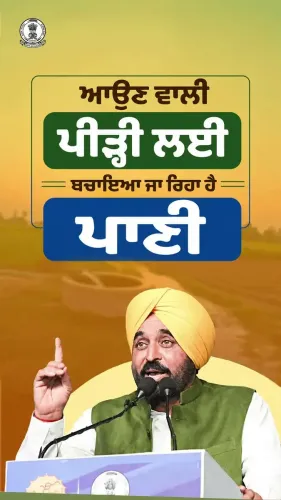
14,000 km pipeline network: Mann cited a farm-irrigation pipeline project credited with raising canal-water utilisation to 88 per cent and helping reverse groundwater depletion.
Hockey representation: According to Mann, 12 of the 15 current national hockey team players are from Punjab, reflecting the state's sports revival.
Kartarpur access pledge: Mann vowed to keep raising Punjab's voice for unrestricted open darshan at Sri Kartarpur Sahib in Pakistan.
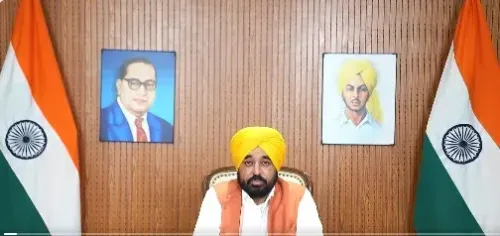
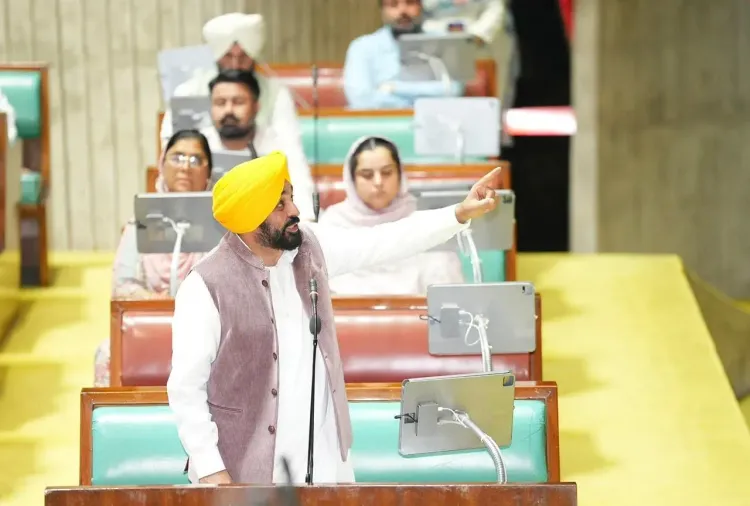
Punjab's water, Punjab's youth, Punjab's honour — Chief Minister Bhagwant Mann stood his ground in the Punjab Vidhan Sabha on Tuesday, October 27, 2026, laying out a sweeping assertion of state rights that ranged from river-water royalties to the national hockey team's Punjabi identity.
Posting in Punjabi on X, Mann declared: 'Punjab de paaniaan te sirf Punjab da haq hai' — 'Punjab's waters belong to Punjab alone' — and went further, demanding the proposed SYL (Sutlej-Yamuna Link) canal be scrapped in favour of a YSL alignment and announcing plans to recover a staggering ₹1.44 lakh crore in royalties from Rajasthan for past water usage.SYL to YSL — Mann's canal counter-proposal
The SYL canal is one of Indian federalism's oldest open wounds. Conceived in the early 1980s as a mechanism to divert Punjab river waters to Haryana, the project triggered decades of legal battles, political crises, and one of the state's most emotionally charged legislative acts — the Punjab Termination of Water Agreements Act, 2004. The Supreme Court has repeatedly weighed in, yet a final resolution has eluded successive governments.
Mann's counter — a YSL (Yamuna-Sutlej Link) — flips the directional logic, redirecting the conversation back toward Haryana's own river resources. Simultaneously, the royalty demand against Rajasthan signals an escalation from political rhetoric to fiscal claim, framing water not merely as a rights issue but as an economic one.
Groundwater crisis and 14,000 km of pipe
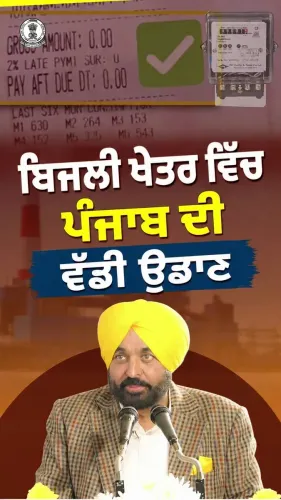
Beyond the political theatre, Mann cited tangible infrastructure work: 14,000 kilometres of pipes laid to push canal water directly to fields, an effort he credited with lifting canal-water utilisation to 88 per cent and beginning to reverse the state's alarming groundwater depletion. Punjab's over-reliance on tubewells — a legacy of the Green Revolution — has pushed water tables to critical lows in multiple districts; canal-based delivery is the accepted counter-strategy across administrations.
The scale of the pipeline network, if realised, would represent one of the largest farm-irrigation upgrades in the state's recent history, and the groundwater-recovery claim — if it holds up — would mark a genuine reversal of a decades-long decline.
Twelve of fifteen: Punjab's grip on national hockey
Mann pivoted to identity and aspiration in the same breath, asserting that 12 of the 15 players in the current national hockey squad are from Punjab — a statistic that speaks to the state's deep sporting roots and, in his telling, to the revival of its khel sanskriti (sports culture) under his government. Punjab has historically been the nursery of Indian hockey, and Mann's framing positions state-level infrastructure investment as the pipeline feeding national glory.
Kartarpur Corridor and the voice that 'will always be raised'
Sri Kartarpur Sahib, the historic Sikh gurdwara in Pakistan where Guru Nanak Dev Ji spent the last years of his life, has been accessible to Indian pilgrims through the Kartarpur Corridor since November 2019 — a visa-free passage agreed under a bilateral framework. Mann closed his assembly address with a pledge that his government's voice for unrestricted, open darshan (visitation) at Kartarpur would 'always remain loud', signalling continued diplomatic pressure for fuller access.
He ended with 'Inquilab Zindabad' — 'Long live the revolution' — the rallying cry that has bookended the Aam Aadmi Party's Punjab narrative since it swept to power in 2022.
With the SYL case still alive in the Supreme Court, a royalty claim that will test Rajasthan's response, and irrigation figures that invite independent scrutiny, the assembly address is less a closing statement than an opening move in a fresh round of inter-state battles — ones that will define whether Mann's bold numbers translate into durable policy wins.
Point of View
Kartarpur — broadens the address into a comprehensive state-identity argument ahead of what will likely be fresh judicial and inter-state negotiations. Whether the numbers cited survive scrutiny will determine how much political capital the speech actually generates.
NationPress
27 Oct 2026
Frequently Asked Questions
What is the SYL canal dispute between Punjab and Haryana?
The Sutlej-Yamuna Link (SYL) canal was proposed in the early 1980s to divert a share of Punjab's river waters to Haryana. Punjab has consistently opposed the diversion, passed a law in 2004 terminating water-sharing agreements, and the matter has been contested in the Supreme Court for decades without final resolution.
What is the YSL canal that Bhagwant Mann is proposing?
CM Bhagwant Mann proposed a Yamuna-Sutlej Link (YSL) canal as an alternative to the SYL, effectively reversing the flow direction and drawing on Haryana's Yamuna allocation rather than Punjab's rivers. The proposal is a political counter to the SYL demand and has not yet been formally tabled as a policy document.
Why is Punjab demanding ₹1.44 lakh crore royalty from Rajasthan?
CM Mann claimed that Rajasthan has historically used Punjab river water without paying royalties to the state. He announced that Punjab intends to recover ₹1.44 lakh crore as dues for past water usage under existing canal-sharing arrangements, though the legal framework for such a claim would require fresh proceedings or negotiations.
What is the Kartarpur Corridor and why does Punjab want open darshan?
The Kartarpur Corridor, opened in November 2019, allows Indian Sikh pilgrims visa-free passage to Sri Kartarpur Sahib gurdwara in Pakistan. Current access operates under specific conditions and registration protocols; Mann's demand for 'open darshan' refers to unrestricted, simpler access for pilgrims without bureaucratic hurdles.
How is Punjab addressing its groundwater depletion crisis?
The Mann government has cited the laying of 14,000 kilometres of pipelines to deliver canal water directly to farms, reducing dependence on groundwater pumping. The initiative is claimed to have raised canal-water utilisation to 88 per cent and contributed to a partial recovery of water table levels.