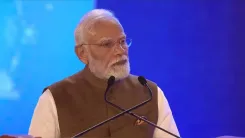
Uttarakhand tables ₹7,844 cr supplementary budget at Gairsain

Synopsis
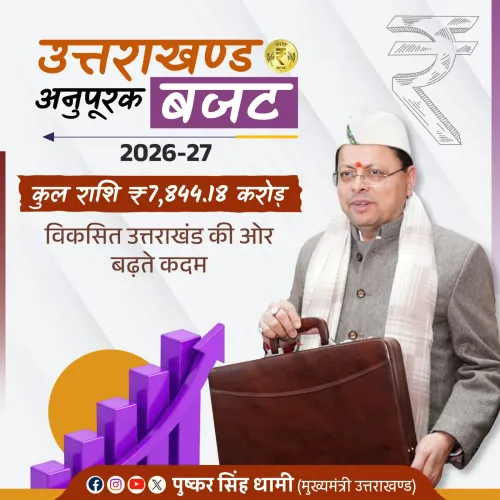
Uttarakhand's government has tabled a ₹7,844.18 crore supplementary budget for 2026-27 at the Gairsain session, with over half the outlay in capital expenditure and a landmark rise in local body devolution from 10.5% to 12.5% of state tax revenue.
Key Takeaways
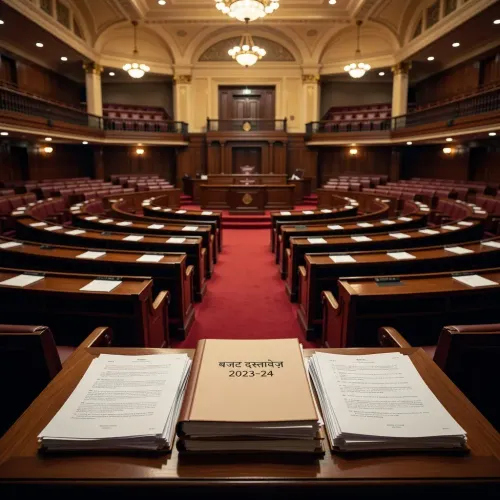
Uttarakhand has proposed a ₹7,844.18 crore supplementary budget for financial year 2026-27, tabled at the Gairsain (Bhararisain) Vidhan Sabha session on 27 October 2026.
Over half the allocation — ₹4,164.32 crore — is in the capital account, targeting physical infrastructure creation.
The total state budget size will rise from ₹1,11,703.21 crore to ₹1,19,547.39 crore after the supplementary addition.
The Sixth State Finance Commission's recommendation to raise local body devolution from 10.5% to 12.5% of state tax revenue has been accepted, backed by ₹721 crore .
Key sectoral allocations include ₹500 crore under SASCI, approximately ₹270 crore for the energy sector, and ₹100 crore for ADB-funded urban projects.
Road connectivity, judicial infrastructure, police housing, and panchayat buildings also receive dedicated provisions in the supplementary budget.
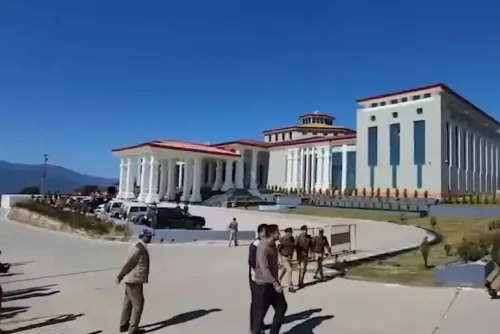
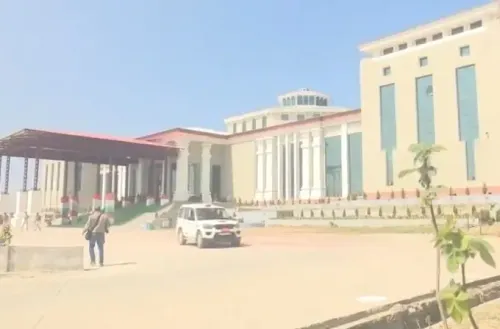
A mountain state with seasonal windows for construction just signalled where its money is going. The Uttarakhand Government has tabled a ₹7,844.18 crore supplementary budget for financial year 2026-27, proposing additional resources for roads, drinking water, energy, urban development, and local bodies — with the session held at the hill legislature in Gairsain's Bhararisain, Chamoli district, on 27 October 2026.
Capital spending takes the larger share
The headline figure breaks down sharply in favour of bricks over bills. Of the total outlay, ₹4,164.32 crore falls in the capital account — assets, construction, long-term investments — while ₹3,679.86 crore is on the revenue side. That means more than half the supplementary allocation is pointed at physical creation rather than maintenance or salaries. Once passed, this addition will push Uttarakhand's total budget size from the original ₹1,11,703.21 crore to ₹1,19,547.39 crore.
Hill states like Uttarakhand face a narrow construction season — monsoons halt work, winters freeze high-altitude sites — so front-loading capital spending in supplementary budgets is a well-established tactical move to keep project pipelines moving.
Local bodies get a bigger slice of the state tax pie
One provision stands out for its structural significance. Accepting the recommendations of the Sixth State Finance Commission, the government has proposed raising the share of state tax revenue devolved to rural and urban local bodies from 10.5 per cent to 12 per cent. A dedicated allocation of ₹721 crore backs this commitment. Gram panchayats and nagar palikas will see more funds flowing directly for local development needs — a shift that mirrors the national push for deeper fiscal decentralisation after successive Finance Commission cycles.
Sector-by-sector: where the money flows
The supplementary budget spreads resources across several critical verticals. Under the Special Assistance Scheme for Capital Investment (SASCI) — a central government programme providing targeted capital grants to states — ₹500 crore has been earmarked for infrastructure expansion. The energy sector, including transmission and distribution upgrades, gets approximately ₹270 crore across various heads.
Urban infrastructure projects backed by the Asian Development Bank receive roughly ₹100 crore through the Urban Development Department. Police housing — both residential and non-residential — is allocated around ₹55 crore. Judicial infrastructure sees approximately ₹22 crore, panchayat building construction gets ₹5 crore, and road works under the Pradhan Mantri Gram Sadak Yojana plus the Public Works Department attract ₹31 crore, with the Rural Development Department getting ₹30 crore alongside.
Gairsain session: governance from the hills
The choice of venue matters. Bhararisain in Gairsain has periodically hosted Uttarakhand Vidhan Sabha sessions as a deliberate exercise in decentralising governance away from the plains-based capital Dehradun. Tabling a fiscally significant supplementary budget here — not in Dehradun — carries a symbolic weight that successive governments have leaned into: the state's budget decisions being made in the terrain that most needs the investment.
With utilisation certificates and physical progress reports for SASCI and energy allocations still to follow, the real test of this ₹7,844 crore push is what gets built before the next monsoon shuts the sites down.
Point of View
Keeping that symbolism alive even as actual devolution mechanisms are being strengthened.
NationPress
27 Oct 2026
Frequently Asked Questions
What is the total size of Uttarakhand's supplementary budget for 2026-27?
The supplementary budget for financial year 2026-27 is worth ₹7,844.18 crore . Once added to the original budget of ₹1,11,703.21 crore, the total state budget size will become ₹1,19,547.39 crore .
Where was the Uttarakhand supplementary budget session held?
The Vidhan Sabha session was held at Bhararisain in Gairsain , Chamoli district — a location the state periodically uses to decentralise governance away from the plains-based capital Dehradun.
How has the share of state tax revenue for local bodies changed in Uttarakhand?
Accepting the Sixth State Finance Commission's recommendations, the government has proposed raising the devolution share for rural and urban local bodies from 10.5% to 12.5% of state tax revenue, backed by an allocation of ₹721 crore .
What is SASCI and how much has Uttarakhand allocated under it?
SASCI — the Special Assistance Scheme for Capital Investment — is a central government programme providing capital grants to states for infrastructure projects. Uttarakhand has allocated ₹500 crore under this scheme in the supplementary budget.
What sectors receive funding in Uttarakhand's supplementary budget 2026-27?
Key sectors include energy (approximately ₹270 crore ), ADB-funded urban development projects (approx. ₹100 crore ), police housing ( ₹55 crore ), judicial infrastructure ( ₹22 crore ), roads under PMGSY and PWD ( ₹31 crore ), rural development ( ₹30 crore ), and panchayat buildings ( ₹5 crore ).