Uttarakhand CMO: ₹225 Cr for Health in Supplementary Budget

Synopsis
Uttarakhand's supplementary budget for FY 2026-27 proposes ₹225 crore for cashless health schemes, ₹160 crore for medical college infrastructure, ₹200 crore for digital learning, and targeted allocations for sports, nutrition, and social pensions.
Key Takeaways
₹225 crore proposed for Atal Ayushman Yojana (₹100 cr) and Golden Card Yojana (₹125 cr) providing cashless healthcare to the public and state employees.
Approximately ₹160 crore in capital expenditure allocated for Pithoragarh and Rudrapur medical colleges and nursing colleges. ₹200 crore proposed for digital learning across school and higher education sectors statewide. ₹5 crore earmarked under Mukhya Mantri Yuva Bhavishya Nirman Yojana to fund NEET, JEE, and CLAT coaching for secondary-school students.
Sports allocations include ~ ₹35 crore for a Sports University, ₹10 crore for a women's sports college in Champawat , and ₹8 crore for National Games training camps.
Social welfare provisions include ~ ₹60 crore for Poshan 2.0, ₹27 crore for widow pensions, and ~ ₹93 crore for various welfare pension schemes.
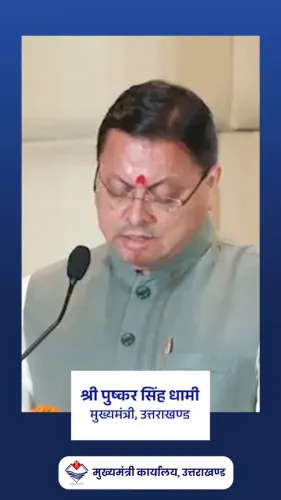
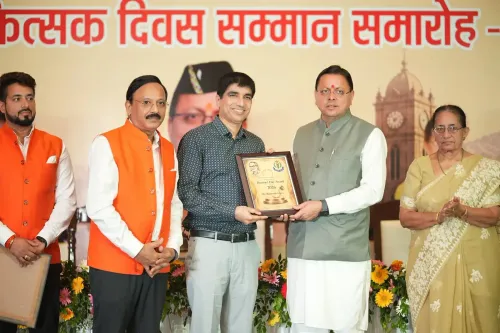
Uttarakhand's supplementary budget for FY 2026-27 has arrived with a clear signal: the state government is doubling down on health cover, digital classrooms, sports infrastructure, and social pensions — deploying a combined allocation touching several hundred crore rupees across welfare sectors. The Chief Minister's Office of Uttarakhand announced the provisions on Tuesday, October 27, 2026, detailing a wide sweep of fund proposals that stretch from mountain medical colleges to open-air gyms.
₹225 Crore to Keep Cashless Healthcare Running
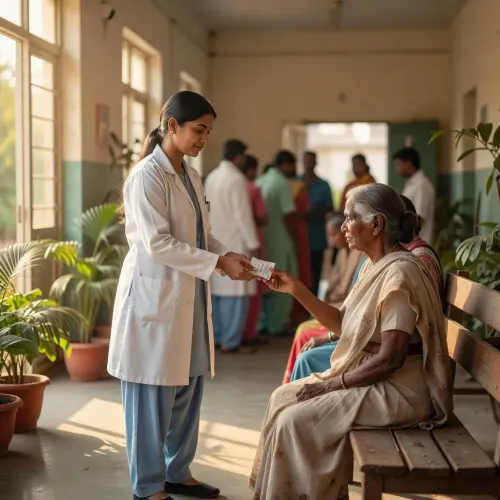
The single largest health allocation in the supplementary budget goes to two cashless medical schemes. The government has proposed ₹100 crore for the Atal Ayushman Yojana, which provides the general public with cashless treatment up to five lakh rupees per family annually. Another ₹125 crore has been earmarked under the Golden Card Yojana, extending similar cashless hospital access to state government employees and their families.
Both schemes trace their lineage to the national Ayushman Bharat Pradhan Mantri Jan Arogya Yojana, launched in 2018, which Uttarakhand adapted into its own state variant. Top-ups of this kind through supplementary budgets have become a recurring feature of the state's fiscal calendar, reflecting steady demand pressure on cashless claim volumes.
Pithoragarh and Rudrapur Medical Colleges Get ₹160 Crore Push
On the medical education front, the budget proposes approximately ₹160 crore in capital expenditure for works related to Pithoragarh Medical College, Rudrapur Medical College, and associated nursing colleges. Pithoragarh, a high-altitude hill district, has long faced a shortage of specialist healthcare infrastructure; a functional medical college there would mean local training pipelines for doctors and nurses who might otherwise be posted far from the region.
Capital allocations at this scale are specifically intended to accelerate construction and equipment procurement — physical progress reports on both campuses will be the real test of whether the money translates into brick and mortar by year-end.
₹200 Crore for Digital Learning, ₹5 Crore to Coach NEET and JEE Aspirants
Education gets a dual thrust. The budget proposes ₹200 crore for digital learning across school and higher education — one of the larger line items in the supplementary — signalling a continued push to wire classrooms and expand e-learning platforms across the state's dispersed hill geography.
More targeted is the ₹5 crore allocation under the Mukhya Mantri Yuva Bhavishya Nirman Yojana for coaching secondary-school students in NEET, JEE, and CLAT entrance examinations. Competitive exam coaching has historically been an urban, private-sector privilege; a state-funded programme aims to level that playing field, particularly for students in remote districts who cannot afford coaching centres in Dehradun or Delhi.
Sports University, Champawat Women's College, and National Games Prep
Uttarakhand's sports sector receives a cluster of allocations: approximately ₹35 crore for a Sports University, ₹10 crore for a women's sports college in Champawat, and ₹8 crore for special training camps ahead of the forthcoming National Games. Athlete scholarships are pegged at roughly ₹5.50 crore, with an additional ₹5 crore for establishing open gyms.
The Champawat women's sports college is notable — Champawat is a border district with historically limited institutional infrastructure, and a dedicated women's facility there would mark a meaningful geographic equity step.
Anganwadis, Widows, and Welfare Pensions: The Social Safety Net
The budget does not neglect ground-level welfare. Approximately ₹60 crore has been proposed under Saksham Anganwadi and Poshan 2.0, the national nutrition mission that works through Anganwadi centres to improve outcomes for children, pregnant women, and lactating mothers. ₹20 crore goes to honoraria for bhojan matas (mid-day meal workers), and approximately ₹27 crore is earmarked for destitute widow pensions.
Broader welfare pension schemes receive roughly ₹93 crore. Two child-focused schemes — Mukhya Mantri Vatsalya Yojana and Mukhya Mantri Bal Sanidhy Yojana — get approximately ₹2 crore and ₹1 crore respectively, supporting orphaned and vulnerable children.
Together, these provisions map a supplementary budget that is less a single big bet and more a wide-mesh net — stitching together healthcare, education, sport, and social security into a single fiscal document. Whether the allocations flow to intended beneficiaries before the financial year closes will be watched closely.
Point of View
Fitting a 'hills-first' narrative the government has cultivated. Utilisation, however, remains the crucial variable — supplementary allocations in Uttarakhand have not always translated into equivalent on-ground expenditure within the same financial year.
NationPress
27 Oct 2026
Frequently Asked Questions
What is the Atal Ayushman Yojana and how much has been allocated in the supplementary budget?
The Atal Ayushman Yojana is Uttarakhand's state health insurance scheme that provides cashless medical treatment up to ₹5 lakh per family. The supplementary budget for FY 2026-27 proposes ₹100 crore for this scheme.
What is the Golden Card Yojana in Uttarakhand?
The Golden Card Yojana extends cashless medical treatment to Uttarakhand state government employees and their families. The supplementary budget allocates ₹125 crore for it in FY 2026-27.
How much money has Uttarakhand allocated for digital education in the supplementary budget?
The supplementary budget proposes ₹200 crore for digital learning across both school education and higher education in Uttarakhand.
What is the Mukhya Mantri Yuva Bhavishya Nirman Yojana?
It is a state scheme that provides coaching support to secondary-school students for competitive entrance exams including NEET, JEE, and CLAT . The supplementary budget earmarks ₹5 crore for it.
What sports-related allocations are there in Uttarakhand's supplementary budget 2026-27?
The budget proposes approximately ₹35 crore for a Sports University, ₹10 crore for a women's sports college in Champawat , ₹8 crore for National Games training camps, ~ ₹5.50 crore for athlete scholarships, and ₹5 crore for open gyms.