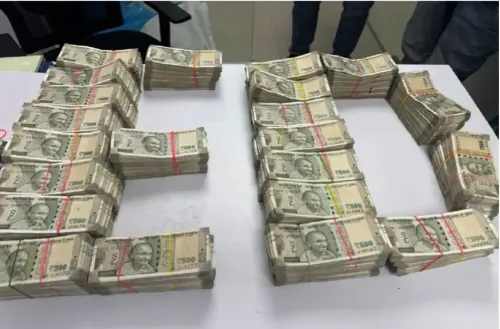
ED attaches ₹54 crore in smuggled gold in Guwahati, Myanmar-UAE hawala route exposed

Synopsis
The ED has provisionally attached over ₹54 crore in gold seized from a courier in Guwahati, with investigators alleging the bullion was smuggled into India via Myanmar and the UAE through hawala channels — then funnelled into the formal bullion trade using fabricated invoices. The case exposes a professionalised syndicate with coded courier systems and fixed pay, and a court has already rejected a fraudulent ownership claim over the gold.
Key Takeaways
The Enforcement Directorate provisionally attached ₹54 crore worth of gold and metal flakes in Guwahati on 23 September 2026 under the PMLA, 2002 .
A total of 37.064 kg of gold — 29 large bars and 50 small pieces — along with 13 grams of silver-coloured metal flakes were attached.
The gold was originally seized from Akshay Parshuram Bansode at Kharguli Hatisil, Guwahati on 30 June by Assam Police.
Investigators allege the gold was smuggled via Myanmar and the UAE using hawala channels and was intended for laundering into India's formal bullion trade through fabricated invoices.
A jurisdictional court reportedly found ownership invoices to be prima facie fabricated and rejected the release application.
Neither the accused nor the claimant could produce customs clearance certificates or lawful import documents; further investigation is ongoing.
The Enforcement Directorate (ED), Guwahati Zonal Office-I, has provisionally attached ₹54 crore worth of gold and silver-coloured metal flakes in connection with a money laundering probe into an alleged gold smuggling network operating through Assam. The action, announced on Wednesday, 23 September 2026, marks a significant escalation in federal efforts to dismantle cross-border bullion trafficking routes into northeastern India.
What Was Seized
Under the provisions of the Prevention of Money Laundering Act (PMLA), 2002, the ED provisionally attached 37.064 kg of gold — comprising 29 large gold bars and 50 smaller pieces — along with approximately 13 grams of silver-coloured metal flakes. The seized material is currently in safe custody at the Kamrup Metro Treasury.
The gold was originally seized by Assam Police on 30 June from the alleged conscious possession of Akshay Parshuram Bansode at Kharguli Hatisil in Guwahati. The ED's attachment order now brings the case under the ambit of anti-money-laundering law, enabling asset freezing ahead of prosecution.
How the Alleged Syndicate Operated
The ED initiated its investigation on the basis of an FIR registered by Latasil Police Station in Kamrup (Metro) district, which pertained to organised illegal transportation, concealment of smuggled gold, and criminal conspiracy. Investigators found that Bansode had allegedly been ferrying gold across India for several years, acting on instructions from an unidentified individual who reportedly controlled a network of couriers.
According to the agency, the alleged syndicate operated through a coded identification system and paid its couriers a fixed monthly remuneration — a hallmark of professionalised smuggling operations. The gold is believed to have entered India through Myanmar and the UAE via hawala channels before being routed through Assam.
Notably, the investigation suggests the contraband was intended to be laundered into India's formal bullion trade through invoices generated by traders allegedly linked to a bullion refining company, a method that obscures illicit origin by mimicking legitimate commerce.
Fabricated Documents, Rejected Claims
The ED also examined a competing claim of ownership over the seized gold, purportedly supported by sale invoices. However, the jurisdictional court reportedly found those invoices to be prima facie fabricated and rejected the claimant's application seeking release of the gold.
Critically, neither Bansode nor the ownership claimant could produce customs clearance certificates, import documents, or any other proof establishing lawful acquisition of the gold — a gap that investigators say strengthens the money laundering case.
Broader Context and What Comes Next
The Myanmar-UAE hawala route has increasingly come under scrutiny as a conduit for smuggled gold into India's northeastern states, which share a porous border with Myanmar. This case adds to a series of ED actions in the region targeting bullion trafficking networks that exploit both geographic proximity and informal financial channels.
The ED has confirmed that further investigation into the alleged smuggling network and the full money laundering trail remains ongoing. Authorities are expected to identify and act against additional members of the syndicate, including the unidentified controller allegedly running the courier network.
Point of View
Yet the sophistication here — fixed-pay courier networks, coded identifiers, and bullion-trade laundering via fabricated invoices — points to an operation that ran undetected for years. The court's rejection of forged ownership documents is significant: it closes a common legal escape route and signals judicial vigilance. The real test now is whether the ED can trace and dismantle the anonymous controller at the top of the network, without whom prosecutions tend to stop at the courier level.
NationPress
23 Sept 2026
Frequently Asked Questions
What did the ED seize in the Guwahati gold smuggling case?
The ED provisionally attached 37.064 kg of gold — including 29 large bars and 50 small pieces — and approximately 13 grams of silver-coloured metal flakes, collectively valued at over ₹54 crore. The attachment was made under the Prevention of Money Laundering Act, 2002.
How was the gold allegedly smuggled into India?
According to the ED, the gold was allegedly smuggled into India through Myanmar and the UAE using hawala channels. It was then allegedly intended to be introduced into the formal bullion trade through fabricated invoices generated by traders linked to a bullion refining company.
Who is Akshay Parshuram Bansode?
Akshay Parshuram Bansode is the individual from whose alleged conscious possession Assam Police seized the gold on 30 June at Kharguli Hatisil in Guwahati. The ED found that he had allegedly been transporting gold across India for several years on the instructions of an unidentified syndicate controller.
Why did the court reject the ownership claim over the seized gold?
The jurisdictional court reportedly found the invoices submitted as proof of ownership to be prima facie fabricated and rejected the claimant's application for release of the gold. Neither the claimant nor Bansode could produce valid customs clearance or lawful import documents.
What happens next in the ED's investigation?
The ED has confirmed that investigation into the full money laundering trail and the broader smuggling network is ongoing. Authorities are expected to pursue the unidentified individual allegedly controlling the courier syndicate, along with any traders connected to the bullion refining company.