ED probes Pay10, Asian Checkout for cyber-fraud money laundering
Synopsis
The ED has cracked open what it calls a multi-crore laundering machine hidden inside two payment aggregator firms — Pay10 and Asian Checkout. Fake websites, bogus GST invoices, hawala settlements, and a Grenadian beneficial owner based in Dubai: the alleged scheme routed hundreds of crores from illegal betting and cyber fraud through India's digital payments infrastructure.
Key Takeaways
The Directorate of Enforcement (ED) launched a PMLA investigation against Pay10 Services Private Limited and Asian Checkout Private Limited (ACPL) on charges of cyber-fraud-linked money laundering.
Searches conducted from 13 to 15 May 2026 led to seizure of ₹1.4 crore cash , jewellery and bullion worth ₹65 lakh , digital devices, and freezing of four luxury vehicles .
The alleged scheme involved fictitious websites, fake merchant onboarding, fraudulent GST invoices, and transactions linked to illegal online betting and cyber fraud.
The Ultimate Beneficial Owner (UBO) of Pay10 has been identified as a Grenadian national based in Dubai, UAE ; certain Chartered Accountants are also implicated.
Proceeds were allegedly layered through multiple hawala operators ; further investigation is in progress.
The Directorate of Enforcement (ED) has launched a money laundering investigation against Pay10 Services Private Limited (Pay10) and Asian Checkout Private Limited (ACPL), two payment aggregator platforms accused of facilitating large-scale digital and cyber fraud-linked financial crimes, the agency confirmed on 16 May 2026. The probe, registered under the Prevention of Money Laundering Act (PMLA), follows searches at multiple premises across three days.
Searches and Seizures
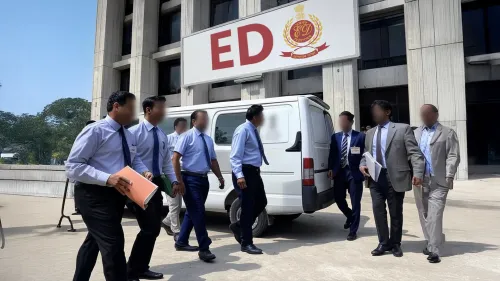
ED conducted PMLA searches from 13 May 2026 to 15 May 2026 at premises linked to Pay10, ACPL, and associated persons and entities. Investigators seized incriminating documents, cash of approximately ₹1.4 crore, jewellery and bullion valued at around ₹65 lakh, and multiple digital devices containing evidence of money laundering. The agency also froze four luxury vehicles connected to the two firms.
How the Fraud Operated
According to the ED, the investigation has uncovered a well-structured modus operandi through which hundreds of crores of rupees were allegedly laundered. Several fictitious websites were created to simulate sales of goods and services, with no genuine underlying business activity. Funds generated through these fake transactions were routed through payment gateways and subsequently layered, diverted, and concealed to disguise their illicit origin.
Pay10 and ACPL allegedly operated under the guise of legitimate payment aggregators while onboarding fake and dubious merchants, generating fraudulent invoices — including GST-related invoices — and enabling transactions linked to illegal online betting, gaming, and cyber fraud. The entities also reportedly took accommodation entries from fraudulent and non-existent companies. A cartel arranging fake bills for Pay10 has been identified, according to the ED.
Key Persons and Hawala Links
The Ultimate Beneficial Owner (UBO) of Pay10 has been identified as a Grenadian national based in Dubai, United Arab Emirates (UAE). Certain Chartered Accountants (CAs) have also been found to be associated with him, the agency said. Investigation further revealed laundering of proceeds of crime originating from illegal online betting, bogus invoices from fictitious garment merchants, illegal liaison activities, and other criminal proceeds. Unaccounted cash settlements were reportedly routed through multiple hawala operators.
Public Advisory and Next Steps
The ED has strongly advised the public not to engage with unauthorised online betting or gambling platforms, not to transfer funds to suspicious UPI IDs or unknown payment links associated with betting apps or websites, and not to share personal or banking details on such platforms. The agency urged anyone with information on illegal betting operations, promotional networks, or associated payment channels to report it to the nearest law enforcement agency. Further investigation is ongoing.
Point of View
Which sit between merchants and banks, can be weaponised as laundering conduits at scale if onboarding checks are weak. The involvement of a foreign UBO domiciled in Dubai and CAs generating fictitious invoices suggests this was not opportunistic but engineered. The Reserve Bank of India tightened payment aggregator regulations in 2022, yet this alleged scheme appears to have operated well into 2026 — raising questions about the gap between regulatory intent and on-ground enforcement. With hundreds of crores reportedly in play and hawala networks involved, the ED's next move on asset attachment will signal how seriously the Centre treats fintech-enabled laundering as a systemic risk.
NationPress
14 Oct 2026
Frequently Asked Questions
What is the ED's investigation against Pay10 and Asian Checkout about?
The Directorate of Enforcement has launched a PMLA investigation against Pay10 Services Private Limited and Asian Checkout Private Limited for allegedly laundering hundreds of crores of rupees through fake websites, bogus merchant accounts, and fraudulent invoices. The funds are believed to be proceeds from illegal online betting, cyber fraud, and other criminal activities.
What was seized during the ED searches?
During searches conducted between 13 and 15 May 2026, the ED seized approximately ₹1.4 crore in cash, jewellery and bullion worth around ₹65 lakh, and multiple digital devices. Four luxury vehicles linked to the two firms were also frozen.
Who is the Ultimate Beneficial Owner of Pay10?
The ED has identified the Ultimate Beneficial Owner (UBO) of Pay10 as a Grenadian national currently based in Dubai, UAE. Certain Chartered Accountants have also been found to be associated with him in the alleged scheme.
How did the alleged money laundering scheme work?
According to the ED, fictitious websites were created to simulate legitimate sales of goods and services. Funds from cyber fraud and illegal betting were routed through payment gateways operated by Pay10 and ACPL, then layered and concealed through fake invoices, accommodation entries from non-existent entities, and hawala operators.
What should the public do to stay safe from such fraud?
The ED has advised the public not to engage with unauthorised online betting or gambling platforms, avoid transferring funds to suspicious UPI IDs or unknown payment links, and refrain from sharing personal or banking details on unverified platforms. Any information on illegal betting or associated payment channels should be reported to the nearest law enforcement agency.