ED freezes 1,424 accounts, attaches ₹17.82 crore in Northeast drug-hawala crackdown
Synopsis
The ED has cracked open a cross-border narco-hawala circuit stretching from Myanmar's Golden Triangle to Mumbai and Delhi — with ₹268.80 crore flowing through a single Champhai exchanger, a homemaker's account receiving ₹15.48 crore on a ₹27,000 monthly income, and a Mini-ATM counter in Churachandpur processing ₹175 crore in drug cash. The Champhai-Zokhawthar corridor is now exposed as both the drug entry point and the money settlement hub for a network spanning the entire Northeast.
Key Takeaways
The ED froze 1,424 bank accounts and provisionally attached properties worth ₹17.82 crore in Mizoram and Manipur on 23 October 2026 .
Total assets secured across three linked PMLA cases now exceed ₹26 crore .
Six accused arrested under Section 19 of PMLA; proceedings for four more are underway before the Special Court in Mizoram.
A Mini-ATM counter in Churachandpur made 2,947 transfers totalling ₹175.03 crore in drug cash between 2024 and June 2026.
Accounts of Lalrampari and Lalliansanga (M/s JTS Store, Champhai) recorded credits of approximately ₹268.80 crore , including ₹125 crore in cash from multiple states.
Drug money also flowed from New Delhi , Kolkata and Mumbai back to border hawala accounts, indicating a national-scale settlement network.
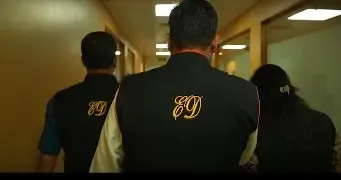
The Enforcement Directorate (ED) on 25 October 2026 conducted coordinated searches across Mizoram and Manipur under the Prevention of Money Laundering Act (PMLA), targeting a cross-border narco-hawala network linked to Myanmar-sourced drug trafficking. The agency froze 1,424 bank accounts and provisionally attached properties worth ₹17.82 crore, taking total assets secured in the three linked cases to over ₹26 crore.
Scale of the Operation
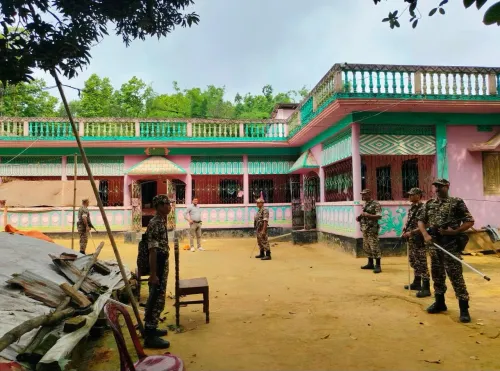
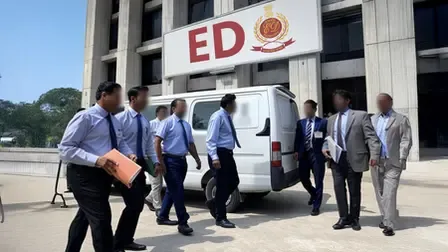
The ED's Aizawl and Imphal Sub-Zonal offices carried out simultaneous search operations on 23 October 2026 at multiple premises in Aizawl, Champhai and Lawngtlai in Mizoram, and Churachandpur in Manipur. The operation was conducted in coordination with the Narcotics Control Bureau (NCB) and the Mizoram Police, which launched parallel action against the same trafficking network on the same day.
Six accused have been arrested under Section 19 of the PMLA — three in Mizoram and three in Manipur. Production-for-arrest applications against four more accused, presently in judicial custody in narcotics cases, are being processed before the Special Court in Mizoram. The arrested persons are being produced before the jurisdictional Special Courts (PMLA).
How the Narco-Hawala Network Operated
According to the ED statement, investigators uncovered one interconnected narco-hawala ecosystem in which the same set of bank accounts in Champhai, Aizawl and Lawngtlai received drug money generated across Manipur, Mizoram, Assam and Tripura, and settled it with suppliers in Myanmar.
The trafficking corridor functioned as a two-way street through the Champhai-Zokhawthar sector. In one direction, precursor chemicals moved from India to Myanmar — M/s Krishiv Enterprises reportedly dispatched approximately 32 tonnes of Caffeine Anhydrous in 15 consignments between March and November 2024, along with 10 tonnes of Aluminium Chloride Anhydrous, to front consignees in Aizawl and the border belt. These chemicals were then moved across the border to tablet-pressing units in Myanmar, where Caffeine Anhydrous is used to bulk and cut methamphetamine into 'Yaba' tablets.
In the other direction, finished heroin, brown sugar and methamphetamine tablets produced in Myanmar were carried across the Tiau river at Zokhawthar, staged at Champhai, and transported onward via National Highway-06A to Aizawl and further into Assam and Tripura. Myanmar-based organisers, identified as Runthanchhungi alias Nu Sungi and Chintuang, hired local carriers who concealed consignments in soap cases, taxis, motorcycles and truck convoys with escort vehicles.
The Money Trail: From Metro Cities to Border Towns
Drug cash collected across the Northeast entered the banking system through Mini-ATM/Customer Service Point counters. In Churachandpur, syndicate operative Nengzatuan Valte alias Tuanpi collected cash and handed it to Zenngaihniang alias Taniang, who delivered up to ₹1 crore per day at M/s Go Alpha Trip, a Mini-ATM counter run by H. Gouzalal. Recorded under the code name 'NUNIANG', the counter made 2,947 transfers aggregating ₹175.03 crore between 2024 and June 2026.
Beneficiary account holders in Mizoram, who rented their accounts for ₹500 per lakh, passed funds onward through RTGS/NEFT/IMPS within days. Of ₹11.98 crore received across seven analysed accounts, only ₹17 lakh was withdrawn in cash. Notably, a single account belonging to a Champhai homemaker — operated by her bank-employee husband — received ₹15.48 crore against a declared family income of approximately ₹27,000 per month.
The layered funds ultimately reached unlicensed Rupee-Kyat exchangers in Champhai, chiefly Lalrampari and her husband Lalliansanga (Proprietor of M/s JTS Store), whose accounts recorded credits of approximately ₹268.80 crore, including ₹125 crore in cash from Assam, Nagaland, West Bengal, Tripura and Delhi. The proceeds were integrated into real estate, including Hotel JTS, a five-storey commercial building in Zion Veng, Champhai.
The money trail was not confined to the Northeast. Hawala accounts in Aizawl and Champhai received funds from New Delhi, Kolkata and Mumbai — including approximately ₹2.14 crore received by hawala operator Lalrinkima from shell entities in Kolkata — indicating that proceeds from drug sales in metropolitan cities were being routed back to the border through layered corporate and hawala channels.
Arrests and Evidence Seized
The six persons arrested under PMLA include Kashyap G. Thakkar, Thangkhuala and T. Chatuan Vanlalgakha in Mizoram, and Zenngaihniang alias Taniang, Nengzatuan Valte alias Tuanpi and H. Gouzalal of Churachandpur, Manipur. Taniang and Tuanpi, already in judicial custody in NDPS cases, were formally arrested with the permission of the Special Judge, ND&PS, Churachandpur.
Searches led to the seizure of incriminating ledgers recording cash received and transfers made, cheque books, debit cards, mobile phones and digital devices. Account holders admitted their accounts were rented to suspected narco-hawala operators for ₹500 per lakh. The investigation was initiated on the basis of FIRs under the Narcotic Drugs and Psychotropic Substances (NDPS) Act, 1985.
Northeast as a Drug Corridor
The Northeast region shares a 1,643 km porous border with Myanmar and has emerged as the principal land corridor for drugs produced in the Golden Triangle. Heroin and methamphetamine entering Mizoram and Manipur are consumed locally and moved onward through Assam to the rest of India and Bangladesh, with drug money flowing back to border towns for settlement with Myanmar-based suppliers. The ED investigation lays bare the full circuit — chemical supply, drug flow and money settlement — all converging on the Champhai-Zokhawthar corridor.
Production-for-arrest proceedings against four more accused are expected to conclude before the Special Court in Mizoram in the coming weeks, as investigators continue to trace further layers of the narco-hawala chain.
Point of View
Nagaland, West Bengal, Tripura and Delhi suggests that the 'Northeast drug problem' has long been a national money-laundering problem with a Northeast address. The use of Mini-ATM counters as bulk cash laundering nodes — a single counter processing ₹175 crore — points to a regulatory blind spot in India's last-mile banking infrastructure that goes well beyond this case. The more uncomfortable question for enforcement agencies is how accounts receiving hundreds of crores against declared incomes of thousands of rupees per month escaped banking system scrutiny for years.
NationPress
25 Oct 2026
Frequently Asked Questions
What did the ED uncover in the Mizoram and Manipur drug-hawala crackdown?
The ED uncovered a cross-border narco-hawala network that sourced heroin, brown sugar and methamphetamine from Myanmar, sold the drugs across the Northeast and metropolitan India, and channelled the proceeds back to Myanmar-based suppliers through layered banking and hawala channels centred on the Champhai-Zokhawthar corridor in Mizoram. The agency froze 1,424 bank accounts and attached properties worth ₹17.82 crore, taking total assets secured to over ₹26 crore.
Who has been arrested in connection with the ED's PMLA action?
Six persons have been arrested under Section 19 of the PMLA: Kashyap G. Thakkar, Thangkhuala and T. Chatuan Vanlalgakha in Mizoram, and Zenngaihniang alias Taniang, Nengzatuan Valte alias Tuanpi and H. Gouzalal in Churachandpur, Manipur. Four more accused currently in judicial custody in NDPS cases face production-for-arrest proceedings before the Special Court in Mizoram.
How was drug money laundered through the Mini-ATM counter in Churachandpur?
A Mini-ATM and money-transfer counter called M/s Go Alpha Trip in Churachandpur, run by H. Gouzalal, received drug cash of up to ₹1 crore per day from handler Zenngaihniang alias Taniang and made 2,947 transfers totalling ₹175.03 crore between 2024 and June 2026 to traders, pharmacies and individuals in Zokhawthar, Champhai, Lawngtlai and Aizawl. The counter recorded Taniang under the code name 'NUNIANG' and routed funds through multiple Churachandpur counters and front entities to obscure the trail.
Why is the Champhai-Zokhawthar corridor significant in Northeast drug trafficking?
The Champhai-Zokhawthar corridor in Mizoram sits on India's 1,643 km porous border with Myanmar and serves as the principal entry point for drugs produced in the Golden Triangle. It functions as a two-way hub: precursor chemicals flow out to Myanmar's tablet-pressing units, while finished heroin and methamphetamine flow in, with the same network of hawala accounts settling payments in both directions.
Did the drug money network extend beyond the Northeast?
Yes. ED investigations found that hawala accounts in Champhai and Aizawl received substantial funds from New Delhi, Kolkata and Mumbai, including approximately ₹2.14 crore from shell entities in Kolkata and cash deposited in Delhi, Guwahati and Silchar. This indicates that proceeds from drug sales in major Indian cities were being routed back to the border through layered corporate and hawala channels, making it a national-scale laundering operation.