ED raids 10 locations in Assam, Delhi over Myanmar areca nut smuggling

Synopsis
The ED's money laundering probe into Myanmar areca nut smuggling has now reached Delhi and Assam, with 10 premises raided and 8 named accused. The racket used a three-tier network, benami bank accounts, and fraudulent e-way bills worth over ₹337 crore — with the contraband ultimately reaching buyers as far as Nagpur and Uttar Pradesh.
Key Takeaways
The Enforcement Directorate searched 10 premises in Assam and Delhi on Wednesday under the PMLA, 2002 .
Eight accused were targeted, including Romi Jain of M/s Ganpati Traders, Delhi , and financiers from Cachar , Hailakandi , and Karimganj districts.
Fraudulent e-way bills worth ₹86.25 crore (CGST) and ₹251.19 crore (SGST) were issued between FY2021-22 and FY2023-24 .
The racket used a three-tier structure — Burmese suppliers, Mizoram-based facilitators, and Assam/Delhi-based financiers — to move and layer proceeds.
Smuggled areca nuts reached buyers in Delhi , West Bengal , Nagpur , and Uttar Pradesh .
Signed blank cheques, property documents, and digital devices were seized; further investigation is underway.
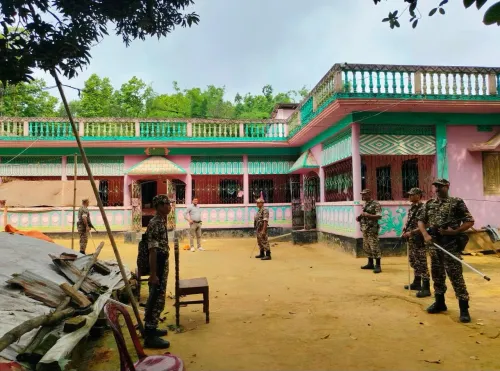
The Enforcement Directorate (ED) on Wednesday conducted search operations at 10 residential and business premises across Assam and Delhi as part of a money laundering investigation into an organised cross-border areca nut smuggling racket originating from Myanmar. The searches, carried out under the Prevention of Money Laundering Act (PMLA), 2002, targeted premises linked to eight accused allegedly involved in smuggling Burmese betel nuts into Mizoram and distributing them through a network of purchasers and financiers across Assam and Delhi.
Who Was Targeted
The ED's Aizawl Sub-Zonal Office conducted the searches at premises linked to Jakir Hussain, Kabir Hussain, Anjan Kumar Paul, Pinku Paul, Romi Jain, Anowar Hussain, Khalil Uddin, and Dipankar Deb. The premises are located in the Cachar, Hailakandi, and Karimganj (Sribhumi) districts of southern Assam, as well as in Delhi.
How the Smuggling Racket Operated
According to the ED, the operation ran on a layered, three-tier structure. At the first tier, Burmese suppliers handed consignments of areca nuts — without customs clearance — to Mizoram-based facilitators at godowns near Champhai, close to the India-Myanmar border. Mizoram-based facilitators including Lalhnemi, Zosangpuii, Zonunsanga, and others then arranged onward supply to purchasers and financiers in southern Assam's Cachar, Karimganj, and Hailakandi districts.
At the third tier, Assam-based financiers either sold the areca nuts further or routed sale proceeds to buyers outside the Northeast region. Romi Jain, proprietor of M/s Ganpati Traders in Delhi, was found to have conducted large transactions with entities based in Silchar and Mizoram involved in the illegal trade. Myanmar-origin areca nuts procured through this chain were ultimately supplied to buyers in Delhi, West Bengal (including Kolkata and Falakata), Nagpur, and Uttar Pradesh.
The Paper Trail: Fraudulent Bills and Benami Accounts
The investigation revealed that fraudulent e-way bills and forged documents were used to move the contraband, despite the entities involved not being GST-registered. E-way bills amounting to approximately ₹86.25 crore under CGST and ₹251.19 crore under SGST were found to have been issued during financial years 2021-22 to 2023-24. The border town of Zokhawthar in Mizoram, which shares an unfenced border with Myanmar, emerged as a major transit point.
The ED also found that multiple bank accounts had been opened and operated in the names of persons other than the actual beneficial owners, apparently to layer the proceeds of crime. These individuals reportedly paid Mizoram-based facilitators for the use of their bank accounts and business permits, including GST registrations, to facilitate the trade.
Legal Background and Earlier Raids
The ED initiated the investigation on the basis of an FIR registered by the Anti-Corruption Branch of the Central Bureau of Investigation (CBI) in Imphal against unknown public servants and private persons, pursuant to directions issued by the Gauhati High Court on 16 July in a Public Interest Litigation (PIL). The PIL alleged large-scale smuggling of areca nuts from Myanmar into Champhai district of Mizoram using fraudulent documentation.
This is the second round of PMLA searches in the case. Earlier, on 4 June, the ED had searched nine premises in Champhai, Mizoram, targeting entities engaged in procurement of smuggled areca nuts from Burmese suppliers. Financial analysis of bank accounts covered during those searches, along with statements recorded under the PMLA, established a money trail leading to individuals in Silchar and Delhi.
What Was Seized and What Comes Next
During the current searches, investigators recovered and seized signed blank cheques, property documents, digital devices, mobile phones, and other incriminating material relating to the proceeds of crime. Several persons questioned during the operation reportedly admitted to having remitted amounts to Mizoram-based facilitators for the purchase of Burmese-origin areca nuts, corroborating the money trail already established. Further investigation is underway.
Point of View
Where unfenced stretches at Champhai and Zokhawthar have long served as entry points for contraband. What distinguishes this probe is the financial sophistication: benami accounts, forged GST registrations, and layered inter-state transactions suggest a white-collar operation grafted onto a traditional smuggling route. The Gauhati High Court's PIL-driven intervention is a reminder that executive enforcement alone has not been sufficient to curb the trade. The real question is whether the ED's financial investigation will yield prosecutable money laundering charges or merely result in asset seizures that leave the network intact.
NationPress
21 Sept 2026
Frequently Asked Questions
What is the ED's areca nut smuggling case about?
The ED is investigating an organised racket that smuggled areca nuts (betel nuts) from Myanmar into Mizoram through the Champhai border and then distributed them across India via financiers in Assam and Delhi. The probe is under the Prevention of Money Laundering Act (PMLA), 2002, and follows an FIR by the CBI's Anti-Corruption Branch in Imphal.
Who are the accused named in the ED raids?
The eight accused named are Jakir Hussain, Kabir Hussain, Anjan Kumar Paul, Pinku Paul, Romi Jain, Anowar Hussain, Khalil Uddin, and Dipankar Deb. Their premises in Cachar, Hailakandi, Karimganj districts of Assam and in Delhi were searched.
How large was the fraudulent billing in the areca nut case?
Fraudulent e-way bills amounting to approximately ₹86.25 crore under CGST and ₹251.19 crore under SGST were found to have been issued between financial years 2021-22 and 2023-24, according to the ED.
Why is Mizoram central to this smuggling network?
Mizoram's Champhai district and the border town of Zokhawthar share a large unfenced border with Myanmar, making them easy entry points for contraband areca nuts without customs clearance. Mizoram-based facilitators operated godowns in Champhai and used forged documents to move the goods onward.
What action had the ED taken before these raids?
On 4 June, the ED had already searched nine premises in Champhai, Mizoram, targeting entities involved in procuring smuggled areca nuts from Burmese suppliers. The financial analysis from those searches established the money trail that led to the current raids in Assam and Delhi.