ED freezes 215 bank accounts in ₹820 crore Tayal Group fraud probe
Synopsis
The ED's crackdown on the Tayal Group goes beyond a routine bank fraud case — it alleges that insolvency proceedings themselves were weaponised as a legal shield against PMLA enforcement, with Resolution Professionals allegedly complicit. With ₹820.86 crore in estimated proceeds of crime and 215 bank accounts frozen, this case tests whether India's insolvency framework can be gamed to outrun financial crime investigators.
Key Takeaways
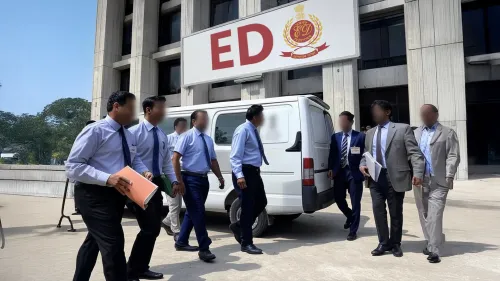
The Enforcement Directorate froze 215 bank accounts and seized ₹20 lakh cash in searches across 12 locations in Mumbai and Ahmedabad on 30 September 2026 .
Estimated proceeds of crime in the case stand at approximately ₹820.86 crore .
The probe targets Tayal Group promoters Pravin Tayal and Saurabh Tayal , along with Resolution Professionals Kiran C.
Ambavat , and Ravi Kapoor .
Empress Mall, Nagpur was provisionally attached at an estimated value of ₹483 crore .
The ED alleged that CIRP proceedings under the IBC were initiated through sham creditors to shield assets from PMLA enforcement action.
A parallel investigation by the ED's Ahmedabad Zone found a similar pattern involving Vidhant Realty Pvt Ltd and alleged violation of Section 29A of the IBC .
The Enforcement Directorate (ED) has frozen 215 bank accounts and seized ₹20 lakh in cash following searches at 12 locations across Mumbai and Ahmedabad in a money laundering investigation linked to alleged bank fraud by companies of the Tayal Group and the alleged misuse of insolvency proceedings. The agency has estimated the proceeds of crime at approximately ₹820.86 crore.
What the Searches Uncovered
The searches were conducted on 30 September 2026 by the ED's Kolkata Zonal Office-II under the Prevention of Money Laundering Act (PMLA), 2002, targeting Tayal Group promoters and directors Pravin Tayal, Saurabh Tayal, and others, as well as certain Resolution Professionals (RPs). The ₹20 lakh in cash was recovered from the residential premises of Pravin Tayal.
According to the ED, searches led to the recovery of documents relating to the incorporation and operation of shell companies, along with a large number of bank accounts in cooperative banks opened in the names of associates of the accused. Records relating to immovable properties allegedly concealed from the ED and lending banks were also identified, and fresh non-performing assets (NPAs) created by group companies were reportedly unearthed.
The Alleged Fraud Mechanism
The investigation stems from cases registered by the ED's Kolkata Zone-II in connection with alleged large-scale bank fraud involving Tayal Group companies, including K. Lifestyle & Industries Ltd., Actif Corporation Ltd., and Jaybharat Textiles & Real Estate Ltd.
The ED alleged that the group generated and availed bank funds through falsified stock statements, inflated production claims, and the unauthorised sale of hypothecated machinery. Funds were allegedly layered through shell companies and diverted into real estate assets, including Empress Mall in Nagpur, which was provisionally attached during the investigation at an estimated value of ₹483 crore, along with other immovable properties.
The Insolvency Misuse Angle
A central allegation in the ED's case is that after attachment of assets, the accused promoters and directors allegedly initiated corporate insolvency resolution process (CIRP) proceedings through shell entities under Section 7 of the Insolvency and Bankruptcy Code (IBC) — entities which the agency alleged were controlled by the accused and used as sham creditors to shield group assets from enforcement action.
The ED further alleged that the RPs — Kiran C. Shah, Vinod P. Ambavat, and Ravi Kapoor, whose premises were also searched — assisted the promoters by admitting unverified and inflated claims of related parties, thereby reducing the voting share of secured lenders. The agency alleged the RPs filed applications to set aside PMLA attachments, suppressed adverse orders before courts and tribunals, and created encumbrances that prevented the ED from taking possession of rent generated from attached properties. Rent worth several crores was allegedly continued to be received by companies floated by the accused.
The Ahmedabad Connection
A similar modus operandi was identified in a parallel investigation by the ED's Ahmedabad Zone involving Tayal Group entity Vidhant Realty Pvt Ltd. Insolvency proceedings were allegedly initiated against the company through another group entity, Kausar Textiles Pvt Ltd, to frustrate PMLA attachment proceedings.
In that case, Cubical Realty Pvt Ltd emerged as the successful resolution applicant — which the ED alleged was in violation of Section 29A of the IBC, as it was reportedly beneficially owned by members of the Tayal family, including Pravin Kumar Tayal and Navin Kumar Tayal. The agency said further investigation is ongoing.
Broader Significance
This case is notable for its alleged nexus between promoter-directors, shell company networks, and Resolution Professionals — raising questions about the integrity of insolvency proceedings that are meant to protect creditors. Notably, this is not the first time the ED has flagged attempts to weaponise the IBC's creditor-resolution framework to neutralise PMLA enforcement. The outcome of this investigation could have implications for how courts and regulators oversee the conduct of RPs in cases where PMLA attachments are already in place.
Point of View
Designed to protect creditors, was turned into an instrument to defeat them. If the ED's version holds up, it points to a structural vulnerability in the IBC framework: the absence of a robust firewall between promoter-linked entities and the resolution process. The alleged role of Resolution Professionals, who are officers of the court, is particularly troubling and will likely invite scrutiny from the Insolvency and Bankruptcy Board of India. India cannot afford a reputation for insolvency proceedings that can be reverse-engineered by the very defaulters they were meant to contain.
NationPress
7 Oct 2026
Frequently Asked Questions
What is the Tayal Group ED case about?
It is a money laundering investigation under the PMLA involving alleged large-scale bank fraud by Tayal Group companies, including K. Lifestyle & Industries Ltd., Actif Corporation Ltd., and Jaybharat Textiles & Real Estate Ltd. The ED has estimated the proceeds of crime at approximately ₹820.86 crore and alleges the group used shell companies and insolvency proceedings to conceal and protect fraudulently obtained funds.
How many bank accounts did the ED freeze in this case?
The ED froze 215 bank accounts linked to accused entities and associated persons under Section 17(1-A) of the PMLA. The accounts were held primarily in cooperative banks and opened in the names of associates of the accused.
What is the allegation against the Resolution Professionals?
The ED alleged that Resolution Professionals Kiran C. Shah, Vinod P. Ambavat, and Ravi Kapoor assisted accused promoters by admitting unverified and inflated claims of related parties, reducing secured lenders' voting share. They allegedly also filed applications to set aside PMLA attachments and suppressed adverse court orders, effectively shielding the accused's assets from enforcement.
What properties have been attached in the Tayal Group case?
The ED has provisionally attached Empress Mall in Nagpur at an estimated value of ₹483 crore, along with other immovable properties linked to the Tayal Group promoters. Additional properties allegedly concealed from the ED and banks were identified during the 30 September searches.
How does the alleged IBC misuse work in this case?
According to the ED, after its attachment of assets, the accused promoters allegedly initiated corporate insolvency resolution process (CIRP) proceedings through shell entities acting as sham creditors under Section 7 of the IBC. In the Ahmedabad case, a related entity allegedly became the successful resolution applicant in violation of Section 29A of the IBC, which bars persons connected to the defaulter from participating in the resolution process.